




What Length Walking Poles Do I Need? The Complete Sizing Guide
Choosing the correct walking pole length is one of the most important decisions you'll make when selecting trekking equipment. The right length enhances stability, improves propulsion, and prevents joint strain, while improperly sized poles can lead to shoulder pain, wrist discomfort, and inefficient energy transfer. Whether you're a casual walker or a serious backpacker, understanding how to determine your ideal pole length will significantly improve your comfort and performance on the trail. This comprehensive guide will walk you through multiple sizing methods, terrain-specific adjustments, and professional fitting techniques to ensure you find your perfect match.
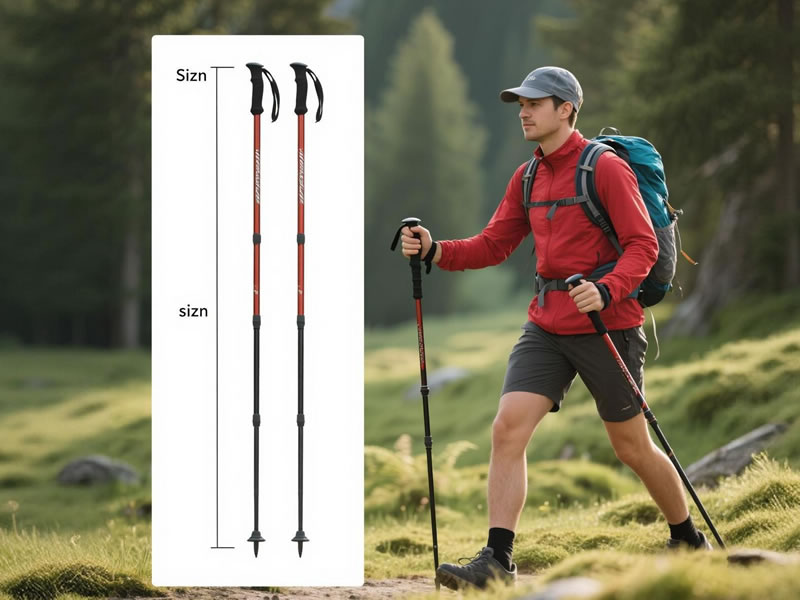
Recommended trekking pole purchase link: https://s.click.aliexpress.com/e/_c4M7OWaN
The Gold Standard: The 90-Degree Elbow Rule
The most reliable and widely recommended method for determining basic pole length is the 90-degree elbow test:
- Stand upright on a flat surface with your shoulders relaxed
- Hold the pole with your hand positioned naturally on the grip
- Place the pole tip directly vertical on the ground beside you
- Check your elbow angle - it should form approximately 90 degrees
This method works because it positions your arms in their most biomechanically efficient position for transferring power to the poles while maintaining natural shoulder alignment. If your elbow angle is significantly more or less than 90 degrees, you'll experience either reduced propulsion or unnecessary joint strain.
Mathematical Formula: Height-Based Calculations
For those who prefer precise measurements or are shopping online, mathematical formulas provide an excellent starting point:
- General Hiking: Your height (in centimeters) × 0.68
- Fitness Walking/Nordic Walking: Your height (in centimeters) × 0.72
- Mountain Descents: Your height (in centimeters) × 0.74
Example Calculation: For a 175cm (5'9") hiker:
- General hiking: 175 × 0.68 = 119cm
- Fitness walking: 175 × 0.72 = 126cm
- Mountain descents: 175 × 0.74 = 129.5cm
These formulas account for different usage scenarios and provide a reliable baseline, though individual proportions may require fine-tuning.
Anatomical Considerations: Beyond Simple Height
Your unique body proportions significantly impact your ideal pole length:
Torso-to-Leg Ratio:
- Long torso/short legs: May need slightly shorter poles than formulas suggest
- Short torso/long legs: Often benefit from slightly longer poles
Arm Length Variations:
Measure from your armpit to the ground while standing naturally - this measurement in centimeters often correlates well with your starting pole length for general hiking.
Flexibility Factors:
- Limited shoulder mobility: May require slightly shorter poles
- Excellent flexibility: Might prefer longer poles for increased propulsion
Adjusting for Different Terrain and Activities
The concept of one perfect pole length is misleading because optimal length changes with terrain:
Uphill Technique:
- Shorten poles 5-10cm from your flat terrain length
- Reasoning: Maintains proper elbow angle on inclines
- Benefit: Prevents overreaching and shoulder strain
Downhill Technique:
- Lengthen poles 5-10cm from your flat terrain length
- Reasoning: Provides better support and control during descent
- Benefit: Reduces impact on knees and improves stability
Mixed Terrain Approach:
- Adjustable poles are essential for routes with frequent elevation changes
- Practice quick adjustments while maintaining movement rhythm
- Mark common positions with tape for quick reference
Pole Types and Their Length Implications
Fixed-Length Poles:
- Best for: Dedicated Nordic walking, known routes with consistent terrain
- Advantage: Lighter weight, more durable construction
- Disadvantage: Lack of adaptability to changing conditions
Adjustable Telescopic Poles:
- Best for: General hiking, backpacking, variable terrain
- Advantage: Versatility across different activities and users
- Disadvantage: Slightly heavier, more potential failure points
Folding (Z-Poles):
- Best for: Fastpacking, alpine climbing, weight-conscious users
- Advantage: Rapid deployment, compact storage
- Disadvantage: Limited or no adjustability in many models
Common Sizing Mistakes and Their Consequences
Poles Too Long:
- Symptoms: Shoulder discomfort, awkward arm position, reduced rhythm
- Risks: Rotator cuff strain, inefficient energy transfer
- Correction: Shorten gradually until elbow reaches 90 degrees
Poles Too Short:
- Symptoms: Bent-over posture, wrist discomfort, limited propulsion
- Risks: Back strain, reduced stability benefits
- Correction: Lengthen until natural upright posture is achieved
Specialized Applications and Their Length Requirements
Nordic Walking:
- Typically longer than standard hiking poles (height × 0.72)
- Enhanced propulsion and upper body engagement
- Full arm extension during the push-off phase
Trail Running/Fastpacking:
- Generally shorter than hiking poles for quicker cadence
- Emphasize rapid planting and minimal arm movement
- Balance between stability and freedom of movement
Rehabilitation Use:
- Often slightly shorter to ensure optimal control
- Priority on stability rather than propulsion
- Medical professional consultation recommended
Practical Fitting Session: A Step-by-Step Approach
- Start with calculations using your height and the appropriate formula
- Perform the 90-degree test with adjustable poles set to your calculated length
- Walk naturally on a flat surface, focusing on comfortable arm movement
- Make micro-adjustments (2-3cm at a time) based on comfort and efficiency
- Test on varied terrain if possible, noting how different angles feel
- Finalize your measurement once you find the position that feels most natural
Children and Growing Users: Special Considerations
For young hikers, different rules apply:
- Adjustable poles are essential to accommodate growth
- Regular reassessment every 6-12 months during growth spurts
- Focus on technique with properly fitted equipment to prevent bad habits
When to Re-evaluate Your Pole Length
Your ideal length may change due to:
- Significant weight loss or gain altering posture and biomechanics
- Changes in fitness level affecting flexibility and strength
- New activities requiring different techniques
- Age-related postural changes affecting optimal positioning
Conclusion: Your Personal Perfect Fit
Finding your ideal walking pole length is both science and art—beginning with mathematical formulas and biomechanical principles, but ultimately refined through personal experience and comfort. The right length should feel like a natural extension of your body, providing support without conscious effort or discomfort. Remember that adjustable poles offer valuable versatility for most users, allowing you to adapt to changing terrain and refine your preferences over time.
Your perfect pole length is the one that enables efficient energy transfer, promotes proper posture, and feels comfortable throughout your entire hike. Don't hesitate to experiment with slight adjustments—sometimes as little as 2-3 centimeters can transform an awkward experience into a comfortable, efficient walking partnership. With properly fitted poles, you'll unlock the full benefits of this versatile tool, turning every step into a more stable, powerful, and enjoyable movement.




