




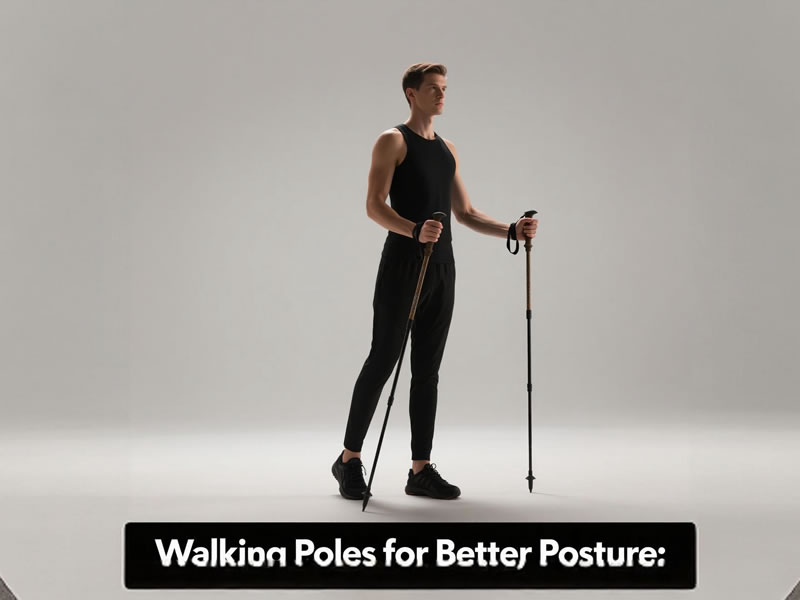
Walking Poles for Better Posture: The Ultimate Guide to Standing Taller
In an era dominated by screens and sedentary lifestyles, poor posture has become an epidemic affecting millions worldwide. The forward head position, rounded shoulders, and hunched back that characterize modern postural dysfunction lead to chronic pain, reduced mobility, and diminished confidence. While countless products promise postural improvement, one of the most effective solutions may already be in your gear closet: walking poles. These simple tools, when used correctly, can serve as powerful postural correctors that reinforce proper alignment both on and off the trail. This comprehensive guide explores how strategic pole use can help you stand taller, move more efficiently, and reclaim the natural posture your body deserves.
Recommended trekking pole purchase link: https://s.click.aliexpress.com/e/_c4M7OWaN
The Science Behind Pole-Induced Postural Improvement
Walking poles influence posture through multiple biomechanical mechanisms that work simultaneously to reinforce proper alignment:
Creating Conscious Body Awareness:
The very act of holding poles instantly heightens your awareness of your upper body position. This mindfulness is the first step toward postural correction, as you become conscious of slouching the moment it occurs. The physical connection between your hands and the ground provides continuous feedback about your spinal alignment.
Engaging the Postural Muscle Chain:
Proper pole use activates a cascade of muscular engagement that supports upright positioning:
- Shoulder Stabilizers: The deltoids and rotator cuff muscles engage to control pole placement
- Upper Back Muscles: Rhomboids and trapezius work to retract and stabilize the shoulder blades
- Core Musculature: Abdominals and spinal erectors activate to maintain trunk stability
- Neck Support: Deep cervical flexors help maintain proper head positioning
Counteracting Sedentary Patterns:
The forward-leaning position encouraged by poles directly opposes the flexed, closed posture we maintain while sitting. This extension of the spine and opening of the chest area helps reverse the adaptive shortening that occurs from prolonged sitting.
The Transformation: From Tech Neck to Trail Ready
Modern life has reshaped our bodies in specific ways that poles can help address:
Forward Head Posture Correction:
The average person's head now positions 2-3 inches forward of its ideal alignment. Poles help by:
- Encouraging visual focus on the horizon rather than the ground
- Creating tension through the posterior muscle chain that gently pulls the head back
- Reducing the need to look down for footing on uneven terrain
Rounded Shoulder Rehabilitation:
Years of computer and phone use leave shoulders internally rotated and protracted. Pole use counters this by:
- Promoting external rotation through the planting motion
- Encouraging scapular retraction with each pole push-off
- Strengthening the mid-back muscles that pull shoulders into proper position
Spinal Decompression:
The gentle traction created by leaning on poles can increase space between vertebrae, potentially relieving disc pressure and creating a more favorable environment for spinal health.
Proper Technique for Maximum Postural Benefits
Mastering these techniques will transform your poles into postural tools:
The Upright Stance Foundation:
Before moving, establish proper alignment:
- Stand with poles planted slightly behind your body line
- Engage your core by gently drawing your navel toward your spine
- Roll your shoulders back and down, opening your chest
- Align your ears over your shoulders, shoulders over hips
- Maintain a neutral pelvis rather than anterior or posterior tilting
The Rhythmic Walking Pattern:
Once moving, focus on these elements:
- Maintain the upright stance rather than collapsing forward with each step
- Allow natural arm swing from the shoulders, not the elbows
- Keep pole plants gentle rather than aggressive stabs
- Ensure the pole strap supports weight transfer without tight gripping
Breath Integration:
Coordinate breathing with your movement:
- Inhale during the recovery phase as poles swing forward
- Exhale during the power phase as you push through the poles
- Use deep diaphragmatic breathing to enhance core engagement
Specific Postural Problems and Pole Solutions
For Desk-Related Hunching:
- Use poles with a more vertical planting angle to emphasize shoulder opening
- Focus on conscious scapular retraction with each pole push-off
- Practice "chest opening" pauses during walks by leaning slightly into poles while expanding the thoracic spine
For Anterior Pelvic Tilt:
- Engage core muscles throughout the pole motion
- Use slightly shorter poles to encourage proper hip alignment
- Focus on hip extension during the push-off phase
For Text Neck:
- Set poles to a length that encourages looking forward, not down
- Practice "chin tucks" while walking to reinforce proper head positioning
- Use poles to support posture during standing breaks
Progressive Postural Training Program
Week 1-2: Awareness and Alignment
- Focus on proper setup and static positioning
- Practice pole walking with frequent posture checks
- Use mirrors or video feedback to monitor form
- Begin with 15-20 minute sessions to build endurance
Week 3-4: Integration and Endurance
- Increase session length to 30-45 minutes
- Incorporate varied terrain to challenge postural adaptation
- Add specific postural exercises during walks
- Reduce visual posture checks as muscle memory develops
Week 5-6: Advanced Application
- Practice maintaining posture during conversation or distraction
- Introduce elevation changes while preserving alignment
- Begin transferring pole-supported posture to pole-free walking
- Incorporate dynamic balance challenges
Complementary Exercises to Enhance Pole Benefits
Pre-Walk Warm-ups:
- Thoracic extension over a foam roller
- Scapular wall slides
- Chin tucks with resistance
- Dead bugs for core activation
Post-Walk Reinforcement:
- Doorway chest stretches
- Latissimus dorsi foam rolling
- Deep neck flexor strengthening
- Prone Y-T-W-L sequences
Daily Maintenance:
- Seated pelvic tilts at your desk
- Standing scapular retractions
- Chin tucks during computer work
- Diaphragmatic breathing breaks
Equipment Selection for Postural Focus
Optimal Pole Features:
- Adjustable Length: Allows fine-tuning for individual height and arm length
- Comfortable Grips: Reduce tension that travels to shoulders and neck
- Adequate Weight: Heavy enough to provide feedback, light enough to prevent strain
- Secure Straps: Enable proper weight transfer without tight gripping
Avoid These Common Mistakes:
- Choosing poles that are too long, causing shoulder elevation
- Selecting grips that are too small, promoting a death grip
- Using baskets that are too large, creating awkward planting angles
- Ignoring strap adjustment, missing key postural benefits
Measuring Your Postural Progress
Track improvements through these indicators:
- Visual Assessment: Before/after photos showing shoulder and head position
- Pain Reduction: Decreased neck, shoulder, and back discomfort
- Endurance: Increased time maintaining proper posture before fatigue
- Awareness: Earlier recognition of slouching with quicker self-correction
- Breathing: Improved diaphragmatic breathing capacity
Real User Experiences and Transformations
Office Worker Transformation:
"After 15 years at a desk, I had developed a permanent hunch. Using walking poles for my daily lunch walks not only improved my posture during the walks but created muscle memory that carried through to my workday. I'm now consciously sitting taller without constant effort." - Michael T., Software Developer
Chronic Pain Relief:
"My physical therapist recommended poles to address my forward head posture that was causing chronic headaches. Within six weeks of consistent use, my headache frequency decreased by 80%, and I found myself automatically sitting and standing taller throughout the day." - Sarah L., Teacher
Long-Term Postural Maintenance
Once proper alignment becomes habitual:
- Continue using poles for longer walks to reinforce good patterns
- Periodically return to focused posture walks for maintenance
- Use poles as tools for posture checks during other activities
- Share the technique with friends and family struggling with similar issues
Conclusion: Standing Tall for Life
Walking poles offer more than just stability on the trail—they provide a practical, effective solution to the postural problems that plague modern life. By engaging the correct muscle chains and providing continuous alignment feedback, they serve as mobile postural coaches that travel with you wherever you walk. The benefits extend far beyond your time on the trails, gradually reprogramming your movement patterns to support a taller, more confident presence in all aspects of life.
Remember that postural improvement is a journey, not a destination. Be patient with your progress, celebrate small victories, and trust that each pole plant brings you closer to the natural, effortless alignment your body craves. The path to better posture begins with a single step—make that step with poles in hand, and you'll be walking taller for years to come. Your future self, free from the aches and limitations of poor posture, will thank you for the investment in your structural health.




