




Can Walking Poles Reduce Impact on Concrete?
Urban walking presents a unique challenge to our joints: the unyielding nature of concrete surfaces transmits substantial impact forces with every step. While walking poles are traditionally associated with trail hiking, their benefits extend significantly to pavement and concrete environments. Scientific evidence and biomechanical research demonstrate that properly used walking poles can reduce impact forces on hard surfaces by up to 25%, offering substantial protection for joints throughout the lower body and spine. This comprehensive analysis explores the mechanisms behind this impact reduction and provides practical guidance for maximizing benefits during urban walking.
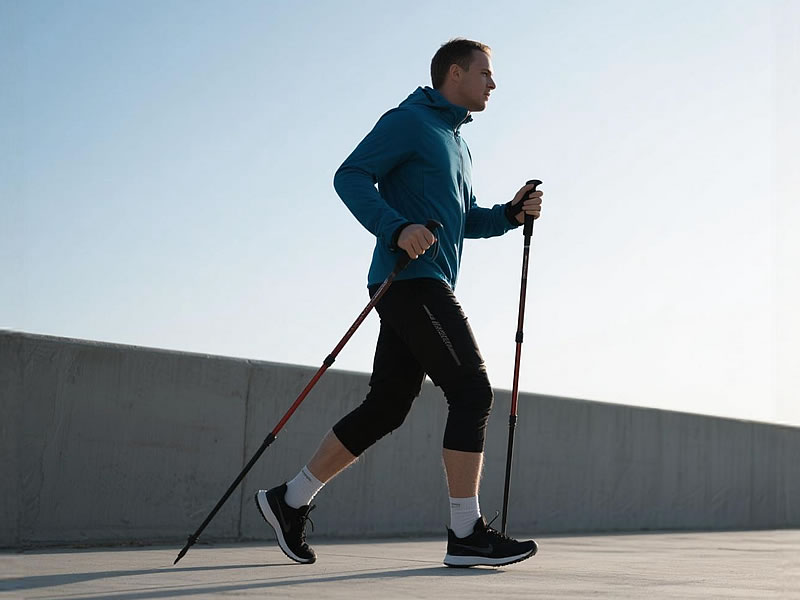
Recommended trekking pole purchase link: https://s.click.aliexpress.com/e/_c4M7OWaN
The Science of Impact Reduction: Understanding the Mechanisms
Walking poles mitigate concrete's harsh effects through several interconnected physiological mechanisms:
Force Distribution and Weight Sharing:
Research published in the Journal of Sports Sciences reveals that using walking poles redistributes approximately 20-25% of body weight from the lower to upper extremities. This fundamental shift means your knees, hips, and ankles absorb significantly less force with each step. On concrete, where ground reaction forces can reach 1.5 times body weight during normal walking, this redistribution translates to substantial cumulative reduction over thousands of steps.
Shock Absorption Through Upper Body Engagement:
The arms and shoulders act as natural shock absorbers when using poles. As the pole tip contacts the concrete, the subtle flexion of elbows and shoulders dissipates impact forces before they travel through the skeletal system. This dynamic cushioning effect is particularly valuable on surfaces that offer no natural compliance.
Gait Modification and Cadence Effects:
Studies in Gait & Posture demonstrate that pole use encourages a slightly shorter, more frequent stride pattern. This gait modification reduces the peak forces generated during heel strike—the moment when concrete's impact is most jarring. The resulting smoother weight transfer protects vulnerable joints from repetitive trauma.
Quantifiable Benefits: What the Research Reveals
Multiple scientific investigations confirm the protective benefits of pole walking on hard surfaces:
- A 2018 study found 26% reduction in knee joint loads during pole-assisted walking on pavement
- Research with osteoarthritic patients demonstrated 23% less pain during and after concrete walking with poles
- Biomechanical analysis shows 18% reduction in spinal compression forces during downhill concrete walking
- Long-term studies indicate significantly slower cartilage degeneration in pole users regularly walking on hard surfaces
Optimal Equipment Selection for Concrete Surfaces
Rubber Tip Imperative:
While carbide tips excel on trails, rubber tips are essential for concrete:
- Provide superior shock absorption compared to metal-on-concrete contact
- Create secure traction without the jarring "click" of metal tips
- Available in various compounds for different weather conditions
- Typically last 150-200 miles on pavement before requiring replacement
Shock-Absorbing Pole Systems:
Several manufacturers offer poles with integrated suspension:
- Internal spring mechanisms provide additional impact dampening
- Adjustable systems allow customization based on user weight and sensitivity
- Carbon fiber construction naturally absorbs vibration better than aluminum
Weight and Balance Considerations:
Heavier poles (typically aluminum) can provide more stable platforms, while lighter carbon models reduce overall exertion. Choose based on your primary needs: maximum stability versus minimal fatigue.
Proper Technique for Maximum Impact Reduction
The Urban Pole Rhythm:
Develop a modified technique for concrete surfaces:
- Plant poles at a slightly shallower angle than used on trails
- Focus on smooth, rolling placements rather than aggressive stabs
- Maintain consistent, moderate pressure rather than varying intensity
- Allow natural arm swing with relaxed shoulders
Posture and Alignment:
- Maintain upright posture with engaged core muscles
- Avoid leaning heavily on poles, which can cause shoulder strain
- Keep head up and eyes forward rather than watching pole placement
- Distribute weight evenly between poles and legs
Pacing and Cadence:
- Aim for a rhythm that matches your natural walking pace
- Use metronomic effect of pole plants to maintain consistent speed
- Adjust pole length slightly to optimize elbow angle (typically 90-100 degrees on flat concrete)
Specific Benefits for Different Urban Walker Profiles
Commuter Walkers:
- Reduce cumulative joint stress during daily work travel
- Improve posture after long periods of sitting
- Increase walking speed without increasing impact
- Enhance safety in crowded urban environments
Fitness Walkers:
- Enable longer training sessions with reduced recovery time
- Permit higher-intensity workouts with lower injury risk
- Provide full-body engagement while protecting joints
- Allow consistent training despite hard surfaces
Senior Walkers:
- Significantly reduce fall risk on slippery or uneven pavement
- Manage arthritis symptoms during necessary urban mobility
- Maintain independence through improved stability
- Enable social walking that might otherwise be avoided due to discomfort
Rehabilitation Users:
- Gradual return to walking after lower extremity injuries
- Controlled weight-bearing during bone and joint healing
- Confidence building during recovery progression
- Pain management during therapeutic walking
Common Mistakes That Reduce Effectiveness
Overstriding with Poles:
Taking excessively long steps while using poles increases braking forces and amplifies concrete's impact rather than reducing it.
Improper Tip Placement:
Planting poles too far forward creates a braking effect that increases joint stress. Optimal placement is approximately at mid-foot position relative to the body.
Gripping Too Tightly:
Excessive grip tension transfers shock directly to elbows and shoulders, negating the natural shock absorption of arm muscles.
Comparative Analysis: Poles vs. Other Impact-Reduction Strategies
While quality footwear provides crucial cushioning, poles offer complementary benefits:
- Footwear Alone: Reduces impact at ground interface but doesn't address forces transmitted through skeletal system
- Poles Alone: Reduces forces throughout kinetic chain but doesn't cushion initial contact
- Combined Approach: Provides comprehensive protection addressing both initial contact and force transmission
Implementation Guide for Urban Environments
Starting Safely:
- Begin with 15-20 minute sessions to adapt technique
- Practice in quiet areas before progressing to busy sidewalks
- Focus on technique before increasing speed or distance
- Consider working with a physical therapist if managing existing conditions
Progressive Integration:
- Gradually increase duration as comfort with technique improves
- Introduce varied urban terrain: hills, stairs, uneven pavement
- Practice in different weather conditions with appropriate tip compounds
- Develop confidence with quick direction changes and stops
Economic and Practical Considerations
Cost-Benefit Analysis:
While quality poles represent an initial investment ($80-$200), they offer:
- Potential reduction in future medical costs from joint preservation
- Extended years of comfortable mobility
- Multi-purpose use across urban and natural environments
- Typically 3-5 year lifespan with proper maintenance
Urban Convenience Factors:
- Collapsible models store easily in workplaces and vehicles
- Quick-adjust systems accommodate changing urban terrain
- Low-profile designs minimize social self-consciousness
- Lightweight construction prevents carrying fatigue
Conclusion: A Smart Investment in Long-Term Joint Health
Walking poles offer a scientifically validated method for reducing the cumulative impact of concrete walking on human joints. By distributing forces across the upper body, modifying gait patterns, and providing additional stability, they address the fundamental challenge of unyielding urban surfaces. The benefits extend beyond immediate comfort to long-term joint preservation, potentially adding years of pain-free mobility to regular urban walkers.
While the visual of walking poles in city environments may seem unconventional to some, the physiological advantages are substantial and well-documented. For anyone spending significant time walking on concrete—whether for commute, exercise, or necessity—poles represent a practical intervention that pays dividends in both immediate comfort and long-term joint health. The concrete won't get softer, but your walk certainly can with the strategic implementation of walking poles.




