




Walking Poles for Seniors with Poor Balance: Regaining Confidence and Stability
Balance deterioration is one of the most significant yet underaddressed challenges of aging, affecting nearly 40% of seniors over 65 and creating a cascade of consequences that diminish quality of life. The fear of falling can lead to reduced activity, social isolation, and physical deconditioning that ironically increases fall risk. While many seniors reluctantly accept mobility aids like canes or walkers, walking poles offer a superior alternative that provides stability without stigmatization. This comprehensive guide explores how properly selected and used walking poles can transform the walking experience for seniors with balance challenges, restoring confidence and independence.
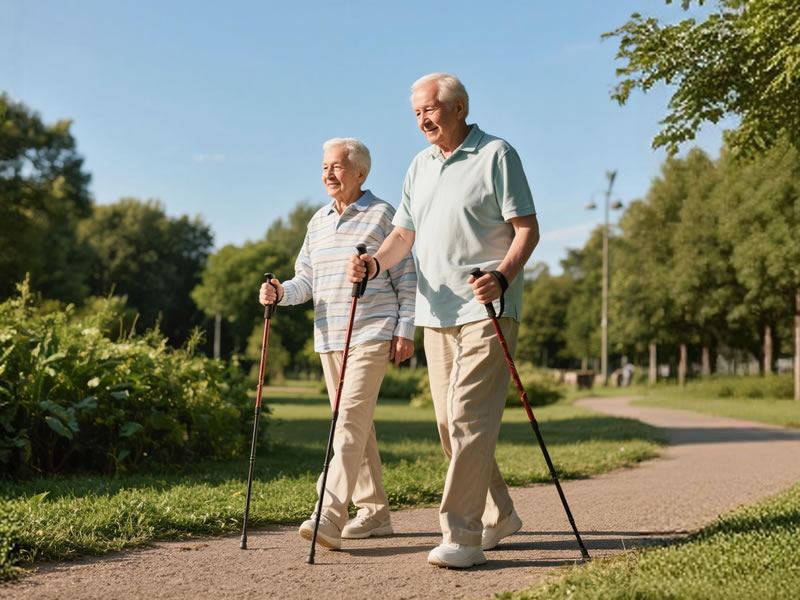
Recommended trekking pole purchase link: https://s.click.aliexpress.com/e/_c4M7OWaN
Understanding Balance Challenges in Seniors
Balance is a complex interplay of multiple physiological systems that naturally decline with age:
The Three Systems of Balance:
- Visual System: Age-related vision changes reduce spatial awareness
- Vestibular System: Inner ear function declines, affecting equilibrium
- Proprioception: Nerve endings become less sensitive, reducing body position awareness
The Vicious Cycle of Poor Balance:
Fear of falling leads to reduced activity, which causes muscle weakness and further balance deterioration. Walking poles interrupt this cycle by providing the security needed to remain active while building strength and confidence.
Why Walking Poles Outperform Traditional Mobility Aids
Superior Stability Through Tripod Support:
While canes provide one additional contact point, walking poles create a stable tripod (or quadpod with two poles) that significantly expands the base of support. This multi-point contact system provides stability in multiple directions, unlike canes that primarily support side-to-side movement.
Natural Gait Preservation:
Walkers often encourage a shuffling gait that further undermines balance mechanisms. Walking poles support a more natural, reciprocal walking pattern that maintains proper neuromuscular coordination.
Bilateral Support Advantage:
Using two poles distributes support evenly across both sides of the body, preventing the muscular imbalances and compensatory movements that single-point aids can create.
Scientific Evidence: What Research Reveals
Multiple studies validate the benefits of poles for senior balance:
- A 2019 study in Gerontology found pole users experienced 27% fewer falls than cane users
- Research in Age and Ageing demonstrated improved gait speed and stability in seniors using poles
- A clinical trial showed 35% improvement in balance confidence among pole users after 8 weeks
Selecting the Right Poles for Balance Support
Safety-First Design Features:
- Wider Tips: Look for poles with broader tip surfaces or additional rubber "feet" for maximum stability
- Secure Locking Mechanisms: External lever locks are typically easier to operate and more reliable than twist locks
- Comfortable Grips: Ergonomically shaped grips reduce hand fatigue and improve control
- Adjustable Length: Precise length adjustment ensures optimal biomechanical positioning
Weight and Material Considerations:
- Aluminum Poles: Offer durability and reliability at a reasonable weight
- Carbon Fiber: Lighter weight reduces upper body fatigue but typically costs more
- Optimal Weight: Heavy enough to provide stability feedback but light enough to prevent arm fatigue
Proper Technique for Maximum Stability
Initial Setup and Positioning:
- Adjust pole length so elbows form 90-degree angles when tips touch the ground
- Stand upright with shoulders relaxed and looking forward
- Position poles slightly behind your body line, not directly beside you
The Stability-Focused Walking Pattern:
- Plant poles firmly before transferring weight
- Maintain a consistent rhythm that matches your natural pace
- Keep poles relatively close to your body for optimal control
- Focus on smooth, controlled movements rather than speed
Terrain-Specific Techniques:
- Uneven Surfaces: Use poles to test ground stability before stepping
- Inclines: Shorten poles slightly for uphill sections
- Descents: Lengthen poles slightly and use for controlled braking
- Crowded Areas: Widen pole placement for increased stability base
Progressive Balance Training Program
Phase 1: Foundation Building (Weeks 1-2)
- Practice basic pole technique in safe, familiar environments
- Focus on developing consistent planting rhythm
- Build confidence with short, controlled walks
- Master getting up and down from chairs while using poles for support
Phase 2: Skill Development (Weeks 3-4)
- Introduce slightly more challenging surfaces
- Practice turning and changing direction smoothly
- Incorporate simple balance exercises with pole support
- Gradually increase walking distance as confidence grows
Phase 3: Advanced Application (Weeks 5-6)
- Navigate varied terrain with appropriate techniques
- Practice quick stops and obstacle avoidance
- Reduce visual dependence on poles through proprioceptive training
- Implement dual-task walking (such as talking while walking securely)
Complementary Exercises to Enhance Benefits
Strength Training:
- Seated leg lifts while holding poles for support
- Mini-squats with pole assistance for balance
- Calf raises while lightly touching poles for stability
Balance-Specific Exercises:
- Weight shifting between poles
- Single-leg stands with pole support
- Heel-to-toe walking with poles as safety backup
Flexibility Work:
- Gentle upper body stretches using poles for support
- Calf and hamstring stretches with pole assistance
- Spinal twists while seated and holding poles for stability
Safety Considerations and Precautions
Medical Consultation:
Always consult with a healthcare provider before beginning any new exercise program, particularly if you have:
- Severe osteoporosis
- Significant joint replacements
- Neurological conditions
- Uncontrolled cardiovascular issues
Environmental Safety:
- Initially practice in controlled environments
- Avoid slippery or highly uneven surfaces until skills develop
- Ensure adequate lighting for evening walks
- Choose routes with resting spots if needed
Real User Experiences and Success Stories
Margaret's Story (Age 78):
"After my second fall in six months, I was ready to give up walking altogether. My physical therapist suggested walking poles instead of a walker. The difference has been miraculous—I'm walking daily again, my posture has improved, and I haven't fallen in over a year. The poles gave me back my independence."
Robert's Transformation (Age 82):
"I resisted using any mobility aid until my daughter insisted I try walking poles. Now I use them every day. Not only do I feel more secure, but I'm walking further and standing taller. My balance has improved so much that I sometimes walk short distances around the house without them."
Maintenance and Care for Long-Term Reliability
Regular Safety Checks:
- Inspect locking mechanisms weekly for signs of wear
- Check rubber tips for deterioration and replace when worn
- Ensure adjustable sections move smoothly without sticking
- Verify that straps and grips remain secure and comfortable
Proper Storage:
- Store poles partially extended to maintain locking mechanism integrity
- Keep in dry conditions to prevent corrosion
- Avoid extreme temperatures that could damage materials
Conclusion: Stepping Confidently Into Active Aging
Walking poles represent more than mere mobility aids—they're tools of empowerment that enable seniors with balance challenges to maintain active, engaged lifestyles. By providing the stability needed to walk confidently while encouraging proper posture and gait patterns, poles address both the physical and psychological aspects of balance issues. The gradual improvement in strength, coordination, and confidence creates a positive cycle of increasing activity and independence.
Perhaps most importantly, walking poles don't carry the stigma often associated with traditional mobility aids. They position users as active outdoor enthusiasts rather than limited individuals, supporting both physical mobility and psychological well-being. If poor balance has been limiting your activities or diminishing your quality of life, walking poles may offer the secure foundation you need to step confidently forward into whatever adventures await.




