




Walking Poles for Parkinson's Disease: Enhancing Mobility and Confidence
Parkinson's disease presents unique challenges to mobility, balance, and confidence in movement. The characteristic symptoms—tremors, rigidity, bradykinesia (slowness of movement), and postural instability—can transform simple walks into daunting challenges. However, a growing body of research and clinical experience demonstrates that walking poles offer multiple therapeutic benefits for individuals managing Parkinson's. These simple tools provide both physical support and neurological cues that can significantly improve gait patterns, reduce fall risk, and enhance overall quality of life.
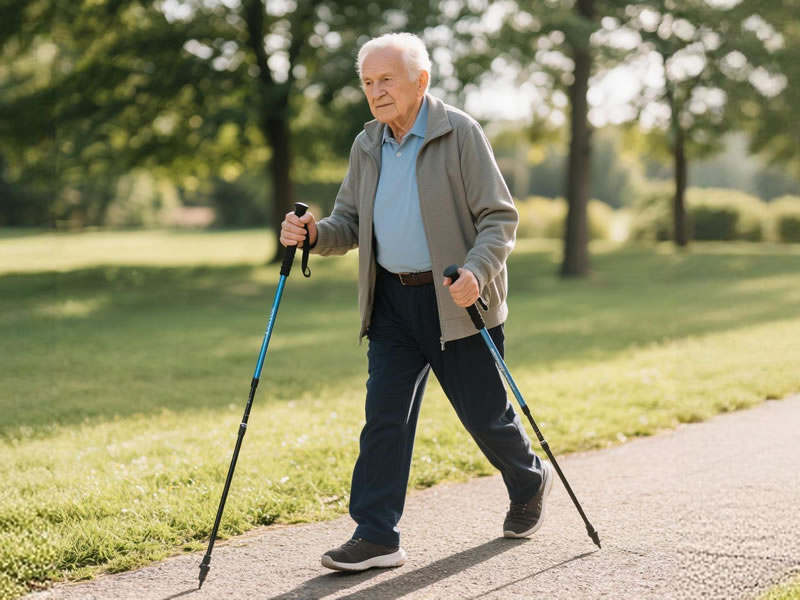
Recommended trekking pole purchase link: https://s.click.aliexpress.com/e/_c4M7OWaN
Understanding the Benefits: More Than Just Physical Support
Walking poles address several Parkinson's-specific challenges through interconnected mechanisms:
Gait Rhythm and Cueing:
One of the most valuable benefits for Parkinson's patients is the rhythmic auditory and tactile cueing provided by pole planting. The consistent "tap-tap-tap" of poles striking the ground creates an external rhythm that can help overcome the internal rhythm deficits characteristic of Parkinson's. This auditory cueing has been shown to:
- Improve step length and walking speed
- Reduce gait freezing episodes
- Enhance movement fluidity and coordination
- Decrease the likelihood of festination (involuntarily quick, short steps)
Balance and Stability Enhancement:
Postural instability significantly increases fall risk in Parkinson's patients. Walking poles create additional points of contact with the ground, effectively widening the base of support and providing:
- Improved stability during weight shifting
- Reduced body sway during standing and walking
- Greater confidence when navigating uneven surfaces
- Support during turns, which are particularly challenging for many patients
Cognitive and Motor Integration:
Using walking poles requires coordination between cognitive processing and motor execution, creating a form of dual-task training. This integration helps maintain neural pathways and may slow the progression of mobility challenges.
Scientific Evidence: What Research Reveals
Clinical studies specifically investigating pole use in Parkinson's populations demonstrate significant benefits:
- A 2018 study published in Neurorehabilitation and Neural Repair found that pole walking improved gait speed by 18% and stride length by 22% in Parkinson's patients
- Research in the Journal of Neurologic Physical Therapy demonstrated a 32% reduction in fall frequency among regular pole users with Parkinson's
- Multiple studies have shown that rhythmic auditory stimulation (provided by pole planting) is particularly effective for overcoming freezing of gait
- Long-term users often maintain improvements in mobility and report higher quality of life scores
Specialized Techniques for Parkinson's-Specific Challenges
Overcoming Freezing Episodes:
When experiencing gait freezing, focus on:
- Deliberately planting poles in a rhythmic pattern
- Using verbal cues like "left-right-left" synchronized with pole plants
- Creating visual targets with pole placements to step over
- Maintaining forward weight shift through the poles
Managing Turn Difficulties:
- Use a "step-to" turning pattern rather than pivoting
- Plant one pole as a pivot point during turns
- Take smaller, more deliberate steps when changing direction
- Practice turns in a safe environment before attempting them in community settings
Addressing Postural Instability:
- Maintain a slightly forward-leaning posture to counter backward leaning
- Use poles to create a forward weight bias during initiation of movement
- Practice controlled stopping using poles for gradual deceleration
- Focus on coordinated arm swings to counter reduced automatic arm movement
Optimal Equipment Selection
Safety-First Design Features:
- Wider Tips: Look for poles with broader bases or additional rubber "feet" for maximum stability
- Secure Locking Mechanisms: External lever locks are typically easier to operate for those with hand dexterity challenges
- Comfortable Grips: Ergonomically shaped grips reduce hand fatigue and accommodate potential rigidity
- Adjustable Length: Precise adjustment ensures optimal biomechanical positioning
Weight and Material Considerations:
- Aluminum Poles: Offer durability and reliability at a reasonable weight
- Carbon Fiber: Lighter weight reduces upper body fatigue but typically costs more
- Optimal Weight: Heavy enough to provide stability feedback but light enough to prevent arm fatigue
Developing a Progressive Training Program
Initial Phase (Weeks 1-2): Focus on Fundamentals
- Practice basic pole technique in safe, familiar environments
- Focus on developing consistent planting rhythm
- Build confidence with short, controlled walks
- Master getting up from chairs while using poles for support
Skill Development (Weeks 3-4): Introducing Challenges
- Practice turning and changing direction smoothly
- Incorporate simple balance exercises with pole support
- Gradually increase walking distance as confidence grows
- Introduce varied surfaces in controlled environments
Advanced Application (Weeks 5-6): Real-World Integration
- Navigate community environments with appropriate techniques
- Practice quick stops and obstacle avoidance
- Implement dual-task walking (such as talking while walking securely)
- Develop strategies for managing fatigue
Complementary Exercises and Strategies
Strength and Flexibility:
- Seated leg lifts while holding poles for support
- Mini-squats with pole assistance for balance
- Calf raises while lightly touching poles for stability
- Gentle upper body stretches using poles for support
Balance-Specific Training:
- Weight shifting between poles
- Single-leg stands with pole support
- Heel-to-toe walking with poles as safety backup
- Controlled reaching exercises while maintaining pole contact
Safety Considerations and Precautions
Medical Consultation:
Always consult with your neurologist and physical therapist before beginning any new exercise program. Specific considerations include:
- Current medication timing and its effect on mobility
- Individual balance capabilities and fall history
- Specific Parkinson's symptoms that might affect pole use
- Appropriate intensity and progression guidelines
Environmental Safety:
- Initially practice in controlled environments free of obstacles
- Ensure adequate lighting for optimal visual cueing
- Choose routes with resting spots if fatigue is a concern
- Avoid slippery or highly uneven surfaces until skills develop
Real User Experiences and Clinical Observations
Personal Success Story:
"After my Parkinson's diagnosis, I struggled with freezing episodes that made walking stressful. My physical therapist recommended walking poles, and the difference has been remarkable. The rhythmic tapping helps me maintain my pace, and I feel much more secure on my feet. I'm walking daily again, which has improved both my physical and mental health." - James R., diagnosed with Parkinson's 2016
Clinical Perspective:
"In my practice, I've seen walking poles significantly improve mobility and confidence for many Parkinson's patients. The combination of physical support and rhythmic cueing addresses two major challenges simultaneously. Patients who regularly use poles typically maintain better gait patterns and experience fewer falls." - Dr. Sarah Wilkins, Neurologic Physical Therapist
Long-Term Benefits and Disease Management
Regular pole use offers advantages beyond immediate mobility improvements:
- Maintenance of functional independence longer in the disease process
- Improved cardiovascular health through sustainable exercise
- Enhanced mood and reduced depression through increased activity
- Social engagement through community walking
- Potential slowing of mobility decline through consistent, appropriate exercise
Conclusion: A Valuable Tool in the Parkinson's Toolkit
Walking poles represent more than simple mobility aids for individuals with Parkinson's disease—they're versatile tools that address multiple symptoms simultaneously. By providing both physical support and neurological cueing, they can significantly improve gait patterns, reduce fall risk, and enhance overall quality of life. The psychological benefits of regained confidence and independence cannot be overstated.
While walking poles aren't a cure for Parkinson's, they're a practical, evidence-based intervention that can help maintain mobility and function throughout the disease journey. As with any new therapeutic approach, success depends on proper technique, appropriate equipment selection, and gradual progression under professional guidance.
If Parkinson's has been challenging your mobility and confidence, walking poles may offer the support you need to continue enjoying the activities you love. Take that first step with poles in hand, and discover how this simple tool can make a profound difference in your daily life with Parkinson's.




