




Proper Arm Motion with Walking Poles: Mastering the Art of Efficient Movement
The difference between simply carrying walking poles and actually using them effectively comes down to one crucial element: proper arm motion. Many hikers invest in quality equipment but never unlock its full potential because they haven't mastered the fundamental arm mechanics that transform walking from a lower-body activity into a true full-body workout. Correct arm motion doesn't just improve propulsion—it enhances stability, reduces joint stress, and can increase calorie burn by up to 40% compared to incorrect technique. This comprehensive guide will take you through the biomechanics of effective arm movement, helping you develop the fluid, efficient motion that separates casual pole carriers from skilled pole users.
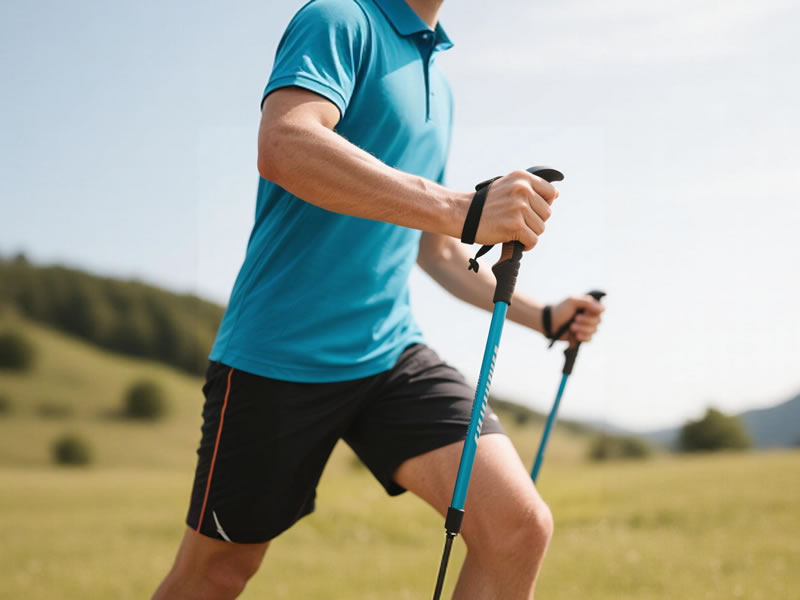
Recommended trekking pole purchase link: https://s.click.aliexpress.com/e/_c4M7OWaN
The Biomechanics of Efficient Arm Motion
Understanding the physics behind proper arm movement reveals why specific techniques work so effectively:
The Pendulum Principle:
Your arms are designed to swing naturally from your shoulder joints, not your elbows. This pendulum motion creates a rhythmic, energy-efficient movement pattern that mirrors your leg swing. When this natural motion is harnessed correctly with poles, it creates a biomechanically perfect system where forward momentum is generated with minimal conscious effort.
The 90-Degree Rule:
Research in sports biomechanics consistently shows that maintaining approximately 90 degrees of elbow flexion at pole plant position optimizes force transmission. This angle creates the ideal leverage for pushing backward while maintaining comfortable joint positioning that prevents strain.
Kinetic Chain Engagement:
Proper arm motion initiates a kinetic chain that engages multiple muscle groups sequentially:
- Shoulders initiate the forward swing
- Back muscles engage during the planting phase
- Triceps and chest muscles power the push-off
- Core muscles stabilize throughout the entire motion
The Four Phases of Correct Arm Motion
Phase 1: The Forward Swing (Recovery Phase)
As your opposite foot steps forward, your arm should swing naturally from the shoulder:
- Keep your elbow relatively close to your body
- Maintain a relaxed grip on the pole
- Allow the pole tip to trail naturally behind you
- Focus on a smooth, unhurried motion
Phase 2: The Pole Plant (Loading Phase)
The moment of contact is crucial for effective energy transfer:
- Plant the pole tip when your hand is approximately level with your opposite foot
- Aim for a position where the pole forms a 45-60 degree angle with the ground
- Make contact firmly but without jarring impact
- Keep your wrist straight and aligned with your forearm
Phase 3: The Power Push (Propulsion Phase)
This is where the real work happens:
- Push backward through the pole, not downward
- Engage your triceps and back muscles actively
- Extend your arm fully behind you
- Transfer power through the wrist strap rather than tight gripping
Phase 4: The Release and Return (Transition Phase)
Completing the motion properly sets up your next stride:
- Release pressure as your arm reaches full extension
- Allow your hand to open slightly at the back of the stroke
- Begin the forward swing smoothly without hesitation
- Maintain rhythm and continuity between phases
Common Arm Motion Mistakes and Their Solutions
The "Elbow-First" Error:
Many beginners lead with their elbows rather than their hands, creating a stiff, inefficient motion.
Correction: Focus on initiating movement from your shoulder joint while keeping your elbow relatively stable.
The "Over-Grip" Problem:
White-knuckling the grips creates tension that travels up to your shoulders and neck.
Correction: Practice the "open palm" drill where you consciously relax your grip between pole plants.
The "Short Stroke" Limitation:
Failing to complete the full range of motion reduces power and efficiency.
Correction: Consciously extend your arm fully behind you during the push phase, aiming for a straight arm position.
The "Asymmetrical Swing" Pattern:
Many people develop a stronger push on one side, leading to muscular imbalances.
Correction: Practice in front of a mirror or record yourself to identify and correct asymmetry.
Arm Motion Variations for Different Terrain
Uphill Technique Modifications:
- Shorten your arm swing slightly to maintain power on steep inclines
- Increase forward lean to maintain pole effectiveness
- Use more powerful, deliberate pushes to assist with elevation gain
- Focus on quick, powerful movements rather than long, sweeping motions
Downhill Technique Adjustments:
- Lengthen your arm reach to plant poles further ahead for stability
- Use poles more for balance and control than propulsion
- Moderate your push intensity to avoid accelerating downward momentum
- Keep elbows slightly more bent to absorb impact
Level Ground Optimization:
- Focus on long, smooth strokes with full extension
- Develop a consistent rhythm that matches your natural walking pace
- Use moderate pressure that maintains momentum without causing fatigue
- Concentrate on the contralateral pattern (opposite arm and leg)
Developing Proper Muscle Engagement
Shoulder Integration:
Your shoulders should initiate the swinging motion while remaining relaxed. Avoid the common mistake of hiking your shoulders toward your ears, which creates tension and reduces efficiency.
Back Muscle Activation:
Consciously engage your latissimus dorsi (the large back muscles) during the push phase. This not only provides more power but also helps maintain good posture.
Core Connection:
Your arm motion should originate from your core, not just your limbs. Practice engaging your abdominal muscles throughout the arm cycle to create a connected, full-body movement.
Training Exercises for Arm Motion Improvement
The Isolation Drill:
Practice arm motion while standing still to develop muscle memory:
- Stand with poles planted correctly
- Go through the four phases slowly and deliberately
- Focus on perfect form without the distraction of walking
- Repeat until the motion feels natural
The Rhythm Development Exercise:
Use a metronome app to establish consistent timing:
- Set a comfortable tempo that matches your natural walking pace
- Synchronize your pole plants with the beats
- Gradually increase tempo as your proficiency improves
- Focus on maintaining form at different speeds
The Range of Motion Challenge:
Consciously exaggerate your arm extension during training walks:
- Focus on reaching further forward during the plant phase
- Emphasize complete extension during the push-off
- Monitor for any discomfort that might indicate over-extension
- Integrate the improved range into your normal technique
Equipment Considerations for Optimal Arm Motion
Pole Length Impact:
Properly sized poles are essential for correct arm mechanics:
- Poles that are too long force overreach and shoulder strain
- Poles that are too short prevent full extension and power transfer
- The standard 90-degree elbow test provides a good starting point
- Consider slight adjustments based on your specific arm proportions
Strap Usage Mastery:
Correct strap use transforms arm efficiency:
- Slide your hand up through the strap from below
- Let the strap cradle your hand at the base of your thumb
- Transfer weight through the strap rather than your grip
- Adjust straps to fit snugly without restricting circulation
Progressive Skill Development Timeline
Weeks 1-2: Foundation Building
- Focus on basic arm rhythm and coordination
- Practice the four phases separately
- Develop awareness of your natural movement patterns
- Concentrate on relaxing unnecessary tension
Weeks 3-4: Integration and Refinement
- Combine arm motion with natural walking rhythm
- Work on smooth transitions between phases
- Increase distance while maintaining form focus
- Introduce minor terrain variations
Weeks 5-6: Advanced Application
- Maintain proper form under fatigue
- Adapt technique to challenging terrain
- Increase speed while preserving efficiency
- Develop the kinesthetic sense to self-correct
Measuring Progress and Effectiveness
Efficiency Indicators:
- Reduced perceived exertion at the same pace
- Increased walking distance before arm fatigue
- Smoother, more fluid movement appearance
- Consistent rhythm that feels automatic
Performance Metrics:
- Improved walking speed with equal effort
- Enhanced stability on uneven terrain
- Reduced muscle soreness after extended use
- Better posture throughout your walks
Conclusion: From Conscious Effort to Automatic Excellence
Mastering proper arm motion with walking poles represents the transition from using poles as simple accessories to integrating them as natural extensions of your body. The journey begins with conscious attention to individual components but ultimately leads to an automatic, fluid motion that enhances every aspect of your walking experience.
Remember that developing excellent arm technique requires patience and consistent practice. The rewards—reduced fatigue, increased efficiency, enhanced stability, and greater enjoyment—make the investment in learning proper form undoubtedly worthwhile. Your poles await; with the arm motion techniques outlined in this guide, you're equipped to transform your walking experience, one perfectly executed arm swing at a time.




