




Walking Pole Rhythm and Pacing: The Secret to Effortless Miles
Walking with poles can feel awkward at first, like trying to pat your head and rub your stomach simultaneously. However, moving beyond that initial clumsiness to discover your natural walking pole rhythm is the key to unlocking their true potential. This isn't just about using poles; it's about harmonizing with them to transform your walk or hike into a smoother, more efficient, and less taxing journey.
Recommended trekking pole purchase link: https://s.click.aliexpress.com/e/_c4M7OWaN
Mastering rhythm and pacing turns your poles from simple sticks into powerful tools for propulsion, stability, and endurance.
The Core Principle: The Opposite Arm-Leg Pattern
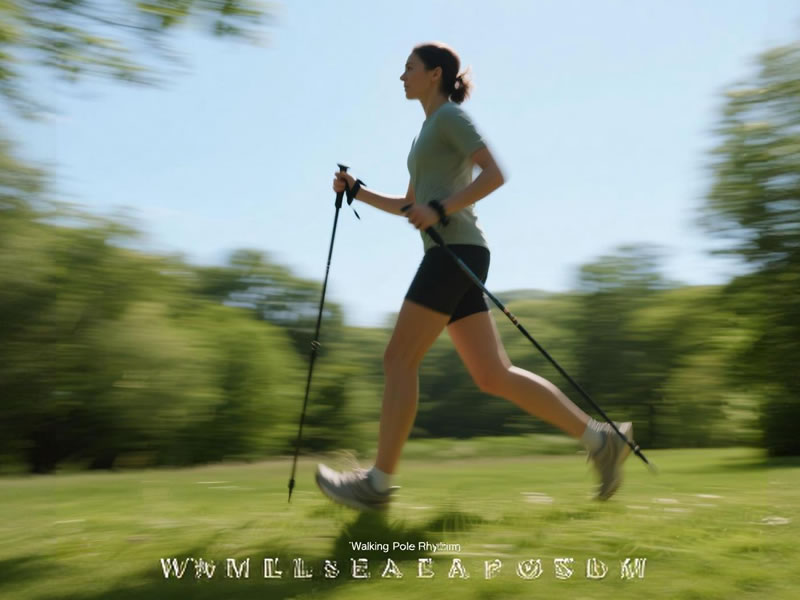
The foundation of proper pole rhythm is the natural gait your body already uses. It's called the opposite arm/leg movement or "diagonal stride." Simply put, your right arm (and pole) swings forward as your left foot steps down, and your left arm advances with your right foot.
Why is this so effective?
- Maintains Balance: This counter-balancing act is your body's innate way of maintaining stability while in motion. The poles simply extend and enhance this natural mechanism.
- Creates Propulsion: Planting the pole at the correct moment, just as the opposite foot strikes the ground, allows you to push yourself forward. This engages your back, shoulder, and arm muscles to share the workload with your legs, propelling you with less lower-body effort.
- Promotes a Smooth Cadence: This pattern establishes a consistent, metronome-like tempo, preventing the stuttering, irregular steps that lead to premature fatigue.
Finding Your Cadence: The Heartbeat of Your Hike
Your cadence, or steps per minute, is the heartbeat of your pacing. With poles, the goal is to find a cadence that feels sustainable and powerful.
- The "Tap-and-Go" Rhythm: Listen for the sound. A well-timed rhythm produces two pole plants for every two steps—a steady tap, tap, tap, tap. The pole should touch the ground lightly just as the opposite foot does.
- Pacing on Flat Ground: On level terrain, focus on a brisk, consistent pace. Your arm swing should be relaxed but purposeful, originating from the shoulder, not the elbow. The pole should plant at an angle behind your front foot, not in front of it, to maximize the push-off phase.
- Pacing on Inclines: Uphill, your rhythm will naturally slow, but your poles become even more critical. Shorten your grip on the poles if they are adjustable, and take smaller, more powerful steps. The rhythm becomes a driving push-push-push, helping you "climb" with your upper body and relieve strain on your quadriceps.
- Pacing on Declines: Downhill, the rhythm shifts to a protective, bracing cadence. Plant your poles ahead and down, establishing a secure point of contact before you step. This controls your descent, reduces impact on your knees, and prevents slipping. Your steps will be more deliberate and controlled.
Troubleshooting Your Rhythm
- Problem: Feeling Rushed or Jerky. Your poles are likely planting too far forward, acting as a brake rather than a propulsion aid. Focus on planting the pole level with your opposite foot or just behind it.
- Problem: The Poles Seem Useless. You might be just carrying the poles or "flicking" them without applying meaningful pressure. Consciously think about driving the pole into the ground and pushing down and back through the wrist strap to engage your larger muscle groups.
- Problem: Constantly Tangling with a Hiking Partner. This often happens when your natural cadences are out of sync. Don't try to match each other step-for-step. Instead, focus on maintaining your own steady rhythm, and the synchronicity will often follow.
The Payoff: Why a Good Rhythm is a Game-Changer
When your walking pole rhythm and pacing are in sync, the benefits are profound:
- Increased Endurance: By distributing the workload across 90% of your body's muscles, you dramatically delay the onset of fatigue in your legs.
- Improved Pace: The constant push-off power from your upper body helps you maintain a faster average speed with less perceived effort.
- Reduced Injury Risk: A steady rhythm promotes balanced movement, reducing the erratic, jarring steps that can lead to joint pain or soft-tissue injuries.
In conclusion, think of your walking poles not as accessories, but as extensions of your own body's rhythm. By focusing on the fundamental opposite arm/leg pattern and listening to the cadence of your steps, you will transition from simply using poles to moving with them. This synergy is where the true magic happens—transforming your hike into a longer, stronger, and more enjoyable journey.




