




How to Carry Walking Poles When Not in Use? A Guide to Safety and Convenience
Trekking poles are fantastic tools for stability, endurance, and joint protection. But what do you do when you hit a smooth, flat section of trail, need to scramble over rocks, or simply want your hands free for a snack? Knowing how to carry your walking poles efficiently when they're not in use is a small but crucial skill that enhances safety, convenience, and the longevity of your gear. An improperly carried pole can be a tripping hazard, a noise nuisance, or even get damaged.
Recommended trekking pole purchase link: https://s.click.aliexpress.com/e/_c4M7OWaN
This guide will walk you through the best methods, from the gold standard of backpack attachment to quick-and-easy hand-carries for short breaks.
The Gold Standard: Attaching Poles to Your Backpack
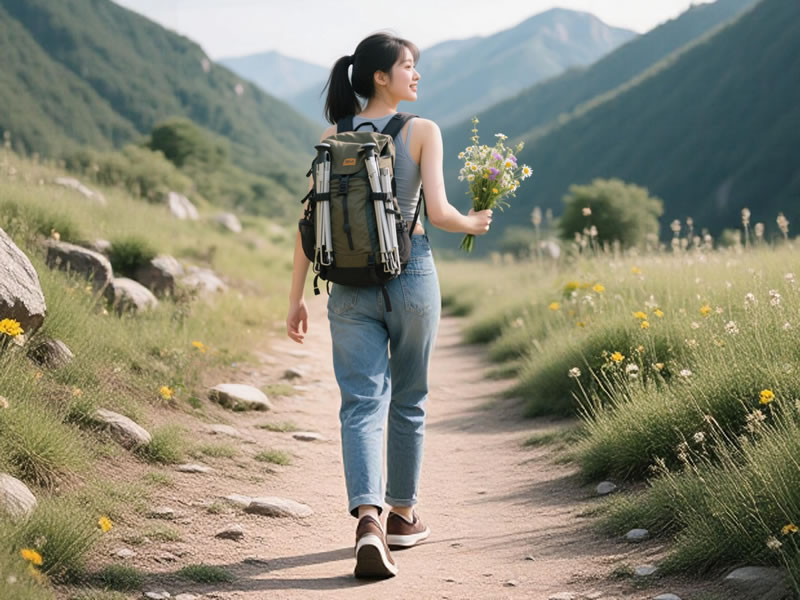
For any extended period of non-use, securely stowing your poles on your backpack is the safest and most comfortable method. Thankfully, most modern hiking packs are designed with this in mind.
Method 1: The Side Compression Strap Attachment (Most Common)
This is the go-to method for the majority of hikers.
- Collapse Your Poles: Shorten them to their smallest length to prevent them from swinging.
- Locate the Loops: Find the compression straps on the sides of your pack, usually with a plastic ladderlock buckle.
- Secure the Shaft: Slide the tip of the pole through the webbing loop near the bottom of the pack. Then, slide the shaft of the pole behind the main compression strap.
- Lock it in Place: Tighten the compression strap over the pole shaft. For extra security, wrap the strap around both poles if you're carrying a pair together.
- Mind the Tips: Ensure the sharp carbide tips are facing downward and are positioned safely away from the pack's fabric to prevent punctures. Many packs have a small rubber patch or grommet to protect against this.
Method 2: The Front-Loading / Ice Axe Loops
Some packs, especially those designed for mountaineering, feature dedicated loops at the bottom of the pack and a velcro or elastic retainer at the top.
- Thread the Tip: Place the pole tip (with the basket removed if large) up through the bottom loop.
- Secure the Shaft: Pull the pole up and snap the shaft into the keeper or wrap the velcro strap around it, just like you would with an ice axe.
- Pros and Cons: This method is incredibly secure and keeps the poles tight to your pack, but it can be less accessible for quick retrieval than the side-mount method.
Quick & Accessible Hand-Carry Techniques
For brief stops or sections where you might need your poles again imminently, carrying them in your hand is practical.
1. The "Forearm Loop" Method:
This is one of the most comfortable and secure hand-carry methods.
- Simply slip your hand up through the wrist strap and let the pole dangle from your forearm.
- This keeps your hand partially free to grab a water bottle or check a map while the poles remain attached to you and off the ground.
2. The "One-Handed Carry" or "Spear Grip":
- Hold both poles together in one hand, just below their grips, like you're holding a bundle of arrows.
- Let the tips drag slightly behind you (on non-paved surfaces) to balance the weight. This is effective but can be tiring for your wrist over long distances.
3. The "Diagonal Cross" Carry:
- Hold one pole in each hand as normal, but then cross them in front of you, forming an "X."
- This keeps them controlled and ready for immediate use, but it's not ideal for narrow, overgrown trails where the crossed poles can snag on vegetation.
What to Avoid: Common Carrying Mistakes
- Don't Drag Them by the Wrist Straps: This puts unnecessary wear on the straps and the pole tips.
- Avoid the "Over-the-Shoulder" Carry: While it might look cool, it's hazardous. The sharp tips are right at head-level for anyone walking behind you and can easily snag on tree branches.
- Don't Leave Them Extended: Always collapse your poles before attaching them to your pack. Extended poles can catch on branches and are more likely to snap under pressure.
A Note on Storage at Home
The principles of good care extend to your home. Don't just lean them in a corner where they can fall. Store them collapsed in a cool, dry place. You can hang them by their straps or keep them in a dedicated gear closet to protect the shafts and mechanisms from damage.
In conclusion, mastering a few simple carrying techniques will make your time on the trail smoother and safer. By securely stowing them on your pack for long stretches and using efficient hand-carries for short breaks, you ensure your poles are a help, not a hindrance, ready to be deployed the moment the terrain demands them.




