




Using One Pole vs Two Poles for Balance: A Hiker's Guide
For hikers and walkers looking to enhance their stability on the trail, the question often arises: is one pole enough, or should I always use two? While any pole is better than none, the choice between a single pole and a pair has significant implications for your balance, efficiency, and overall biomechanics. Understanding the distinct advantages of each approach will help you choose the right tool for your terrain and goals.
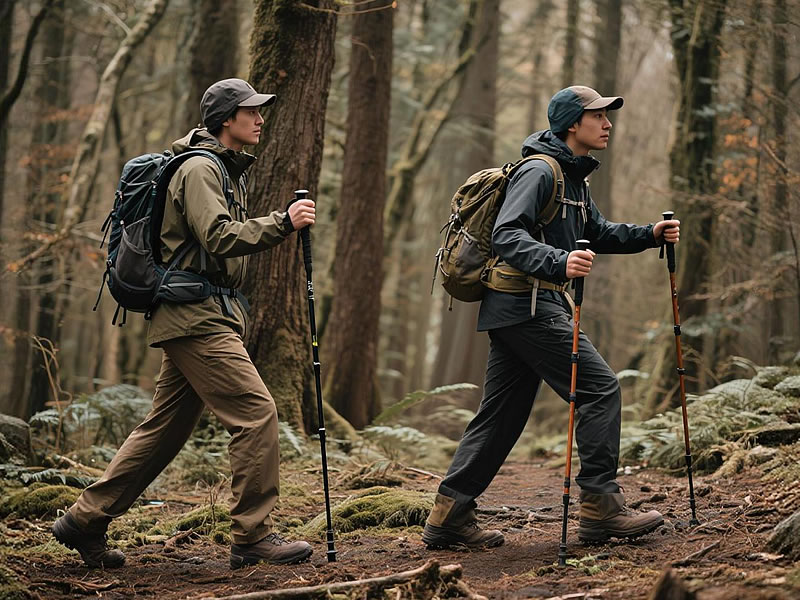
Recommended trekking pole purchase link: https://s.click.aliexpress.com/e/_c4M7OWaN
This isn't just a matter of personal preference; it's a decision that impacts your body's alignment and safety.
The Case for Two Poles: Unmatched Symmetry and Stability
Using two poles is the gold standard for a reason. It fundamentally transforms your biomechanics from a two-legged creature into a stable, four-pointed system.
- True Four-Point Balance: With two poles, you create a consistent, wide base of support. This "four-legged" gait is inherently more stable than a two-legged one, especially on uneven, rocky, or slippery terrain like loose scree or muddy paths. Each plant of a pole prevents a potential stumble, offering constant, alternating support.
- Biomechanical Efficiency and Rhythm: Two poles allow you to engage the natural "opposite arm/leg" rhythm (right pole with left foot, and vice versa). This rhythmic motion promotes a smooth, efficient cadence, reduces whole-body fatigue, and helps distribute the workload across your upper body, core, and legs. This is crucial for long distances or when carrying a heavy pack.
- Superior Joint Protection: The symmetry of two poles ensures that impact and strain are evenly distributed. When descending, you can transfer a significant amount of weight from your knees and ankles through your arms and onto the poles. With one pole, this protective effect is lopsided, leaving one side of your body to bear more of the burden.
- Power on Ascents: On steep climbs, two poles act as extensions of your arms, allowing you to "pull" yourself uphill with your upper body. This engages your latissimus dorsi, pectoral, and triceps muscles, providing a powerful boost that one pole cannot match.
The Niche for One Pole: Convenience and Basic Aid
While two poles are superior for pure performance, a single pole has its place and can be the perfect tool for specific scenarios.
- A Free Hand: This is the single biggest advantage. A solitary pole leaves one hand available for other tasks—checking a map or GPS, taking a photo, holding your dog's leash, or grabbing a quick snack without stopping. This makes it popular for more casual walks or on well-maintained trails where maximum stability isn't a constant concern.
- Simplified Maneuvering: Some hikers find one pole less mentally taxing to manage, especially in lightly technical terrain where they might need to quickly grab a rock or tree branch. It provides a "third leg" for occasional support without the commitment of a full rhythmic technique.
- Lightweight Approach: For those who only want occasional reassurance, carrying a single pole is lighter and less cumbersome than a pair when not in use.
The Critical Drawback of a Single Pole: Asymmetry
The primary issue with using one pole is the introduction of asymmetry into your gait. This can lead to several unintended consequences:
- Muscular Imbalance: You will naturally rely more on the side with the pole, leading to uneven muscle engagement. Over a long hike or many repeated trips, this can contribute to muscle tightness or imbalances in your shoulders, back, and hips.
- Inefficient Gait: It disrupts the natural counter-swing of your arms. To compensate, your body may adopt a slightly irregular, less efficient walking pattern, which can increase energy expenditure over time compared to the smooth rhythm of two poles.
- Uneven Joint Loading: The knee and hip on the side without the pole will consistently absorb more impact, particularly on descents. For individuals with pre-existing joint issues on one side, this could exacerbate the problem.
Making the Right Choice for Your Hike
So, when should you choose one over the other? Here’s a simple guide:
- Choose TWO Poles for:Technical, uneven, or slippery terrain.Long-distance hiking with a heavy backpack.Managing pre-existing knee, hip, or ankle issues.Seeking a full-body workout and maximum endurance.River crossings (where two poles are essential for a stable "tripod").
- A SINGLE Pole may suffice for:Gentle, well-groomed trails.Short, casual walks where having a free hand is a priority.Hikers who need only occasional point-of-contact support.
In conclusion, while a single pole offers convenience and basic aid, two poles provide a scientifically superior solution for balance, joint protection, and efficient power. For any serious or prolonged hiking on challenging terrain, investing in a pair is an investment in your stability, safety, and long-term physical health. Consider your primary activities: if your goal is ultimate performance and protection, go with two. If your needs are more casual and a free hand is non-negotiable, one pole can be a useful companion.




