




Walking Poles for Bird Watchers: Your Unlikely Tool for Steadier Sightings
For the dedicated bird watcher, the quest is a symphony of patience, silence, and sudden, thrilling action. It involves traversing uneven wetlands, standing motionless in dense forests, and holding heavy optics rock-steady for that perfect glimpse. While binoculars and a field guide are essentials, there's an underrated tool that can profoundly enhance the entire experience: a trusty pair of walking poles.
Recommended trekking pole purchase link: https://s.click.aliexpress.com/e/_c4M7OWaN
Often overlooked in the birder's kit, walking poles are far more than just mobility aids; they are multifaceted tools that directly contribute to success, comfort, and endurance in the field.
Beyond the Trail: Key Benefits for Birders
The advantages of using walking poles extend well beyond simply helping you navigate a path.
- Silent Approach and Stable Footing: Birding often leads you off-trail into muddy, slippery, or uneven terrain. Poles provide two additional points of contact, dramatically improving your balance on unstable ground. This allows you to move more slowly and quietly, preventing slips and rustling that could flush out your quarry. The rhythmic, quiet tap of poles can even become part of your natural soundscape, less disruptive than heavy, uncertain footsteps.
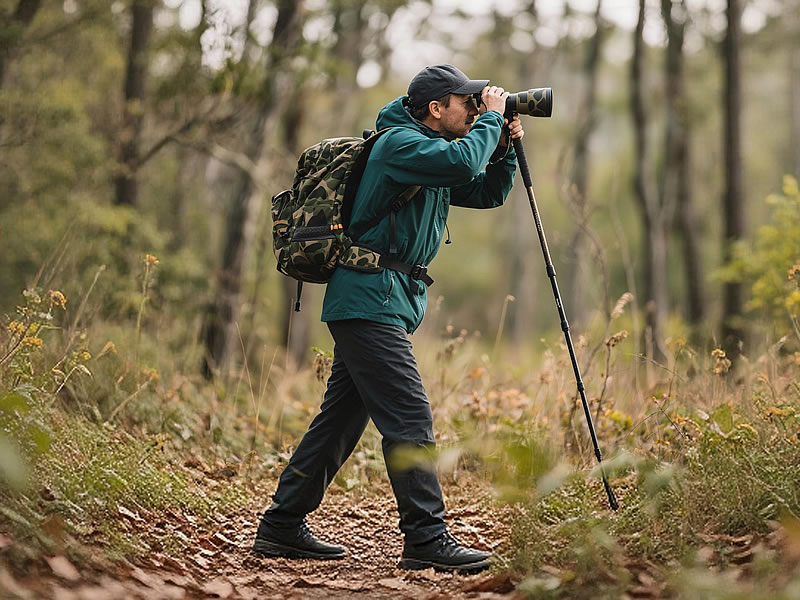
- The Ultimate Monopod Hack: This is the game-changer. Many high-quality walking poles feature a standard 1/4-20 camera thread hidden under the handle. With a simple twist, you can screw a compact adapter (often included) directly onto the pole and attach your spotting scope, camera with a telephoto lens, or even heavy binoculars.Eliminate Shake: Instantly, your walking pole becomes a sturdy monopod. This provides crucial stability, eliminating arm fatigue and hand tremors that lead to blurry images and shaky views. It’s the perfect compromise between hand-holding and carrying a bulky tripod.Capture the Moment: For digiscopers and photographers, this means being able to take sharper, clearer photos in lower light conditions without the weight penalty of a full tripod setup.
- Endurance for Long Days in the Field: A successful birding day can mean miles of walking and hours of standing. Walking poles engage your upper body, back, and core muscles, distributing the physical effort across your body. This reduces fatigue in your legs and back, allowing you to stay focused and comfortable for longer periods. The propulsion they provide on inclines also helps you conserve energy.
- A Tool for Observation and Safety: A pole can be gently used to part dense foliage for a better view, rather than reaching in with your hands. It can also serve as a prudent tool for checking the stability of a stream bank or gently probing the depth of a puddle before you step in.
What to Look for in a "Birding Pole"
Not all poles are created equal. When selecting poles for birding, prioritize these features:
- Monopod Capability: This is non-negotiable. Ensure the model you choose has a built-in camera thread. Brands like Leki and Black Diamond often include this on their higher-end models.
- Locking Mechanism: Flick Locks Preferred: Lever-style flick locks allow for quick, secure, and easy adjustments with cold or wet hands. This is vital when you need to rapidly adjust the height from a walking position to a stable monopod stance.
- Material: Lightweight Carbon Fiber: Carbon fiber poles are lighter than aluminum, reducing arm fatigue during long carries. More importantly, carbon fiber has superior vibration-dampening properties, which means less shake is transmitted to your optics when the pole is used as a monopod.
- Compact and Packable: Look for poles that collapse down to a short length (around 15-16 inches). This makes them easy to strap to your pack when you’ve reached your blind or observation point and need your hands completely free.
- Cork Grips: Cork handles are excellent for moisture management, wicking away sweat during long, patient waits in humid conditions.
Technique: Integrating Poles into Your Routine
The transition is simple. Use the poles with a natural, opposite arm/leg rhythm as you walk to your location. When you stop to observe or set up a shot:
- Adjust the pole to a length where the top is at or slightly below eye level when planted vertically.
- Screw in your optics.
- Plant the pole firmly, lean into it slightly, and create a stable "tripod" with your two legs and the pole.
- Use a slow, controlled breathing technique to further stabilize your view.
In conclusion, walking poles for bird watchers are a strategic upgrade, not just a walking aid. They bridge the gap between mobility and observation, providing the stability needed for crystal-clear sightings and the endurance required for all-day adventures. By choosing a pole with integrated monopod functionality, you are investing in a tool that will support both your journey into the wild and the quality of your connection with the avian world.




