




Walking Poles for Countryside Rambles: Enhancing Your Connection to the Landscape
The image of a countryside ramble is one of pastoral bliss: rolling hills, quiet lanes, and public footpaths winding through fields and woodlands. It's a pursuit of gentle exercise and mental rejuvenation. While such terrain may not demand the technical gear of a mountain expedition, incorporating a simple pair of walking poles can profoundly transform the experience from a pleasant stroll into a more comfortable, engaging, and deeply connected journey.
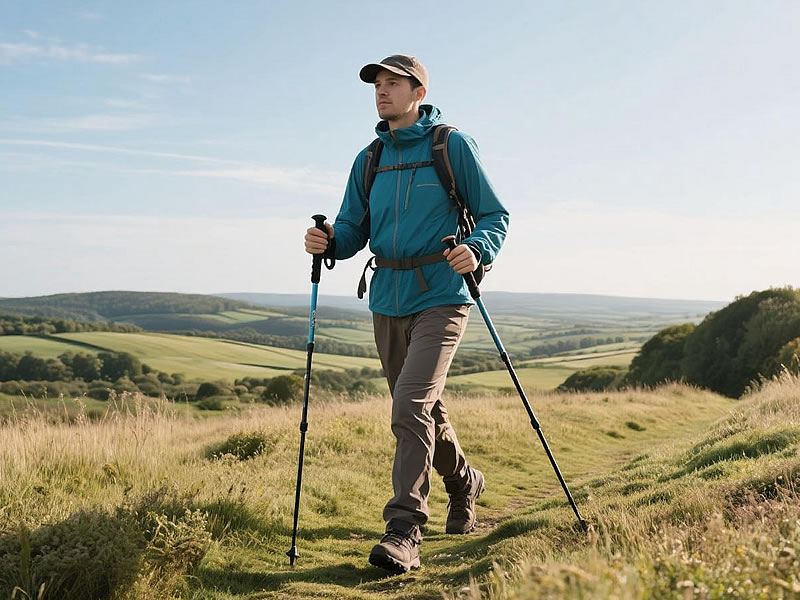
Recommended trekking pole purchase link: https://s.click.aliexpress.com/e/_c4M7OWaN
Walking poles for the rambler are not about survival; they are about refinement. They are the tool that allows you to walk further, see more, and feel better at the end of the day.
The Understated Benefits of Poles on Gentle Terrain
One might question the need for poles on a "simple" walk. Their value, however, becomes immediately apparent across the classic elements of the British and European countryside.
- Joint Preservation on Hard-Packed Paths: While not steep, miles of walking on hard-packed farm tracks, country lanes, or even well-trodden field paths send a constant, jarring impact through your ankles, knees, and hips. Poles act as shock absorbers, transferring a portion of this impact to your arms and shoulders. This significantly reduces cumulative joint stress, making a 10-mile ramble feel more like a 6-mile one and leaving you feeling spry for the next day's adventure.
- Confidence on Uneven and Slippery Ground: The charm of the countryside lies in its unpredictability. A single footpath can transition from a grassy field to a muddy gateway, a slick stile, a rocky stream crossing, or a dew-soaked meadow. Poles provide two additional points of contact, offering instant stability and confidence. They prevent slips in mud, provide balance on stepping stones, and ensure surefootedness on steep, grassy banks where a twisted ankle is a real risk.
- Rhythm, Pace, and Full-Body Engagement: Poles introduce a metronomic rhythm to your walk. The natural opposite arm/leg motion encourages a steady, efficient pace that can help you cover ground with less perceived effort. This rhythm is meditative, connecting your breath and movement to the landscape. Furthermore, it turns your ramble into a gentle full-body workout, engaging your core, back, and arms, which helps improve posture and prevent the slouching that can come from hours of walking.
- A Tool for Interaction and Navigation: A pole is more than a support; it's an interactive tool. Use it to gently part chest-high nettles or bracken, test the depth of a puddle, or tap a muddy section before committing your boot. For those following paper maps or a phone, the added stability is invaluable when you stop to check your bearings, providing a steady platform to stand and consult your route.
Choosing the Right Pole for the Rambler
For countryside rambles, the ideal pole prioritizes simplicity, comfort, and packability over heavy-duty mountaineering features.
- Weight and Packability: Since you'll be carrying them often between sections of road-walking or when navigating narrow stiles, lightweight poles are key. Collapsible Z-poles or compact three-section telescopic poles are perfect, as they can be swiftly shortened or stowed in your rucksack when not needed.
- Locking Mechanism: Flick locks (lever locks) are highly recommended. They are easy to operate with cold hands, less prone to jamming with dirt, and provide a secure, visible lock. Twist locks can be sufficient but may slip over time.
- Grip and Strap: Cork grips are a superb choice. They naturally wick away moisture and mould to your hand for superior comfort. A well-designed wrist strap is essential for efficient use, allowing you to push down through the strap without gripping the pole tightly, thus reducing hand fatigue.
- Tips: A durable carbide tip provides excellent grip on a variety of surfaces. Interchangeable rubber feet (often included) are perfect for providing quiet, non-slip traction on paved lanes and rocky paths, protecting both the tip and the surface.
Mastering the Rambler's Rhythm
The technique for countryside walking is one of relaxed efficiency. Focus on a natural arm swing, planting the pole opposite your forward foot. The tip should land level with or just behind your other foot, providing a gentle push-off that propels you forward. The motion should feel fluid and integrated, not forced. On gentle ascents, a slightly more deliberate push will help power you up the slope; on descents, planting the pole ahead will help control your pace and save your knees.
In conclusion, walking poles for countryside rambles are an investment in pure enjoyment. They are not a sign of infirmity but a mark of a savvy walker who understands biomechanics and values comfort. By reducing physical strain, increasing stability, and adding a layer of rhythmic engagement, they free you to fully immerse yourself in the sights and sounds of the landscape. You'll notice more birdsong, admire more views, and finish your walk feeling invigorated rather than exhausted. In the timeless pursuit of the perfect ramble, they are, quite simply, a game-changer.




