




Can Walking Poles Be Used as a Monopod?
For photographers who hike, every ounce in the backpack counts. The desire to capture stunning landscapes and fleeting wildlife moments often conflicts with the physical burden of carrying specialized gear. This leads many to ask a compelling question: can the trekking poles they're already using for stability double as a monopod for their camera? The answer is a resounding yes, but with important caveats that distinguish this solution from a dedicated professional tool.
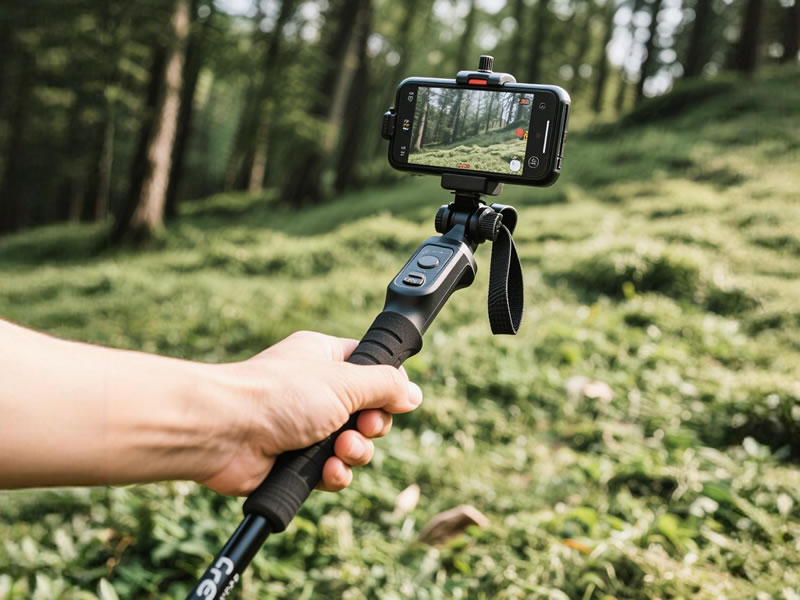
Recommended trekking pole purchase link: https://s.click.aliexpress.com/e/_c4M7OWaN
The Hidden Feature in Your Palm
Many modern, quality trekking poles are designed with this dual purpose in mind. The key lies hidden beneath the hand strap. Unscrew or pop off the cap on the top of the handle, and you will often find a standard 1/4"-20 tripod thread embedded within. This is the exact same thread used on virtually all cameras, tripods, and monopods, opening up a world of possibilities.
How to Convert Your Trekking Pole into a Monopod
The process is straightforward:
- Prepare the Pole: Remove the hand strap and take off the top cap to reveal the thread.
- Extend for Stability: Fully extend all sections of the pole to create a stable, single leg. Ensure the locks are fully tightened to prevent any slippage under the weight of your camera.
- Attach Your Camera: Screw your camera directly onto the thread. For heavier lenses, it's crucial to attach the plate to the lens's tripod collar, not the camera body, to maintain balance and avoid damaging the camera's mount.
The "Pros": Why This is a Genius Solution for Hikers
The advantages of this multi-use approach are significant for the weight-conscious adventurer:
- Weight and Space Savings: It eliminates the need to carry a separate monopod, saving precious pounds and space in your pack. This is the core benefit for long-distance backpackers and alpine climbers.
- Always Available: Your "monopod" is already in your hand. When a photographic opportunity arises suddenly, you can transition from hiker to photographer in seconds without digging through your backpack.
- Improved Sharpness over Handheld: While not as stable as a tripod, a monopod setup provides a significant improvement over shooting completely handheld. It effectively eliminates vertical camera shake, allowing for sharper images at slower shutter speeds, especially with telephoto lenses.
- Versatility in the Field: Beyond static shots, it's excellent for panning shots of moving subjects, such as wildlife or flowing water, providing a stable vertical axis.
The "Cons": Understanding the Limitations
It's crucial to manage expectations. A trekking pole is a makeshift monopod and has several limitations compared to a dedicated model:
- Compromised Stability: Dedicated monopods are designed with specific damping materials and often have larger, more secure feet. Trekking poles are lighter and can transmit more vibration. They are also more susceptible to wind movement.
- Limited Height and Adjustment: A trekking pole's height is fixed once extended, lacking the fine-tuning capabilities of a real monopod. You cannot make small height adjustments without altering the pole's sections.
- Weight Capacity Concerns: While fine for mirrorless cameras and smaller DSLRs, trekking poles may not be rated to safely support the immense weight of a large telephoto lens and professional DSLR body. Always err on the side of caution.
- Durability and Risk: Using your primary stability tool as a camera stand puts extra stress on the locks and joints. There is also an inherent risk of your expensive camera being attached to a less stable platform.
Pro Tips for Success
To get the best results from this technique, employ these strategies:
- Create a "Human Tripod": For maximum stability, lean slightly into the pole, press it firmly against your chest or into the ground, and keep your legs slightly apart. Use your own body as the second and third legs of support.
- Use a Timer or Remote Shutter: Even the act of pressing the shutter button can introduce shake. Using a 2-second timer or a wireless remote shutter release ensures the sharpest possible image.
- Angle the Pole: Instead of holding it perfectly vertical, angle the pole slightly towards you. This creates a more stable, braced position.
In conclusion, using a trekking pole as a monopod is a brilliant, practical hack for the amateur photographer and hiker. It perfectly embodies the multi-use gear philosophy that is central to lightweight adventuring. For professional assignments or when using very heavy gear, a dedicated monopod is still the superior tool. But for capturing memorable, sharp photos on the trail without the extra weight, your walking pole is a capable and always-ready companion.




