




Do Walking Poles Conduct Electricity in Lightning?
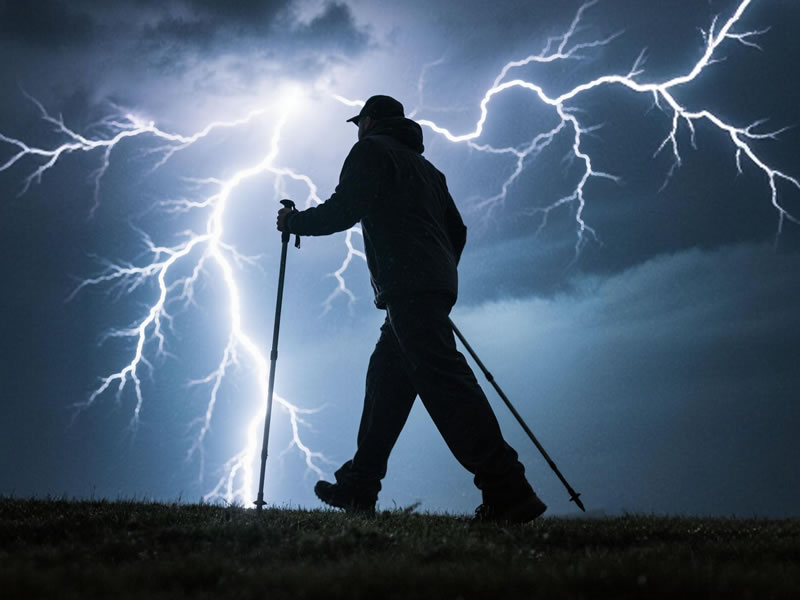
This is a critical safety question for any hiker or outdoor enthusiast, and the answer is unequivocal: Yes, walking poles are excellent conductors of electricity and pose a significant danger during a lightning storm. Understanding the risks and knowing how to react can be a life-saving piece of outdoor knowledge.
Recommended trekking pole purchase link: https://s.click.aliexpress.com/e/_c4M7OWaN
The Science Behind the Conductivity
The materials used in most high-quality walking poles are inherently conductive:
- Aluminum Poles: This is the most common material for trekking poles. Aluminum is a metal and an excellent conductor of electricity. A lightning strike would travel effortlessly up the shaft.
- Carbon Fiber Poles: A common misconception is that carbon fiber is safe because it's a "composite." However, carbon fiber is also highly conductive. While its electrical properties differ from pure metal, it readily conducts electricity and offers no protection from a lightning strike.
- Other Components: Even if a pole had a non-conductive shaft (e.g., wood, which is rare in modern poles), the metal tips, locking mechanisms, and internal components would still create a conductive path.
In a lightning strike, the current is seeking the path of least resistance to the ground. A metal or carbon pole in your hands effectively makes you a taller, more attractive target for that immense electrical charge.
Your #1 Priority: Immediate Action in a Storm
If you hear thunder or see lightning, your goal is to make yourself as small a target as possible and minimize your contact with the ground and conductive objects. Your poles are a key part of this equation.
- Stop Using Them Immediately: The moment you recognize a thunderstorm is approaching, cease using your poles. Holding them upright makes you taller and increases the risk of a direct strike.
- Distance Yourself from Your Poles: Do not just lay them at your feet. You need to get away from them. Move at least 100 feet (30 meters) away from your poles and any other metal gear (e.g., frame packs, trekking poles, crampons). A lightning strike to the ground can travel through the soil and jump to nearby objects—including you.
- Assume the Lightning Safety Position: Once you have distanced yourself from your gear, find the safest possible location. Avoid open fields, isolated trees, ridges, and bodies of water. Seek lower ground, such as a valley or a dense group of uniformly small trees. Crouch down on the balls of your feet, keeping your feet close together. Put your hands on your head and your elbows on your knees. This minimizes your contact with the ground and your profile.
Debunking a Common Myth
Some may wonder if placing the poles flat on the ground beside them is safe. It is not. While not as dangerous as holding them upright, they are still conductive objects within a "strike zone." The only safe practice is to separate yourself from them completely.
Prevention is the Best Strategy
Always check the weather forecast before heading out. Be prepared to alter your plans, especially if thunderstorms are predicted. If you are on a high ridge or in an exposed area and see storms building, descend early. Do not wait for the storm to be upon you.
In conclusion, your trekking poles are vital tools for stability and safety in most conditions, but in a lightning storm, they transform into a serious liability. Recognizing them as the conductors they are and knowing to quickly distance yourself from them is a non-negotiable part of wilderness safety. Your life is worth far more than the cost of a pair of poles.




