




Walking Poles for Sandy Beach Walking: Conquer the Soft Stuff with Confidence
A long walk on the beach is a quintessential pleasure, but the soft, shifting sand can be surprisingly challenging, turning a leisurely stroll into a leg-burning workout. This is where walking poles, often associated with mountain trails, become an unexpected game-changer. When configured correctly, they transform your beach experience, providing the stability and support needed to enjoy the coastline in comfort and safety.
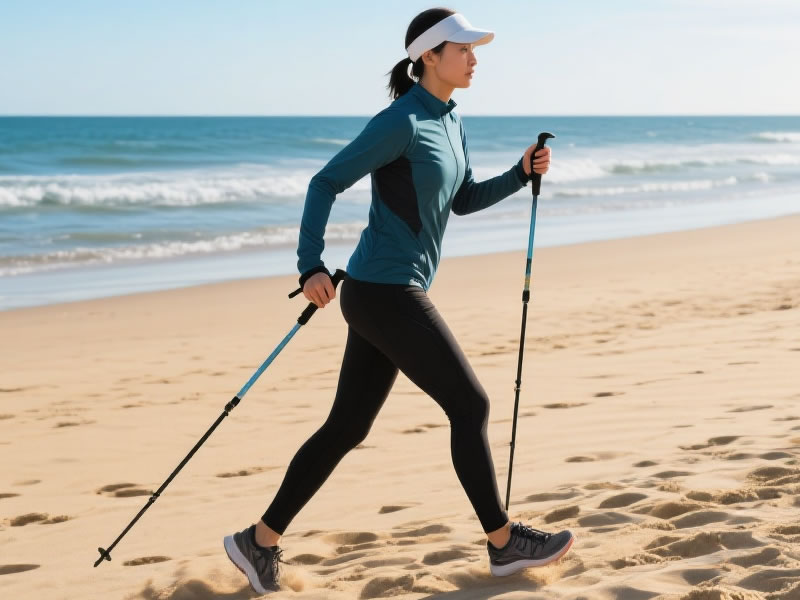
Recommended trekking pole purchase link: https://s.click.aliexpress.com/e/_c4M7OWaN
Why You Need Poles on the Beach
The primary challenge of sandy terrain is its instability. With each step, your foot sinks and shifts, forcing your muscles to constantly micro-adjust. This leads to rapid fatigue in your calves, ankles, and knees. Walking poles directly counter this by:
- Providing Two Extra Points of Contact: They create a stable tripod base, significantly improving your balance on the uneven, giving surface.
- Reducing Lower Body Strain: By engaging your arms and shoulders, poles distribute the physical effort across your body. This takes pressure off your legs, allowing you to walk farther with less fatigue.
- Aiding on Slopes: Navigating the steep, soft incline of a dune becomes a much more manageable task with the pulling power and stability of poles.
The Essential Accessory: Sand Baskets
Attempting to use standard poles on a beach is an exercise in frustration. The small tips will plunge deep into the sand with every step, becoming useless anchors. The absolute non-negotiable accessory for beach walking is a set of sand baskets (sometimes called "mud baskets" or "sand feet").
- How They Work: These are wide, typically solid or heavily webbed plastic discs, usually 4-6 inches in diameter, that attach to the pole shaft just above the tip. They function like snowshoes, distributing your downward force over a larger surface area. This creates "flotation," preventing the pole from sinking more than an inch or two and providing a solid, reliable platform to push off from.
- Installation: They are simple to install, sliding over the tip and securing against the shaft, often replacing the existing small trekking basket.
Mastering the Technique for Sand
Using poles effectively on sand requires a slight adjustment to your technique:
- Plant Deliberately, Not Forcefully: Avoid a sharp, stabbing motion. Instead, use a slow, smooth, and deliberate planting action. Gently place the basket on the sand, allowing it to settle before transferring your weight onto it.
- Use a Shallow Angle: Planting your pole at a slightly shallower, more forward angle can help the basket engage the sand more effectively and provide better forward propulsion.
- Seek Firm Ground: When possible, walk on the wet, compacted sand near the water's edge. The firmer surface requires less effort from both your legs and your poles, giving you a break. Use your poles most actively when traversing the soft, dry sand above the tide line.
Additional Beach-Specific Tips
- Care and Maintenance: Salt water and sand are highly corrosive and abrasive. After your walk, rinse your poles (especially the locks and tips) thoroughly with fresh water to remove all salt and sand particles. This simple step will greatly extend their lifespan.
- Adjustable Length: Telescopic poles are ideal, allowing you to adjust the length for different sections of the beach or for packing away easily.
Equipped with the right baskets and the proper technique, your walking poles will unlock a new level of beach walking enjoyment. They provide the stability to navigate tide-washed rocks, the power to climb towering dunes, and the endurance to explore miles of pristine shoreline without the associated ache.




