




How to Dry Wet Walking Poles Quickly and Safely
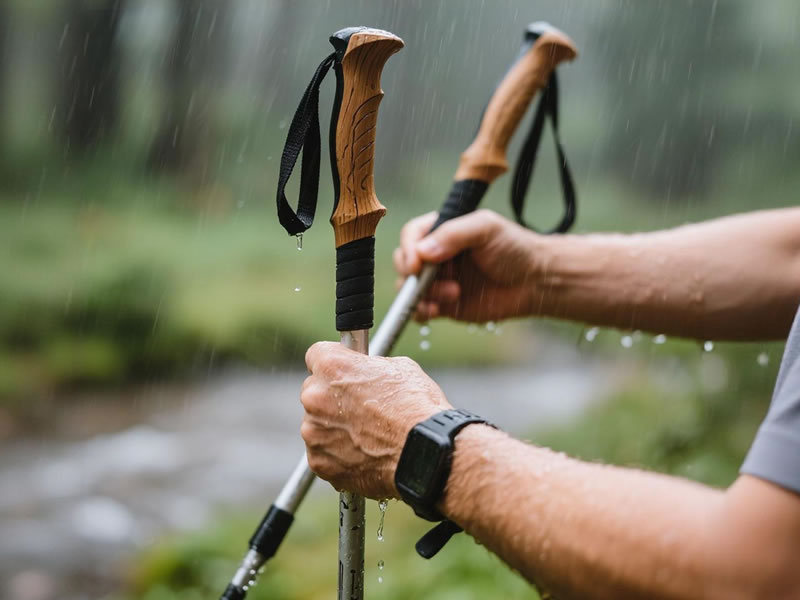
Returning from a wet hike with soggy gear is a common experience, but how you handle your walking poles afterward is crucial for their longevity. Wet poles, if stored improperly, are susceptible to corrosion, internal mold, and locking mechanism failure. While "quickly" is the goal, it must be balanced with "thoroughly" to prevent permanent damage. Here is a comprehensive guide to efficiently dry your poles and ensure they are ready for your next adventure.
Recommended trekking pole purchase link: https://s.click.aliexpress.com/e/_c4M7OWaN
Step 1: The Immediate Post-Hike Takedown
Speed is of the essence. Don't toss your wet poles in the trunk and forget about them.
- Rinse (If Necessary): If your poles have been exposed to saltwater, mud, or sand, the first step is a quick rinse with fresh, clean water. This prevents corrosive elements from eating away at the metal.
- Fully Extend and Disassemble: Extend all sections of your poles to their maximum length. If your model allows it, fully separate the shaft sections. This is the single most important step, as it exposes the interior of the shafts and the internal parts of the locking mechanisms to air.
- Remove All Accessories: Take off the baskets, rubber tips, and any straps. These items can trap moisture against the shaft.
Step 2: The Active Drying Process
Now, move from passive waiting to active drying.
- Thorough Hand-Drying: Use a highly absorbent microfiber towel to vigorously dry the entire pole. Pay meticulous attention to the locking mechanisms. For lever locks, open the lever and dry inside the clasp and the contacted area of the shaft. For twist locks, wipe the exposed threads and collar. This removes the bulk of the surface water.
- The "Airflow is Key" Principle: Lay the disassembled poles horizontally across two chairs, or lean them upright in a way that air can circulate around them. Position them near a gentle air current, such as from a ceiling fan or a cool, dry breeze from an open window. Avoid placing them in a closed, damp closet or garage.
- The Strategic Use of Heat:DO: Use a common hair dryer on its cool or low heat setting. Hold it at a reasonable distance and move it along the shaft, focusing on the lock areas. The goal is to move air, not to bake the poles.DON'T: Never place poles next to a radiator, fireplace, or space heater. Intense, direct heat can damage the structural integrity of aluminum and carbon fiber, weaken the epoxy in carbon poles, and warp plastic components in the locks and grips.
Step 3: Addressing Stubborn Internal Moisture
Sometimes, water gets trapped deep inside the shafts. You'll know if you hear a sloshing sound.
- The "Sling" Technique: This is the fastest and most effective method. Ensure the locking mechanism is fully released. Hold the pole at its center and swiftly swing it down in a controlled arc, like you're throwing a softball pitch towards the ground. The centrifugal force will push the water droplets down and out of the shaft. Always do this in a safe, open area.
Step 4: Final Checks and Proper Storage
Before you consider the job done, perform these final checks:
- Feel for Dampness: Run your hand along the inside of the shaft. If it feels cool or damp, it needs more time.
- The Storage Rule: Never, ever store your poles while they are collapsed and wet. This creates a sealed, moist environment that is a breeding ground for corrosion and mildew, inevitably leading to frozen or seized locks.
By following this systematic approach—disassembly, active drying, and moisture removal—you can drastically reduce drying time. More importantly, you are practicing essential preventative maintenance that will protect your investment and ensure your poles provide reliable support for countless miles to come.




