




How Are Carbon Fiber Walking Poles Manufactured?
Carbon fiber walking poles are renowned for their exceptional strength-to-weight ratio and vibration-dampening properties, making them a favorite among weight-conscious and long-distance hikers. But how are these high-tech tools transformed from raw filaments into the resilient poles we trust on the trail? The manufacturing process is a fascinating blend of material science and precision engineering.
Recommended trekking pole purchase link: https://s.click.aliexpress.com/e/_c4M7OWaN
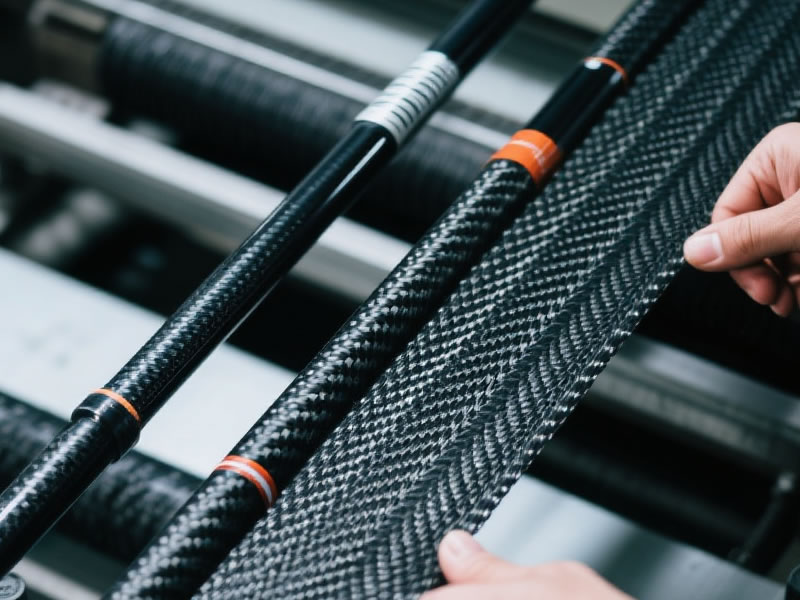
The journey begins with the raw material: carbon fiber. This starts as a polymer called polyacrylonitrile (PAN), which is processed through high-temperature treatments in an oxygen-free environment, a method known as pyrolysis. This complex procedure drives off non-carbon atoms, resulting in thin, strong strands of nearly pure carbon, each about 5-10 micrometers in diameter—thinner than a human hair. These strands are then bundled together into "tows" or "rows" and woven into sheets of fabric.
The magic of carbon fiber lies in the combination of these fibers with a plastic resin. The most common method for creating trekking pole shafts uses pre-preg (pre-impregnated) carbon fiber. In this process, the woven sheets are impregnated with a precise amount of a partially cured thermoset epoxy resin. This pre-preg material is then refrigerated to prevent it from hardening until it's ready for use.
The actual formation of the pole shaft typically involves one of two primary methods:
- Roll Wrapping: In this common and cost-effective method, sheets of pre-preg carbon fiber are cut into specific shapes and precisely rolled around a polished, cylindrical steel mandrel. The angle of the weave is critical, as it determines the pole's strength and flexibility. A 45-degree angle, for instance, provides excellent torsional stability. This layered tube is then overwrapped with a cellophane-like film to compress the layers.
- Compression Molding: For higher-end poles, the cut pre-preg sheets are placed into a two-part, heated female mold. A solid core is then inserted, and the mold is closed under high pressure and temperature. This method creates poles with more consistent wall thickness and can produce more complex, tapered shapes.
The next critical stage is curing. The rolled or molded pole is placed in an oven or autoclave (a high-pressure oven), where the heat triggers a chemical reaction in the resin, causing it to harden permanently. The temperature and pressure are meticulously controlled to ensure optimal strength and eliminate voids or air bubbles.
Once cured and cooled, the solid carbon fiber tube is removed from the mandrel or mold. It is then precisely cut to length using diamond-tipped saws. Holes are drilled for the locking mechanisms, a delicate operation that requires reinforcement to prevent splintering. Finally, the shafts are sent for finishing, which may involve sanding, painting, and applying a protective clear coat.
The final stage is assembly, where the carbon fiber shafts are fitted with grips, straps, locking mechanisms, baskets, and tungsten carbide tips to create the finished product we see on the shelves.
Understanding this intricate process highlights why carbon fiber poles command a premium price. It's not just a material; it's the result of a sophisticated manufacturing journey that transforms delicate fibers into some of the most resilient and lightweight supports a hiker can carry.




