




How Much Weight Can Quality Walking Poles Support?
This is a critical question for any hiker, especially those carrying a heavy backpack or who place significant trust in their poles for balance on technical terrain. The simple answer is that quality walking poles are engineered to withstand substantial force, but the more accurate answer involves understanding the difference between static weight, dynamic forces, and the real-world factors that determine a pole's true limits.
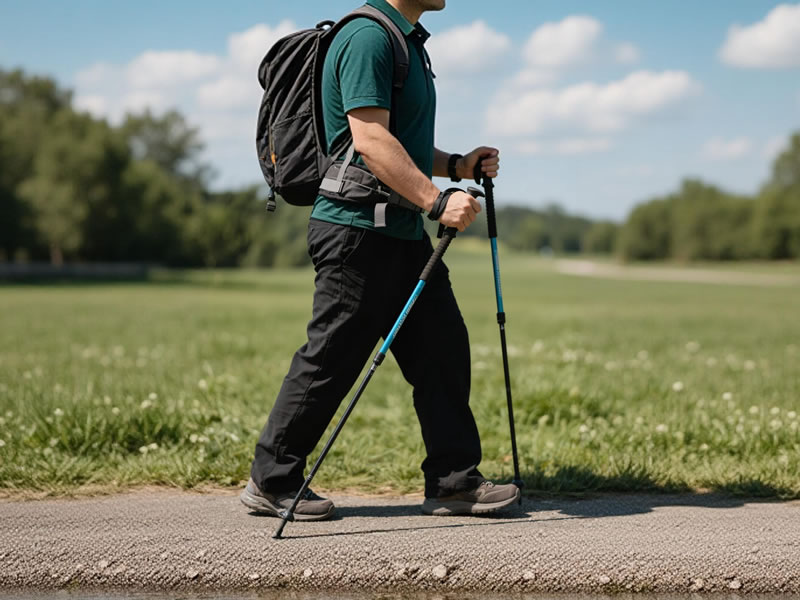
Recommended trekking pole purchase link: https://s.click.aliexpress.com/e/_c4M7OWaN
The Numbers: What Manufacturers and Tests Reveal
While there's no universal industry standard that all brands adhere to, rigorous testing by reputable manufacturers and independent outlets gives us a reliable benchmark. A well-constructed trekking pole from a trusted brand is typically designed to handle a vertical load of 250 to 400 pounds (113 to 181 kilograms).
This range accounts for different materials:
- Aluminum Poles: The workhorse of the industry, particularly poles made from 7075-T6 aerospace-grade aluminum, often sit at the higher end of this range. Their key advantage is a degree of malleability; they are more likely to bend under extreme stress rather than snap catastrophically.
- Carbon Fiber Poles: Known for their excellent strength-to-weight ratio, carbon fiber can theoretically withstand very high vertical forces. However, their failure mode is different. They are more brittle and can splinter or break if subjected to a sharp lateral impact against a rock, whereas aluminum might just bend.
The Critical Distinction: Static Load vs. Dynamic Load
The 250-400 lb figure is typically a static load rating—a slow, steadily applied force. This is not the same as the dynamic load experienced on the trail, which is far more complex and stressful on the equipment.
Consider this scenario: A 180-pound hiker with a 40-pound pack steps down a steep rock face, putting most of their weight on a single pole that is planted at an angle. The instantaneous force on that pole is not 220 pounds. It's the body weight, plus the pack weight, plus the downward momentum of the movement. This shock load can easily multiply the effective force, briefly pushing it toward the pole's limit. This is why a strong safety margin is essential.
The Weakest Link: It's Rarely the Shaft
When discussing weight capacity, it's a mistake to focus solely on the shaft. In most quality poles, the locking mechanism is the most common point of failure. A lever lock or twist lock must clamp the inner shafts with immense pressure to prevent collapse. Under extreme stress, a lock can slip or its internal components can fail long before a well-made aluminum or carbon fiber shaft buckles. This is why a secure, well-maintained, and dirt-free locking mechanism is paramount for safety.
Real-World Applications and Limitations
Understanding these limits informs how we should use our poles:
- They are for Stability, Not for Hanging: Walking poles are designed for balanced, supportive weight-bearing and impact absorption. They are not designed to be used like a gymnastics pole to swing from or to hold your full static weight while you dangle over a cliff edge.
- Angle Matters: A pole planted vertically directly beneath your hand handles weight most efficiently. A pole splayed out to the side creates leverage, placing immense bending stress on the shaft and locks, significantly reducing its effective strength.
- Heavy-Body Hikers and Backpackers: If you are a heavier individual or consistently carry a very heavy pack (e.g., for multi-day expeditions), prioritizing poles made from high-grade 7075 aluminum with robust, external lever locks is the wisest choice for durability and a higher safety margin.
Conclusion: A Question of Trust, Not Just Numbers
So, how much weight can quality walking poles support? They can support the substantial and dynamic forces generated by a heavy-load backpacker on challenging terrain, provided they are high-quality and used correctly. The 250-400 lb static load rating provides that crucial safety buffer for real-world use.
Your trust in the pole should come from:
- Choosing a Reputable Brand that stands behind its engineering.
- Selecting the right material for your typical terrain (aluminum for rugged durability, carbon for lightweight efficiency on trails).
- Regularly maintaining your poles, especially the locking mechanisms.
- Using them as intended—for balanced support, not as a primary lifeline.
By respecting these limits and understanding the engineering behind them, you can confidently rely on your poles to provide the stability you need, mile after mile.




