




What is the Difference Between 3K and 6K Carbon Fiber in Poles?
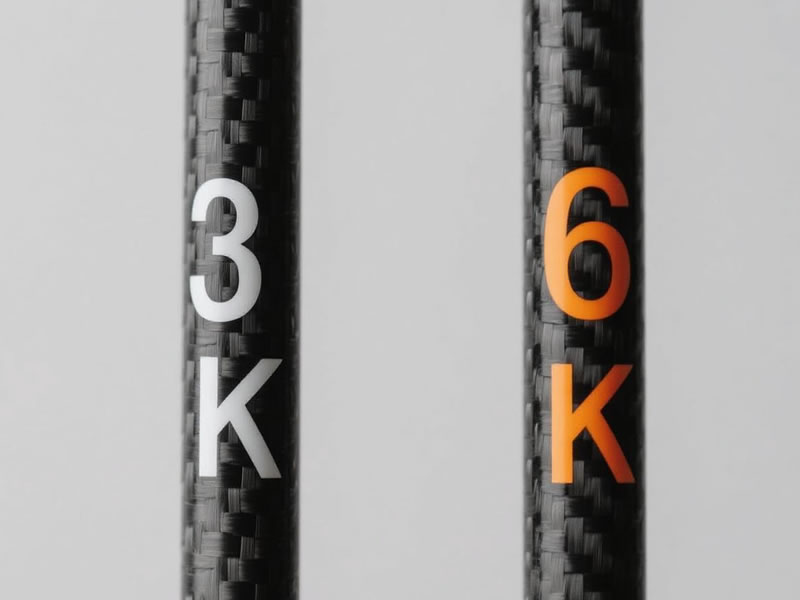
When shopping for carbon fiber trekking poles, you'll often see them described with terms like "3K" or "6K." This isn't a model number but a key specification referring to the carbon fiber weave itself. While it's easy to assume that a higher number means a "better" pole, the reality is more nuanced. Understanding the difference between 3K and 6K carbon fiber helps you look beyond aesthetics and make an informed decision based on your specific needs.
Recommended trekking pole purchase link: https://s.click.aliexpress.com/e/_c4M7OWaN
The "K" Demystified: It's All About the Tow
The "K" stands for "thousand" and refers to the number of individual carbon filaments in a single tow or bundle. These tows are the fundamental yarns that are woven into the fabric used to make the pole.
- A 3K carbon fiber weave uses tows composed of 3,000 individual carbon filaments.
- A 6K carbon fiber weave uses thicker tows composed of 6,000 individual carbon filaments.
This fundamental difference in filament count per tow is the root of all the subsequent variations in appearance, weight, and performance characteristics.
Visual Appearance and Weave Pattern
The most immediate difference is visual.
- 3K Weave: With its finer tows, the 3K weave produces a tighter, more frequent, and distinctly smaller checkerboard pattern. It is often associated with a high-end, detailed aesthetic that many find visually appealing.
- 6K Weave: The thicker 6K tows result in a larger, more pronounced box-like pattern. The weave is visibly coarser, and the individual squares are bigger.
Performance Implications: Strength, Weight, and Flexibility
While the appearance is the most obvious differentiator, the weave size does influence the pole's physical properties, though often in subtle ways.
- Strength-to-Weight Ratio: Generally, a 3K weave, with its finer tows and tighter weave, can be laid up in a more controlled and uniform manner. This can allow manufacturers to create a laminate with an exceptional strength-to-weight ratio. For a given weight, a 3K layup can sometimes offer marginally better optimized strength.
- Stiffness and Impact Resistance: A 6K weave, with its thicker tows, can be slightly less expensive to produce. In terms of performance, some argue that the 6K fabric can offer marginally better impact resistance. The reasoning is that the thicker tows can absorb and distribute the energy of a sharp impact (like a rock strike) slightly differently than the finer 3K tows. However, this potential benefit often comes with a minor weight penalty for the same level of stiffness.
- Conformability: The finer 3K fabric is more pliable and can conform more easily to complex shapes during manufacturing. While trekking poles are simple tubes, this superior conformability can contribute to a more consistent and void-free laminate.
The Most Important Factor: The Overall Layup
It is absolutely critical to understand that the "K" count is just one variable in a complex engineering equation. The performance of a carbon fiber pole is determined far more by:
- The Quality of the Carbon Fiber and Resin: The grade of the raw carbon and the epoxy resin used to bind it are paramount.
- The Layup Schedule: This is the blueprint of the pole. Engineers specify the orientation of the carbon fiber plies (e.g., 0°, 45°, 90°) to control flex, torsional stability, and strength. A well-designed 6K layup can easily outperform a poorly designed 3K one.
- The Manufacturing Process: Whether the pole is roll-wrapped or molded in an autoclave has a massive impact on the final product's integrity and performance.
Which Should You Choose?
For the vast majority of hikers, the practical performance difference between a 3K and 6K carbon fiber pole from the same brand and series will be negligible.
- Choose a pole based on its overall reputation for durability, the warranty, and the feel in your hands, rather than focusing solely on the "K" number.
- If you are an ultralight enthusiast seeking the most optimized strength-to-weight ratio and appreciate a refined finish, a 3K pole might be more appealing.
- If you prioritize potential impact resistance and are less concerned with a minor weight savings, a 6K pole is an excellent and often cost-effective choice.
In conclusion, while 3K and 6K refer to tangible differences in the carbon fabric, they are more a matter of design and construction philosophy than a definitive hierarchy of quality. A well-made pole of either type will provide excellent service, proving that the whole of a trekking pole's performance is far greater than the sum of its "K" parts.




