




How to Use Walking Poles for Stretching Exercises
Walking poles are celebrated for the stability and support they provide on the trail, but their utility doesn't end when the hike does. These versatile tools can be transformed into excellent aides for pre-hike warm-ups and post-hike cool-downs. Integrating walking poles into your stretching routine can enhance your balance, allow for a greater range of motion, and help you perform stretches with better form, ultimately reducing the risk of injury and accelerating recovery.
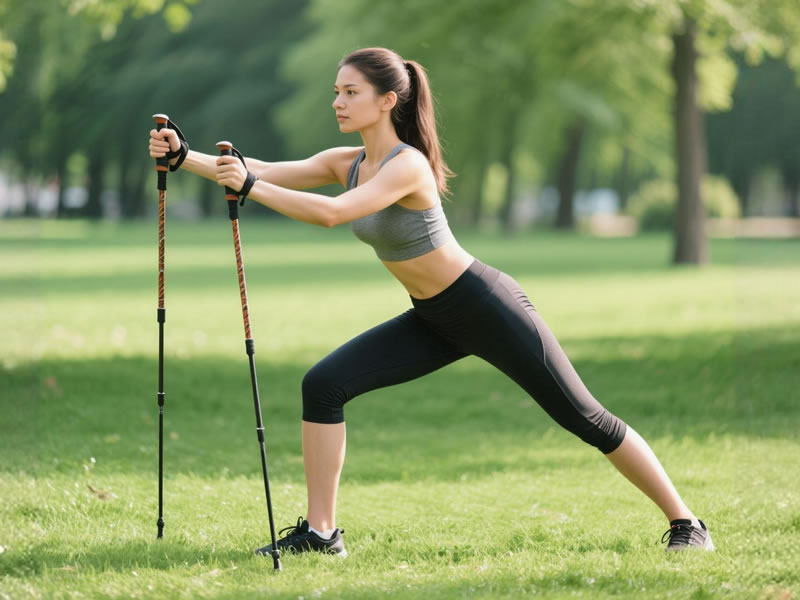
Recommended trekking pole purchase link: https://s.click.aliexpress.com/e/_c4M7OWaN
The Foundation: Why Poles are Perfect for Stretching
The primary advantage of using trekking poles for stretching is the enhanced stability they offer. This external support allows you to focus on the stretch itself rather than on maintaining your balance. It enables you to hold positions longer and sink deeper into a stretch safely. Furthermore, poles can help individuals with limited flexibility or previous injuries perform stretches that would otherwise be inaccessible, making them a fantastic tool for hikers of all ages and fitness levels.
Key Stretches Using Walking Poles
Here is a series of targeted stretches that utilize your poles to work the major muscle groups engaged during hiking.
1. Calf and Achilles Stretch
- How to: Stand facing a tree, wall, or another stable object. Hold your poles in one hand for balance. Step one foot back, keeping the leg straight and the heel firmly pressed into the ground. Gently lean forward, using the poles or the wall for support, until you feel a stretch in the calf of the back leg. To target the Achilles tendon, slightly bend the back knee.
- Muscles Worked: Gastrocnemius and Soleus (calf muscles).
2. Hamstring Stretch
- How to: Stand tall with your feet hip-width apart. Place both poles firmly in front of you for support. Extend one leg straight out in front of you, resting the heel on the ground with the toes pointing up. Keeping your back straight, gently hinge at your hips and lower your chest toward the extended leg. The poles will prevent you from leaning too far and losing balance.
- Muscles Worked: Hamstrings.
3. Quadriceps and Hip Flexor Stretch
- How to: Hold both poles in one hand for support. Stand on one leg and grab the ankle of your other leg, gently pulling your heel toward your glute. Keep your knees together and your torso upright. For a deeper hip flexor stretch, gently push your hip forward. The poles provide crucial balance, making this classic stretch much more stable.
- Muscles Worked: Quadriceps and Hip Flexors.
4. Chest Opener and Lateral Stretch
- How to: Hold the poles behind your back with a wide, overhand grip. With your arms straight, slowly lift the poles up and away from your body, squeezing your shoulder blades together to open your chest. For a lateral stretch, hold the poles above your head with a wide grip and gently lean from side to side.
- Muscles Worked: Pectorals (chest), Latissimus Dorsi (lats), and Obliques.
5. Glute and IT Band Stretch
- How to: While standing, cross one ankle over the opposite knee, mimicking a seated "figure-four" stretch. Hold your poles firmly in front of you for support. Slowly lower your hips down and back as if sitting in a chair, feeling a deep stretch in the hip and glute of the crossed leg.
- Muscles Worked: Gluteus Medius, Piriformis, and Iliotibial (IT) Band.
Important Precautions for a Safe Stretch
- Warm Up First: Never stretch cold muscles. Perform a light warm-up, such as a 5-minute walk, to get blood flowing.
- No Bouncing: Perform all stretches slowly and hold them statically for 20-30 seconds. Avoid bouncing, which can cause micro-tears in the muscle.
- Listen to Your Body: Stretch to the point of mild tension, never sharp pain.
- Ensure Pole Stability: Make sure your poles are on a non-slip surface and the locks are fully engaged to prevent collapsing.
By incorporating these simple yet effective exercises into your routine, you elevate your walking poles from a single-purpose tool to a complete hiking fitness system. This proactive approach to flexibility will keep your muscles supple, improve your hiking posture, and ensure you're ready for the next trail adventure.




