




Walking Poles for Measuring Snow Depth?
When venturing into a winter landscape transformed by snowfall, the ability to accurately assess your environment is a critical component of safety. While specialized probes exist for this purpose, a tool already in your hand—your trekking pole—can serve as an invaluable instrument for measuring snow depth. This simple yet effective technique provides real-time data that can inform your route choices, help assess potential hazards, and deepen your understanding of the winter environment.
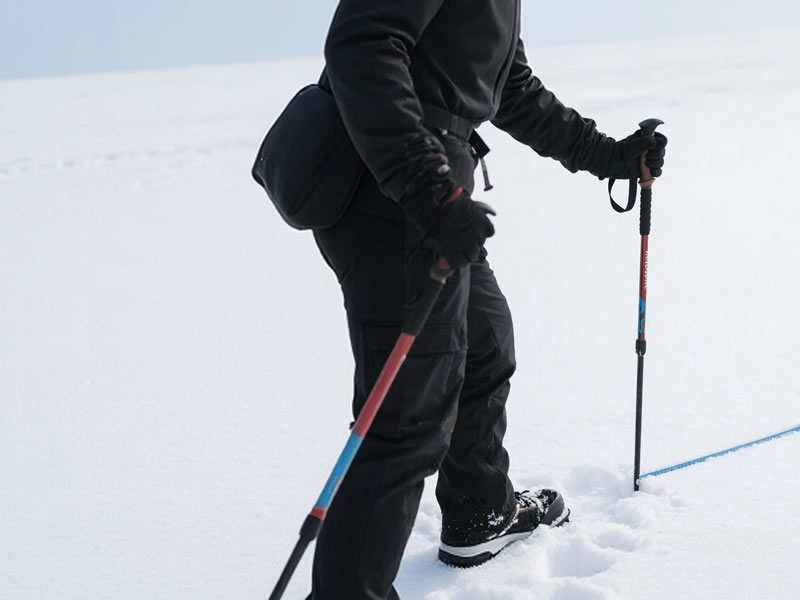
Recommended trekking pole purchase link: https://s.click.aliexpress.com/e/_c4M7OWaN
The "How-To": A Simple Method for Critical Data
Using a trekking pole to measure snow depth is straightforward, but requires a specific technique for accuracy.
- Fully Extend and Plant: Ensure all sections of your pole are fully extended and the locking mechanisms are secure. Stand in a representative spot, free from obvious drifts or wind-scoured areas for a general reading.
- The Vertical Insertion: Hold the pole vertically and gently push it straight down into the snow. It's crucial to use a slow, steady pressure rather than a forceful stab. You are aiming to feel the pole pass through the snowpack until it meets firm resistance from the ground or a solid ice layer.
- Read the Measurement: Once the pole tip hits the ground, note the point on the shaft where the snow surface meets the pole. The length of the pole from that point down to the tip is the total snow depth at that specific location.
Beyond a Single Number: The Power of Transect Measurements
A single measurement offers limited information. The true power of this method lies in taking multiple readings along a transect—a line across the terrain you are traveling.
- Identifying Drifts: By measuring every few paces, you can quickly identify hidden drifts, especially on the lee side (downwind) of ridges, rocks, or vegetation. A sudden, significant increase in depth is a clear warning of a wind slab, a common avalanche trigger.
- Finding Firm Ground: Conversely, consistently shallow readings might indicate a wind-scoured slope or a safer, more compacted route.
- Assessing Snowpack Variability: Understanding how the snow depth changes with aspect (north vs. south facing slope) and elevation provides a richer picture of the conditions you are traveling through.
Connecting Depth to Avalanche Safety
While a trekking pole cannot replace a formal snow stability analysis or the use of a dedicated avalanche probe in a rescue scenario, it is a vital tool for preemptive risk assessment.
- A Critical First Filter: A rapid, widespread snow depth of 12 inches (30 cm) or more is a general indicator that avalanche conditions are possible and warrant increased caution and further evaluation.
- Locating Weak Layers: As you push the pole down, pay attention to what you feel. Does it sink effortlessly through a layer of sugary, unconsolidated snow (depth hoar) before hitting a slab? Feeling distinct layers within the snowpack can alert you to potential instability, prompting you to avoid steep, suspect slopes.
Limitations and Best Practices
It is essential to understand the limitations of this method. A trekking pole will not give you a perfect picture of the entire snowpack structure like a formal snow pit analysis. Furthermore, on very hard or icy layers, the pole tip may not penetrate, giving a false depth reading.
For best results:
- Use a Pole with Clear Markings: Some poles have measurement markings on the shaft, which can be incredibly helpful.
- Measure Often: Conditions change rapidly. Take measurements frequently, especially when moving into new terrain.
- Corroborate with Other Observations: Use your pole measurements in conjunction with other signs, such as recent avalanche activity, cracking snow (whumpfing), and changing weather.
In conclusion, your trekking pole is far more than a simple stability aid in winter; it is a key sensory tool that connects you directly to the snowpack beneath your feet. By mastering the simple act of measuring snow depth, you transform your passive movement through a winter wonderland into an active process of observation and risk management, empowering you to make smarter, safer decisions in the backcountry.




