




Can Walking Poles Be Used for Self-Defense Against Animals?
For many hikers venturing into wildlife country, this question inevitably surfaces. The straightforward answer is nuanced: trekking poles can be a valuable deterrent in specific scenarios, but they are not a reliable substitute for proper wildlife safety practices and dedicated equipment. Understanding their capabilities and severe limitations is crucial for making safe decisions in the backcountry.
Recommended trekking pole purchase link: https://s.click.aliexpress.com/e/_c4M7OWaN
The Psychological and Deterrent Advantages
In situations where avoidance is the primary goal, walking poles can provide several tactical benefits:
- Making Yourself Appear Larger: This is their most effective use. By holding poles above your head and spreading your jacket, you can create a larger, more intimidating silhouette to many animals. This can be particularly effective with canids like coyotes or stray dogs, which often assess threats based on size.
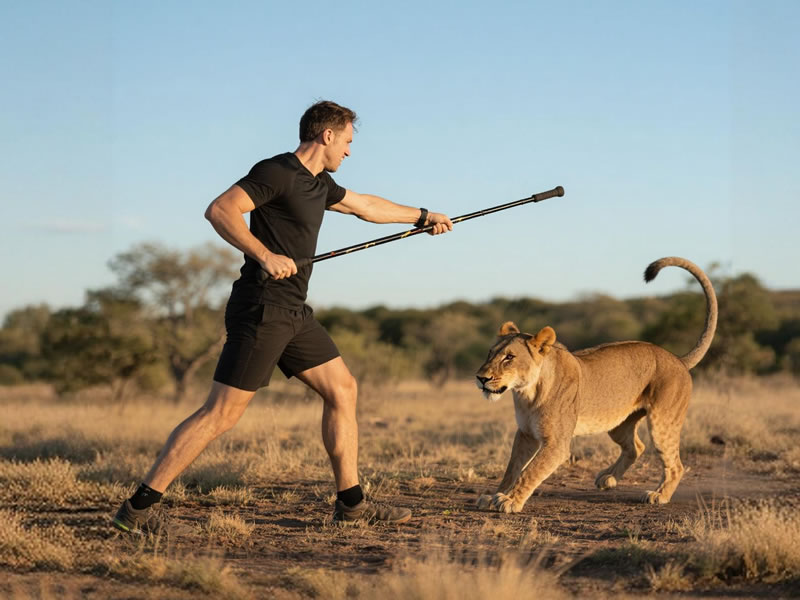
- Creating a "Safe Zone": You can use the extended length of the pole to keep a curious or aggressive animal at a distance. A firm, non-threatening poke towards a smaller animal's snout or body can communicate that you are not easy prey and encourage it to disengage.
- Making Noise: Tapping poles together or against rocks is an excellent way to announce your presence, which is the number one strategy for avoiding surprising animals like bears and mountain lions in the first place.
The Severe Limitations and Critical Dangers
It is imperative to understand what walking poles cannot do:
- Against Large Predators (Bears, Big Cats): Walking poles are not weapons. They lack the structural integrity, mass, and striking power to stop a charging bear or a pouncing mountain lion. A predatory bear can weigh over 500 pounds and move at 35 mph; a trekking pole would be as effective as a toothpick. Attempting to fend off such an animal with a pole could escalate the situation and is dangerously misguided.
- False Sense of Security: Relying on poles for defense can lead to risky behavior, such as approaching wildlife too closely or forgoing more effective tools.
- Risk of Equipment Failure: A forceful swing could break a carbon fiber pole, and even aluminum poles can bend or collapse under extreme force, leaving you with a useless, shortened piece of metal.
Scenario-Specific Guidance
- Canids (Coyotes, Foxes, Stray Dogs): This is where poles are most applicable. Stand your ground, make yourself look big, and use the poles to maintain distance. A sharp shout combined with a forward poke can often deter an advance.
- Snakes: Poles can be used to probe areas ahead of you on overgrown trails. If you encounter a venomous snake, the pole gives you ample distance to back away slowly.
- Ungulates (Moose, Bison): These are some of the most dangerous animals in North America. A trekking pole is utterly useless against a one-ton moose. Your only correct response is to put as much distance as possible between you and the animal, using trees or large obstacles as cover.
- Bears: Your primary tools should be bear spray and your voice. Do not brandish a pole at a bear. For a defensive (non-predatory) bear, back away slowly. For a predatory bear that is stalking you, stand your ground, group together, and use bear spray when it is within range (about 30-60 feet).
The Verdict: A Tool for Deterrence, Not for Combat
Walking poles should be viewed as part of a broader preventative safety strategy, not as a defensive weapon. Their true value lies in helping you avoid a confrontation altogether by making noise and enhancing your presence.
Your essential safety protocol should always be:
- Be Loud: Talk, sing, or clap your poles regularly, especially in areas with poor visibility.
- Carry and Know How to Use Bear Spray: This is the single most effective tool for stopping a charging bear. Keep it accessible, not buried in your pack.
- Maintain Distance: Always give wildlife a wide berth. Use your poles to judge and maintain a safe buffer.
- Know Animal Behavior: Understand the difference between defensive and predatory behavior, as your response will differ drastically.
In conclusion, while your trekking poles can offer a psychological edge and a means of deterring smaller animals, they are a last-resort, marginal tool. Placing your faith in prevention, distance, and dedicated safety equipment like bear spray is the only responsible approach to sharing the wilderness with its native inhabitants.




