




Walking Pole Carrying Systems for Backpacks?
For any hiker who uses trekking poles, there inevitably comes a point on the trail where you need your hands free. This could be for consulting a map and compass, navigating a technical scramble, taking photos, or simply giving your arms a rest. A secure and accessible pole carrying system on your backpack is not just a convenience—it's a critical piece of integrated gear that enhances safety, efficiency, and overall trail enjoyment. Modern backpacks offer a variety of sophisticated solutions, each with its own advantages for different hiking styles and terrain.
Recommended trekking pole purchase link: https://s.click.aliexpress.com/e/_c4M7OWaN
The evolution from simply strapping poles to the side of a pack to dedicated, quick-draw systems represents a significant leap in hiker-centric design. Understanding these options ensures you can choose a pack that fits your needs and use its features to their fullest potential.
1. The Side Compression Strap Method: The Universal Standard
This is the most common and versatile system, found on the vast majority of daypacks and multi-day backpacks.
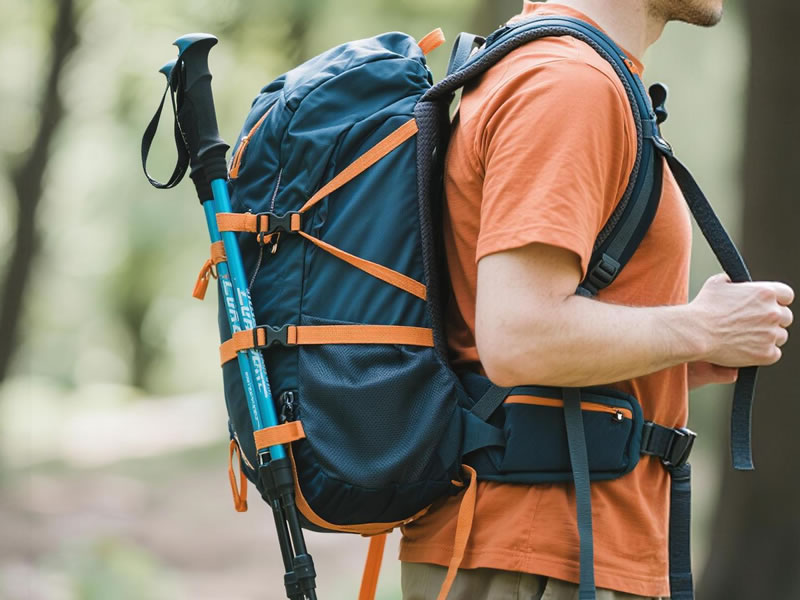
- How It Works: Two sets of compression straps on the sides of the pack are used to secure the poles. Typically, you slide the grip through the lower strap (near the bottom of the pack) and then secure the shaft with the upper strap. The pole tips point upwards, tucked behind your shoulder.
- Pros: Universally available, simple to use, and very secure when done correctly. It keeps the poles out of the way and doesn't interfere with accessing the main pack compartment.
- Cons: Requires you to take off your pack to stow or retrieve the poles. It can be slower than other methods and may require some finagling to get the poles perfectly secure without wobbling.
2. The Front-Mounted Shock-Loop System: The Quick-Draw Champion
Popularized by brands like Ultimate Direction and adopted by many others, this system is a favorite among fast-and-light hikers, trail runners, and anyone who needs frequent, rapid access to their poles.
- How It Works: Two elasticated loops (often with a cord lock) are located on the front of the pack's shoulder straps. You slide the handle of the pole through the loop, and the tip rests in a small fabric pocket or is secured by a lower bungee cord on the hip belt.
- Pros: Extremely fast access without removing your pack. It keeps the weight of the poles centered on your front, which can improve balance during technical sections.
- Cons: The poles are in front of you, which can feel obtrusive to some and may snag on dense brush. It's generally best for shorter, collapsible Z-poles rather than long telescopic models.
3. The Magnetic Quick-Draw Holster: The High-Tech Solution
This is the premium, most innovative system, often found on higher-end packs from brands like Osprey with their "Stow-on-the-Go" system or via aftermarket accessories.
- How It Works: A holster is attached to the hip belt or shoulder strap. A special magnetic or mechanical clip is attached to your trekking pole. The pole simply "docks" into the holster with a satisfying click and is released with a simple twist or pull.
- Pros: The fastest and most seamless system available. It feels incredibly intuitive and high-tech, allowing for one-handed stowing and deployment.
- Cons: It's brand-specific and often requires proprietary pole attachments. It can also be the most expensive option.
4. The Diagonal Rear Carry: The Traditional Mountaineering Approach
Common on larger expedition packs, this method is robust and keeps the poles completely clear of your arms and the surrounding terrain.
- How It Works: The poles are carried diagonally across the back of the pack, with the tips secured near one bottom corner and the grips secured near the opposite top corner using robust straps or daisy chains.
- Pros: Extremely secure for rough terrain like bushwhacking or scrambling. The poles are completely out of the way and won't snag.
- Cons: The slowest method for accessing your poles, as you must fully remove the pack.
Choosing the Right System for You
Your ideal system depends on your primary activity:
- General Hiking & Backpacking: The side compression strap method is reliable and sufficient for most needs.
- Fast-Packing & Trail Running: The front-mounted shock-loop system is unbeatable for speed and accessibility.
- Technical Terrain & Frequent Transitions: A magnetic holster system offers the ultimate in convenience and speed.
- Off-Trail & Mountaineering: The diagonal rear carry provides maximum security and keeps poles from being an obstruction.
Pro Tips for Any System
- Always Cover the Tips: Use the included rubber tip covers or makeshift ones to prevent the sharp carbide tips from snagging on your pack or, worse, poking you in the head.
- Ensure a Snug Fit: A loose pole is a noisy and potentially dangerous pole. Make sure it's held tightly against the pack to prevent swinging or catching on branches.
- Practice: Before you hit the trail, practice stowing and deploying your poles with your chosen system until it becomes second nature.
In conclusion, a well-designed pole carrying system is a seamless extension of your hiking kit. It transforms the often-awkward task of managing your poles into a fluid, efficient part of your hike, freeing you to focus on the journey ahead with confidence and ease.




