




What to Do If a Walking Pole Breaks During a Hike?
The unsettling sound of a cracking trekking pole is a hiker's unwelcome surprise. Whether it's a sharp snap from a carbon fiber shaft or a disheartening bend in an aluminum one, a broken pole in the backcountry can feel like a significant setback. However, with the right knowledge and a cool head, this equipment failure can be managed effectively, allowing you to safely continue your hike and self-rescue. Preparation and improvisation are your greatest tools in this situation.
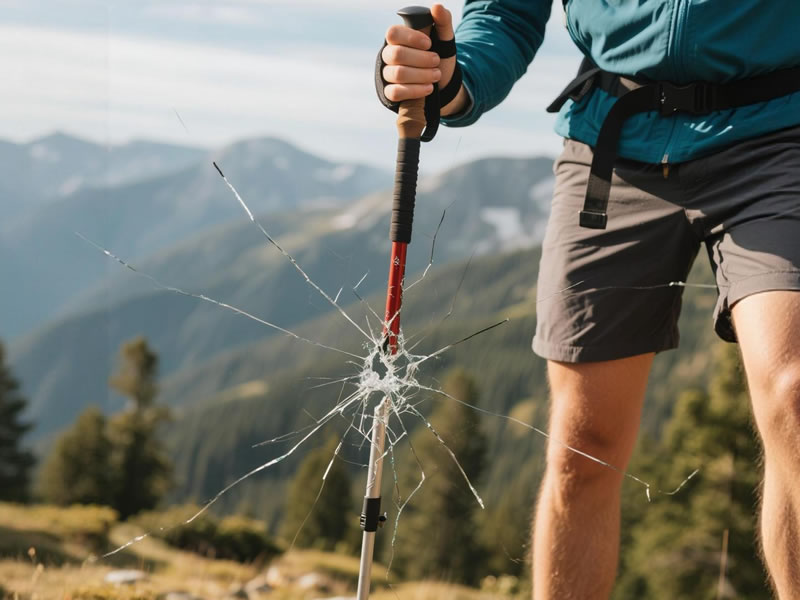
Recommended trekking pole purchase link: https://s.click.aliexpress.com/e/_c4M7OWaN
Your immediate response should follow a calm, methodical process to assess the damage and determine the best course of action.
Step 1: Assess the Damage and Ensure Safety
First, move away from any immediate hazard, like a steep edge or unstable footing. Then, carefully examine the break.
- Bent Aluminum Pole: If the pole is bent but not severed, you may be able to carefully straighten it. Find a sturdy rock or tree crotch and apply gentle, steady pressure to bend it back. Do not over-correct; a semi-straight pole is better than one that breaks completely from being forced.
- Snapped Carbon Fiber or Aluminum: If the pole has a clean break, note the location. A break near the tip is less critical than one near the grip.
- Failed Locking Mechanism: If a lock has slipped or failed, try cleaning any debris from it and re-tightening. If it's mechanically broken, you'll need to bypass it.
Step 2: Execute a Field Repair
Your goal is to create a functional splint that provides enough stability to get you home.
- The Splint Method (for a broken shaft): This is the most reliable repair.Find a Splint: Look for a sturdy, straight stick roughly the length of the broken section of the pole.Stabilize: Place the stick alongside the broken section.Secure It: Use duct tape, athletic tape, or a zip tie from your repair kit to tightly bind the stick to the pole, covering several inches above and below the break. Multiple wraps are key. For a more secure fix, use two sticks on opposite sides of the break.
- The Repair Sleeve: If you carry a dedicated trekking pole repair sleeve (a small, lightweight aluminum tube), slide it over the break and secure it with a hose clamp or tape.
- The "Shortening" Fix: If the break is near the tip, you may be able to remove the broken bottom section entirely and re-insert the tip into the remaining shaft, effectively creating a shorter, but usable, pole.
Step 3: Adapt Your Hiking Strategy
If a repair is impossible or only partially successful, you must adapt.
- The Single-Pole Technique: If one pole is unusable, continue with the other. A single pole is far better than none. Use it on your uphill side for support, or switch sides periodically to balance muscle fatigue.
- The Equal-Length Rule: If you can repair one pole but it's now shorter, shorten the other, unbroken pole to match its length. Hiking with poles of drastically different lengths will throw off your rhythm, posture, and balance, potentially leading to muscle strain or a fall.
- Increase Caution: Without the full stability of two poles, you must slow down. Be extra careful on stream crossings, descents, and uneven terrain. Use your hands on stable features like rocks or trees for additional support.
Prevention and Preparation: The Best Medicine
The most effective strategy is to prevent a break from happening in the first place.
- Carry a Mini Repair Kit: A few feet of duct tape wrapped around a water bottle, a couple of zip ties, and a small repair sleeve weigh almost nothing but can be trip-saving.
- Know Your Gear's Limits: Avoid using your poles for extreme leverage, like lowering yourself down a cliff, which can generate forces they weren't designed to handle.
- Inspect Poles Regularly: Check for deep scratches on carbon fiber (which can be stress risers) and small bends in aluminum before each trip.
In conclusion, a broken trekking pole is a test of a hiker's resourcefulness. By staying calm, executing a simple splint, and adapting your technique, you can turn a potential trip-ender into a minor inconvenience. This experience underscores the importance of carrying basic repair materials and being mentally prepared to solve problems on the trail, ensuring that your journey continues safely and confidently.




