




Can Walking Poles Help in River Crossing Safety?
The short answer is an unequivocal yes. In the context of river crossings, which are consistently ranked among the most hazardous obstacles in the backcountry, trekking poles transform from a simple hiking aid into an essential piece of safety equipment. They provide the critical stability and sensory feedback needed to navigate fast-moving water, slippery rocks, and uncertain footing. However, their effectiveness is entirely dependent on proper technique and an understanding of their role within a broader safety protocol.
Recommended trekking pole purchase link: https://s.click.aliexpress.com/e/_c4M7OWaN
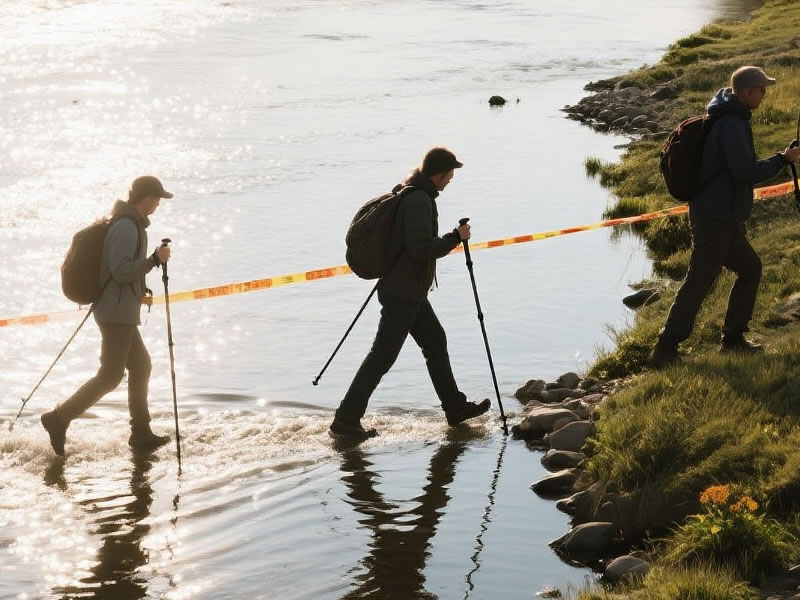
A river crossing without poles is a balancing act on two points of contact. Adding two poles creates a stable, movable four-point contact system. This is the core of their benefit. With each step, you can plant two or three points securely before moving the fourth, effectively creating a tripod that is far more resistant to being knocked off balance by the force of the current. This is not just about comfort; it is about preventing a fall that could lead to hypothermia, injury, or being swept downstream.
The Critical Techniques for Safe Pole Use in Water
Simply holding the poles while wading is not enough. Specific techniques maximize their effectiveness:
- The Upstream Plant: Always plant your poles upstream from your body. The current will push against the poles, bracing you and helping to hold you steady. Planting them downstream offers no support and can actually pull you off balance.
- The Triangular Stance: Your two poles and your leading foot should form a wide, stable triangle. Move one pole, then the opposite foot, then the other pole, then the other foot. This "three points of contact" rule should never be broken.
- Leaning into the Current: It feels counterintuitive, but you must lean slightly into the current, using your upstream-planted poles for support. Leaning away creates a pivot point that the water can easily exploit to roll your feet out from under you.
- Probing for Depth and Stability: Use the poles to probe the bottom ahead of you. Test the depth, feel for drop-offs, and identify stable footing. A sudden plunge of the pole can warn you of a deep hole, while a firm base signals a safe step. This is invaluable for avoiding submerged hazards.
Preparation and Complementary Safety Measures
While poles are invaluable, they are just one component of a safe crossing strategy:
- Unbuckle Your Pack: Always unbuckle your backpack's waist belt and chest strap. If you fall, you need to be able to shed your pack instantly to avoid being pinned underwater by its weight.
- Footwear: Never cross barefoot. Wear sturdy shoes or sandals with grip to protect your feet and provide traction on slippery rocks.
- Cross as a Team: For stronger currents, cross in a group using the "group triangle" formation, linking arms and using the collective stability of multiple people and poles.
- Face Upstream and Move Diagonally: Generally, face upstream and move diagonally downstream. This allows you to brace against the current while making progress across the river.
- Know When Not to Cross: The most important safety tool is judgment. If the water is too high, too fast, or too cold, no amount of gear will make it safe. Postpone your crossing or find a safer route.
Understanding the Limitations
Trekking poles are a preventative tool, not a rescue device. They will not save you if you are attempting a crossing that is beyond your skill level or the conditions are inherently dangerous. They are designed for supportive weight-bearing, not for anchoring yourself against a torrent.
In conclusion, walking poles are not just helpful for river crossings; they are a fundamental asset that dramatically increases safety and confidence. By providing additional points of contact, sensory information about the riverbed, and a means to brace against the current, they are one of the most effective and accessible tools a hiker can carry for navigating this common backcountry challenge. Used in conjunction with sound judgment and proper technique, they turn a perilous balancing act into a managed, controlled maneuver.




