




Walking Poles for Stability During Earthquakes?
When the ground itself becomes unpredictable during an earthquake, the primary instinct is to find stability and prevent falls that could lead to serious injury. While trekking poles are not a standard item in most earthquake preparedness kits, their potential role as an impromptu stability aid warrants careful consideration. Understanding their specific applications and critical limitations can reveal how they might fit into a comprehensive personal safety plan during seismic events.
Recommended trekking pole purchase link: https://s.click.aliexpress.com/e/_c4M7OWaN
The fundamental principle of earthquake safety—"Drop, Cover, and Hold On"—remains paramount. However, the moments during and immediately after severe shaking, when moving may be necessary, present unique challenges where walking poles could offer supplementary support.
Potential Applications in an Earthquake Scenario
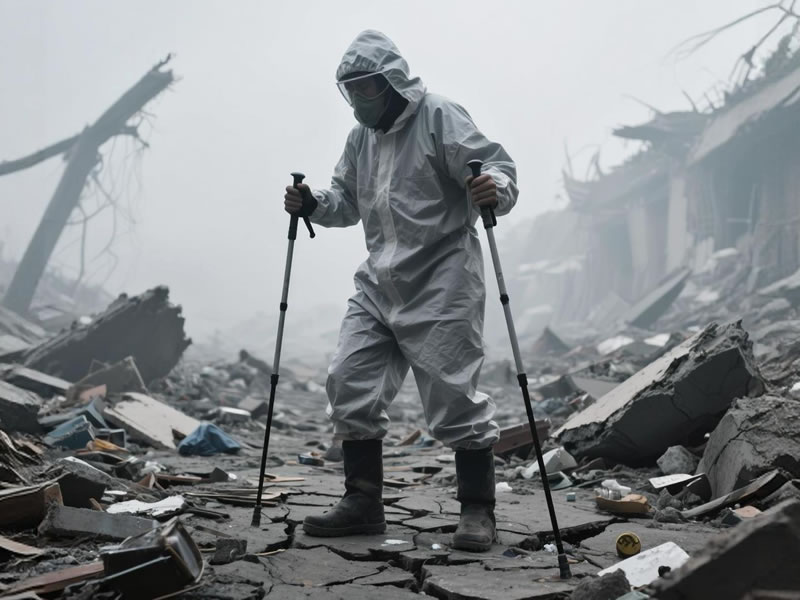
- Stability During Evacuation: After the initial violent shaking subsides, you may need to evacuate a damaged building. The terrain inside and outside may be littered with debris, broken glass, and other hazards. In this context, walking poles can provide two additional points of contact, creating a more stable tripod stance. This can help you navigate over and around obstacles while maintaining balance, much like using them on a rocky trail.
- Probing and Testing the Environment: In low-light conditions or if power is lost, visibility can be extremely poor. An extended trekking pole can be used to gently probe the path ahead, testing the stability of floorboards, identifying puddles of water from broken pipes, or moving light debris aside. This sensory extension can help avoid missteps into dangerous areas.
- Bracing in a Doorway (As a Last Resort): While the "Drop, Cover, and Hold On" method under a sturdy table is universally recommended, if you are caught in a hallway, a strong door frame is sometimes suggested as a secondary option. In such a scenario, bracing your body with the aid of poles planted firmly on either side of the frame could potentially provide additional bracing against the swaying motion, though this is a highly situational and advanced technique.
Critical Limitations and Critical Safety Warnings
It is absolutely vital to understand what trekking poles cannot do and the risks they might introduce.
- They Are Not Structural Support: Walking poles are designed for vertical and moderate lateral loads on natural terrain. They are not engineered to withstand the force of falling debris, collapsing ceilings, or structural collapse. Do not use them to create a "safety cage" or rely on them for overhead protection.
- They Can Impede the "Drop, Cover, and Hold On" Protocol: The single most important action during an earthquake is to get low to the ground and take cover immediately. Fumbling with poles could dangerously delay this life-saving action. Your hands must be free to crawl under a table and hold on to its leg.
- Risk of Entanglement: In a confined space, two long poles can easily become entangled with furniture legs, causing you to trip or preventing you from moving quickly.
- A False Sense of Security: The greatest danger is over-relying on poles and engaging in risky behavior, such as attempting to move during intense shaking instead of taking cover.
A Pragmatic Preparedness Approach
If you choose to incorporate trekking poles into your earthquake plan, follow these guidelines:
- Strategic Storage: Keep them in an easily accessible location near your primary exit, such as by the front door or in your car, not buried in a closet.
- Practice Situational Awareness: Your first action is always to drop and take cover. Only consider using the poles after the intense shaking has stopped and you have determined that movement is necessary.
- Prioritize Proven Safety Measures: Your first line of defense is a well-secured home, an emergency kit with water and food, sturdy shoes by your bed, and the ingrained habit of "Drop, Cover, and Hold On."
In conclusion, trekking poles should be viewed as a potential improvised aid for post-shaking mobility, not as a primary life-saving tool during an earthquake. They can offer valuable stability when navigating the hazardous and unpredictable landscape that follows a major seismic event. However, this utility must be weighed against the critical imperative to act instantly when the shaking begins—an action that requires free hands and an unobstructed path to cover. The most effective stability during an earthquake still comes from being low to the ground, under a sturdy piece of furniture, and holding on.




