




What Is the Average Weight of Ultralight Trekking Poles?
In the pursuit of a lighter pack, every gram matters. For backpackers, thru-hikers, and fastpackers, trekking poles are essential for stability and endurance, but their weight can be a significant consideration. This leads to a critical question: what is the average weight of ultralight trekking poles? Understanding this metric is key to evaluating their place in a lightweight gear system.
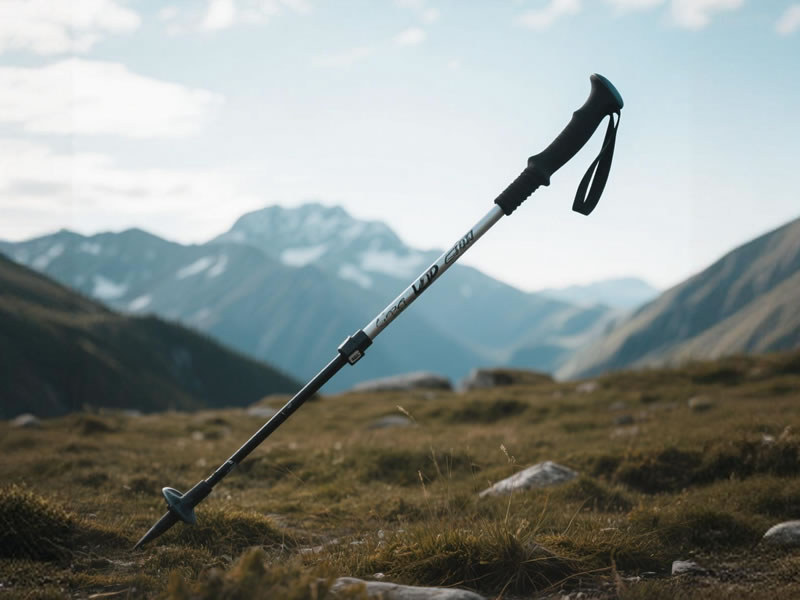
Recommended trekking pole purchase link: https://s.click.aliexpress.com/e/_c4M7OWaN
The term "ultralight" is not just a marketing label; it represents a specific category of poles engineered for minimal weight without completely sacrificing functionality. While there can be outliers, the industry has converged on a general weight range that defines this category.
The Defining Weight Range
After analyzing dozens of models from leading brands, a clear average emerges. A single ultralight trekking pole typically weighs between 120 and 180 grams (4.2 to 6.3 ounces). This translates to a pair weight of 240 to 360 grams (8.5 to 12.7 ounces).
To put this in perspective, this is roughly the weight of a large smartphone or an energy bar per pole. This represents a substantial saving compared to standard trekking poles, which often weigh between 280 and 350 grams each (560-700 grams per pair).
Breaking Down the Spectrum: Carbon Fiber vs. Aluminum
The primary driver of this weight is the material:
- Carbon Fiber: The Featherweight Champions (120-150g/pole)The majority of poles at the lighter end of the spectrum are constructed from high-modulus carbon fiber. This composite material provides an exceptional strength-to-weight ratio. Poles in the 120-150 gram range are the gold standard for ultralight enthusiasts and are commonly used by thru-hikers on long trails like the Pacific Crest Trail or Appalachian Trail.
- Premium Aluminum: The Durable Middle Ground (150-180g/pole)Some manufacturers produce ultralight poles using advanced, thin-walled aluminum alloys. These models often sit in the 150-180 gram range. While slightly heavier than their carbon counterparts, they offer a different kind of durability, being less prone to catastrophic failure from a sharp lateral impact and often coming at a more accessible price point.
Factors That Influence the Final Weight
Several design choices account for the variations within the ultralight category:
- Folding (Z-Pole) vs. Telescopic Design: Folding Z-poles often save weight by eliminating heavy internal locking mechanisms, making them the most common design for the lightest models.
- Grip and Strap Material: Minimalist cork or small EVA foam grips are standard. Elaborate, ergonomic grips with thick padding are omitted to save weight.
- Shaft Diameter and Wall Thickness: Engineering a pole that is both strong and light involves precise calculations about how much material is absolutely necessary.
- Accessories: The inclusion of large baskets, extended foam grips, or complex adjustment systems will push a pole toward the heavier end of the ultralight spectrum.
Why This Average Weight Matters
The significance of this 120-180 gram average is profound on the trail. Weight saved on trekking poles is "live weight"—it is swung forward with every single step. Reducing this rotational mass directly translates to less fatigue in your arms, shoulders, and upper back. Over a 20-mile day, this can conserve a remarkable amount of energy, allowing you to hike farther and feel better at camp.
In conclusion, the average weight of an ultralight trekking pole—120 to 180 grams—is not an arbitrary number. It is the result of sophisticated material science and design philosophy aimed at maximizing efficiency. For the weight-conscious hiker, choosing a pole within this range is a strategic decision to reduce fatigue, increase endurance, and enhance the overall quality of their journey, proving that in the world of backpacking, every single gram truly counts.




