




Best Materials for Ultralight Trekking Poles: Aluminum vs Carbon Fiber
The quest for the perfect ultralight trekking pole inevitably leads to one fundamental decision: aluminum or carbon fiber? This choice represents a classic outdoor gear trade-off, pitting durability against minimal weight. Both materials have passionate advocates, and understanding their distinct characteristics is crucial for selecting the pole that aligns with your hiking style, terrain, and budget.
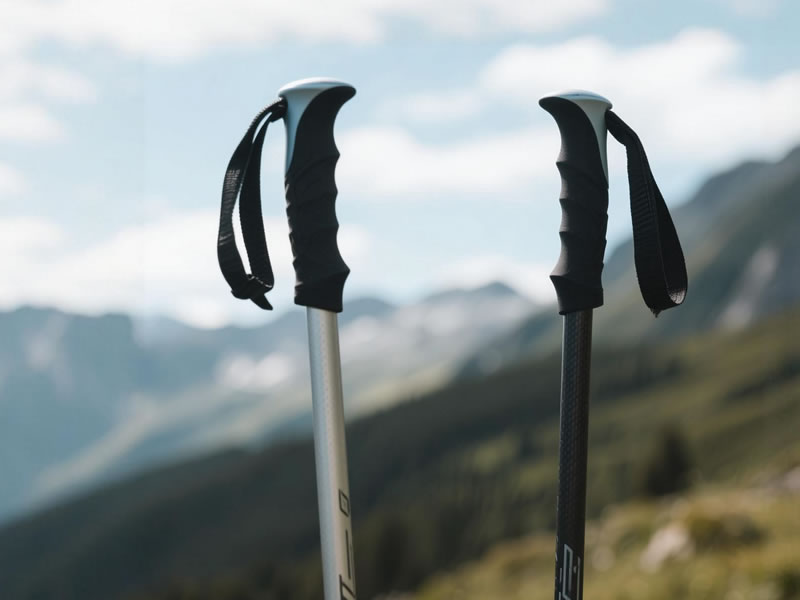
Recommended trekking pole purchase link: https://s.click.aliexpress.com/e/_c4M7OWaN
The core of this debate revolves around three key properties: weight, strength, and vibration dampening. Each material offers a different balance of these attributes, creating a clear profile of advantages and compromises.
Carbon Fiber: The Ultralight Champion
Carbon fiber poles are constructed from thin filaments of carbon woven into a fabric and set within a resin matrix. This composite structure gives them exceptional performance traits that make them the top choice for weight-conscious hikers.
- Unmatched Weight Savings: This is carbon fiber's primary advantage. High-modulus carbon fiber poles can be 30-40% lighter than their aluminum counterparts of similar strength. For a pair of poles, this can translate to a saving of 150-250 grams (5-9 ounces), a significant reduction in "swing weight" that your arms must move thousands of times per day.
- Superior Vibration Dampening: Carbon fiber's composite structure naturally absorbs and dissipates high-frequency trail vibrations. This results in a noticeably smoother feel, reducing "trail buzz" and hand fatigue on long, rocky descents.
- High Strength-to-Weight Ratio: When load is applied along the shaft's axis (as in normal hiking), carbon fiber provides incredible strength for its minimal weight.
However, carbon fiber has a critical vulnerability: its failure mode. Under a sharp, lateral impact—such as jamming the pole between two rocks—carbon fiber can fracture or splinter catastrophically. It is strong but brittle, and a broken carbon pole is often beyond field repair.
Aluminum: The Durable Workhorse
Aluminum, specifically 6061 or the stronger 7075-T6 aerospace alloy, is the traditional and trusted material for trekking poles. Its properties offer a different kind of reliability.
- Impact Resistance and Predictable Failure: Aluminum's greatest strength is its toughness and ductility. When subjected to the same lateral impact that would shatter a carbon fiber pole, aluminum will typically bend. A bent pole, while compromised, may still be usable to get you off the trail and can often be straightened in a field repair.
- Cost-Effectiveness: High-quality aluminum poles are almost always more affordable than equivalent carbon fiber models, offering exceptional value and durability for the price.
- Proven Reliability: Aluminum has a long track record of withstanding the abuses of rugged, off-trail travel, bushwhacking, and mountaineering.
The trade-offs for this durability are weight and vibration. Aluminum poles are inherently heavier and are efficient conductors of vibration, which can translate more shock from the trail to your hands and arms.
The Decision Matrix: Which Material is Right for You?
Your choice should be guided by your answers to these questions:
Choose Carbon Fiber if:
- You are a thru-hiker, fastpacker, or ultralight backpacker where minimizing every gram is a primary goal.
- You primarily hike on established trails where severe lateral impacts are less likely.
- You value a smoother, less jarring feel on long descents.
- Your budget allows for the premium price tag.
Choose Aluminum if:
- You frequently travel off-trail, on rocky scrambles, or in talus fields where pole abuse is inevitable.
- Durability and field-repairability are your top priorities.
- You are budget-conscious but still want high performance.
- The marginal weight savings are less critical to you than absolute robustness.
Conclusion: A Question of Philosophy
There is no universally "best" material—only the best material for you. The aluminum vs. carbon fiber debate ultimately boils down to a personal risk-benefit analysis.
- Carbon fiber is for the efficiency-focused hiker who is willing to trade a degree of impact resistance for transformative weight savings and a smoother ride. It is a calculated investment in performance.
- Aluminum is for the adventurous, terrain-agnostic hiker who prioritizes a tool that can withstand unexpected punishment. It is an investment in resilience and peace of mind.
By honestly assessing the demands you place on your gear, you can confidently choose the material that will become a trusted extension of your body on the trail, mile after mile.




