




Do Ultralight Trekking Poles Have Adjustable Lengths?
This is a fundamental question for hikers considering the leap to ultralight gear. The answer is a definitive yes, but with important distinctions. Unlike the infinite adjustability of standard telescopic poles, ultralight poles employ different adjustment systems that reflect a deliberate trade-off between ultimate customization, packability, and weight savings. Understanding these systems is key to choosing the right pole for your hiking style.
Recommended trekking pole purchase link: https://s.click.aliexpress.com/e/_c4M7OWaN
The world of ultralight poles is broadly divided into two camps, each with a unique approach to length adjustment: telescopic and folding (Z-pole) designs.
1. Telescopic Ultralight Poles: The Traditional Adjustable Approach
These poles function like their standard counterparts but are constructed from lighter materials like thin-walled aluminum or carbon fiber.
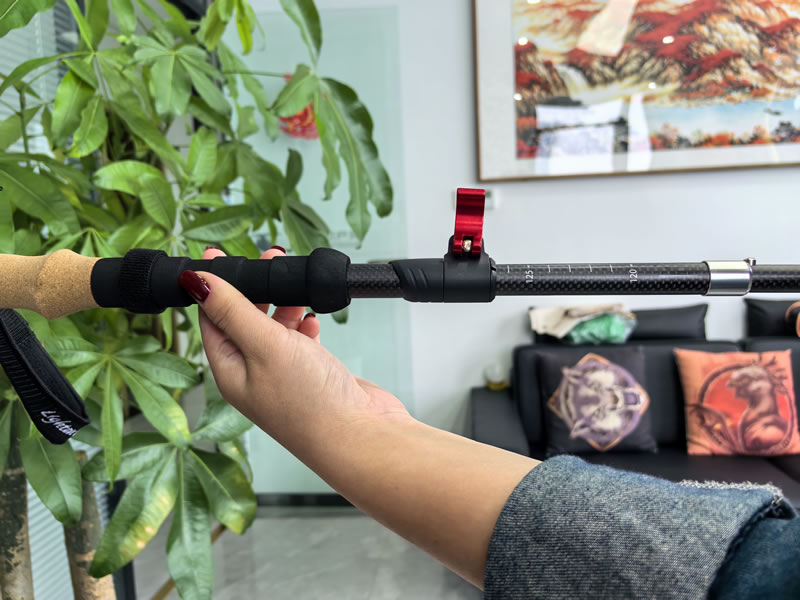
- Adjustment Mechanism: They feature two or three sliding sections secured by locking mechanisms. The two primary types are:External Lever Locks (e.g., FlickLock): Widely preferred for their reliability and ease of use, even with cold or wet hands. They allow for quick, tool-free adjustments and are generally easier to field-repair.Twist Locks: Less common on high-end ultralight models due to potential issues with slipping, freezing, and increased weight.
- The Advantage: True On-the-Fly Adjustability. This is the system's greatest strength. You can make micro-adjustments to perfectly suit the terrain—shortening the poles for a steep ascent to improve leverage, or lengthening them for a descent to reduce impact on your knees. This versatility is invaluable on trails with constantly changing elevation.
- The Compromise: The internal locks and overlapping shaft sections add a small amount of weight and bulk compared to the folding alternative.
2. Folding (Z-Pole) Ultralight Poles: The Segment-Based System
This is the iconic design for modern ultralight hiking, favored for its incredible packability.
- Adjustment Mechanism: Z-poles do not have traditional locks. Instead, they consist of three or four segments connected by a strong, internal tension cord. Length is adjusted by adding or removing pre-sized sections, typically 5, 10, or 15 centimeters in length.
- The Advantage: Maximum Packability and Simplicity. By eliminating locking mechanisms, Z-poles achieve the lightest possible weight and can fold down into an exceptionally compact size (often under 40cm). There are no mechanisms to fail, freeze, or collect dirt.
- The Compromise: Inflexible and Cumbersome Adjustment. Changing the length of a Z-pole is not a trailside quick-fix. It requires disassembling the pole, adding or removing a segment, and reassembling it. This process makes it impractical to fine-tune your pole length frequently throughout a hike. You typically set them to a general length that works for most of your day's terrain.
Which Adjustment System is Right for You?
Your choice should hinge on your priorities:
- Choose Telescopic Poles if:You hike in highly variable terrain with frequent ascents and descents.You value ergonomic precision and want to optimize your posture continuously.You use your poles for setting up trekking-pole tents and need specific heights.
- Choose Folding (Z-Poles) if:Packability and minimal weight are your absolute top priorities.You are a fastpacker or trail runner who needs to stow poles quickly and efficiently.Your hikes are on terrain where a single, general pole length is sufficient for most of the day.You prefer a system with fewer mechanical parts to maintain or fail.
Conclusion: A Deliberate Choice, Not a Limitation
In conclusion, ultralight trekking poles absolutely offer adjustable lengths, but the method and flexibility of that adjustment are defining characteristics of their design. The telescopic pole offers the freedom of customization, while the folding pole offers the purity of minimalism. There is no "better" system—only the system that best aligns with your personal calculus of weight, convenience, and the specific demands of the trails you love to hike. By understanding this key difference, you can confidently select a pole that provides the right kind of support for your adventures.




