




Proper technique for using ultralight trekking poles.
Ultralight trekking poles represent a significant advancement in hiking technology, but their full benefits are only realized when paired with proper technique. Many hikers, even experienced ones, use their poles as simple walking sticks rather than the sophisticated propulsion and stability tools they're designed to be. Mastering the fundamental techniques will not only maximize the efficiency gains from your lightweight equipment but will also dramatically reduce fatigue, improve your pace, and protect your joints over long distances.
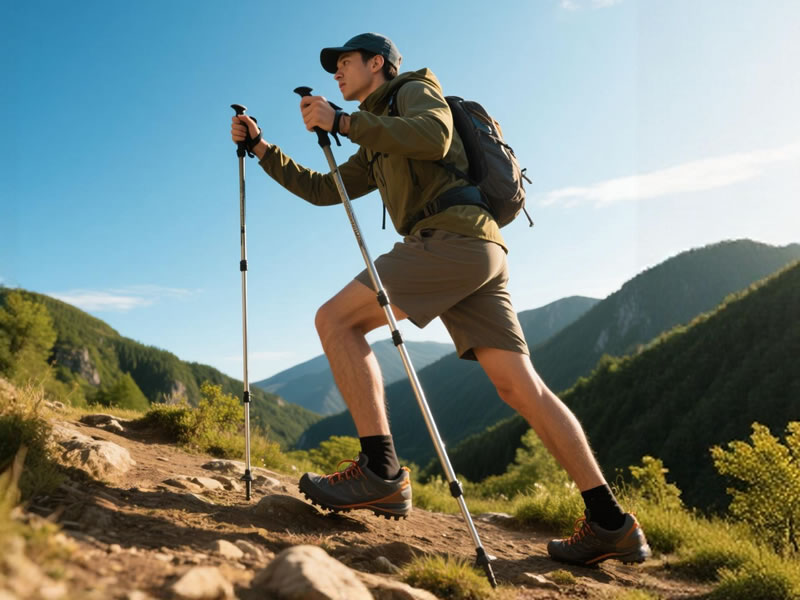
Recommended trekking pole purchase link: https://s.click.aliexpress.com/e/_c4M7OWaN
The core philosophy behind proper pole technique is energy transfer—using your upper body to share the workload with your legs. When done correctly, you're not just planting sticks in the ground; you're actively propelling yourself forward and supporting your descent.
The Foundation: Basic Setup and Posture
Before you take your first step, ensure your poles are correctly configured:
- Optimal Length Adjustment: The baseline measurement is creating a 90-degree angle at your elbow when the tip is on the ground beside your foot. For telescopic poles, this is easily adjustable. For fixed-length folding poles, you may need to choose the appropriate size from the manufacturer. Remember to shorten poles for uphill sections and lengthen them for descents—typically 5-10 cm (2-4 inches) in each direction.
- Proper Strap Usage: This is perhaps the most overlooked yet crucial element. Slide your hand up through the strap from below, then bring it down to grip the pole, allowing the strap to cradle the back of your hand. This creates a platform that transfers weight through your skeletal structure rather than relying solely on grip strength. A proper strap setup allows you to relax your hands between pushes, conserving significant energy.
The Walking Rhythm: Creating Efficiency
The walking motion should feel natural and rhythmic:
- Opposite Arm/Leg Motion: Just as in natural walking, your right pole should plant as your left foot steps forward, and vice versa. This creates a balanced, efficient rhythm that utilizes your body's natural counter-rotation.
- The Planting Angle: Plant your pole at a rearward angle, not straight down. The tip should contact the ground approximately level with your opposite foot. As you move past the pole, you'll push backward, generating forward propulsion rather than just vertical support.
- The Push-Off: Apply steady pressure through the strap as your body moves forward, ending with a gentle push that propels you toward your next step. Think of it as a continuous, fluid motion rather than a series of discrete plants.
Advanced Techniques for Different Terrain
Adapt your technique to the challenges you face:
- Uphill Technique: Shorten your poles and use a more vigorous planting motion closer to your body. Focus on using the poles to "pull" yourself up steep sections, engaging your back and shoulder muscles.
- Downhill Technique: Lengthen your poles and plant them ahead of your body, using them to absorb impact and control your descent. Your arms and poles should act as a "second set of brakes," significantly reducing the strain on your knees and quadriceps.
- Technical Terrain: In rocky or root-filled sections, use quicker, more deliberate plants, always seeking stable placements. The "three points of contact" rule becomes crucial here—ensure two poles and one foot are securely placed before moving the other foot.
Common Mistakes to Avoid
Even experienced hikers can develop bad habits:
- Stabbing the Ground: A forceful, vertical plant wastes energy and can damage fragile trail surfaces.
- Swinging Too Wide: Keep poles close to your body for better control and efficiency.
- Death Grip: Constant tight gripping leads to hand fatigue. Trust the straps and relax your hands between pushes.
- Improper Length: Using poles that are too long or short compromises your posture and reduces effectiveness.
Integrating Technique with Ultralight Advantages
The lightweight nature of modern poles enhances these techniques significantly. Lighter poles require less energy to swing, allowing for a quicker rhythm and faster pace. The reduced swing weight means you can maintain proper form for longer periods without fatigue.
In conclusion, proper technique transforms ultralight trekking poles from simple accessories into powerful tools that extend your endurance, protect your body, and enhance your connection with the trail. The time invested in mastering these fundamentals will pay dividends in comfort and performance on every hike, ensuring that your investment in lightweight gear delivers its full potential. Remember: it's not just about carrying lighter poles, but about using them smarter.




