




Are ultralight trekking poles good for heavy backpackers?
The question of whether ultralight trekking poles are suitable for heavier backpackers is both practical and important. For hikers carrying more body weight and potentially heavier loads, equipment reliability isn't just about comfort—it's about safety. The concern is valid: can these minimalist poles, often weighing less than a water bottle, provide the necessary support and durability? The answer is a qualified yes, but with crucial considerations regarding selection, technique, and realistic expectations.
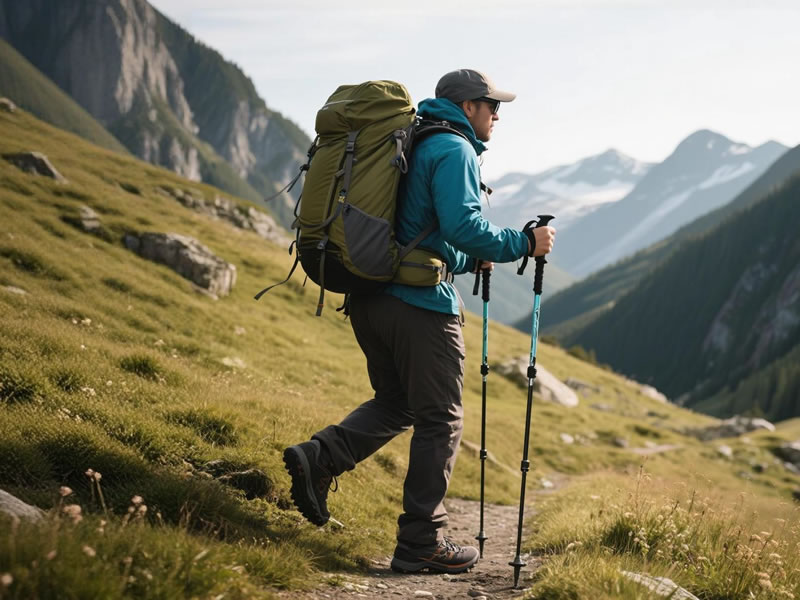
Recommended trekking pole purchase link: https://s.click.aliexpress.com/e/_c4M7OWaN
The appeal of ultralight poles for a heavy backpacker is significant. The cumulative energy savings from swinging lighter poles over thousands of steps can substantially reduce overall fatigue. However, the approach must be more strategic than for a lighter hiker, focusing on specific engineering and materials to ensure the poles can handle the increased stress.
Critical Selection Criteria for Heavier Backpackers
Not all ultralight poles are created equal. Heavier backpackers should prioritize models built with the following features:
- Material: The Carbon Fiber vs. Aluminum DecisionHigh-Modulus Carbon Fiber: Modern, quality carbon fiber poles are incredibly strong for their weight. Their advantage lies in their excellent vibration dampening, which reduces trail shock to the joints. However, their failure mode is a concern—they can splinter or snap under a sharp, lateral impact. For a heavy user who maintains good technique on trails, a robust carbon fiber pole can be an excellent choice.7075-T6 Aluminum: This is often the safer, more durable choice. While slightly heavier than carbon fiber, this aerospace-grade alloy is tremendously strong and has a more forgiving failure mode: it will typically bend before it breaks. A bent pole might still be usable to get you off the trail, whereas a broken carbon pole is not. Its superior impact resistance makes it ideal for off-trail use or for those who are less confident in their pole-placement precision.
- Locking Mechanisms: Non-Negotiable ReliabilityThis is the most common point of failure under heavy loads. External lever locks (e.g., FlickLock, SpeedLock) are essential. They provide visible, mechanical engagement that is far less prone to slippage than twist-lock mechanisms. A slipping lock on a steep descent with a heavy pack is a serious safety hazard. Always test the locks rigorously before committing to a long hike.
- Construction Quality: Look for ReinforcementsSeek out poles that feature reinforced stress points, such as thicker wall construction at the joints or internal sleeves. While this may add a few grams, it dramatically increases the pole's load-bearing capacity and longevity.
Proper Technique is Paramount
For a heavy backpacker, how you use the poles is as important as the poles themselves. Poor technique can break even the strongest pole.
- Angle of Use: Poles are designed to handle compressive forces along their length. Avoid planting them at extreme angles that create high lateral leverage, which is the primary cause of failure.
- Avoid "Poling Up": Never use the poles to pull yourself up a steep rock face or other obstacle. This creates immense, off-axis stress.
- Smooth, Not Jarring: Use a controlled planting motion rather than a forceful stab. Let the poles share the load, not absorb sudden impacts.
The Verdict: A Smart, Informed Choice
Ultralight trekking poles can be an outstanding investment for a heavy backpacker, provided the selection is made with care and awareness. The benefits—reduced arm and shoulder fatigue, better weight distribution, and decreased impact on knees—are too significant to ignore.
The ideal choice for a heavier backpacker is often a high-quality 7075 aluminum pole with external lever locks. This combination offers a remarkable weight saving over traditional poles while providing the peace of mind that comes with superior impact resistance and a more repairable failure mode.
In conclusion, heavy backpackers should not shy away from ultralight poles but should instead become more discerning consumers. By focusing on durable materials, robust locking mechanisms, and proper technique, they can safely enjoy all the efficiency and comfort benefits that modern ultralight gear provides. The goal is not to find the absolute lightest pole, but to find the lightest pole that is confidently capable of supporting your specific journey.




