




Can you use ultralight trekking poles in snow?
The prospect of taking featherlight trekking poles into a winter landscape raises legitimate questions about their capability in harsh, cold conditions. The straightforward answer is yes, you can absolutely use ultralight trekking poles in snow, but their effectiveness and safety are entirely dependent on proper preparation, the right accessories, and an understanding of their limitations compared to their burlier, heavier counterparts.
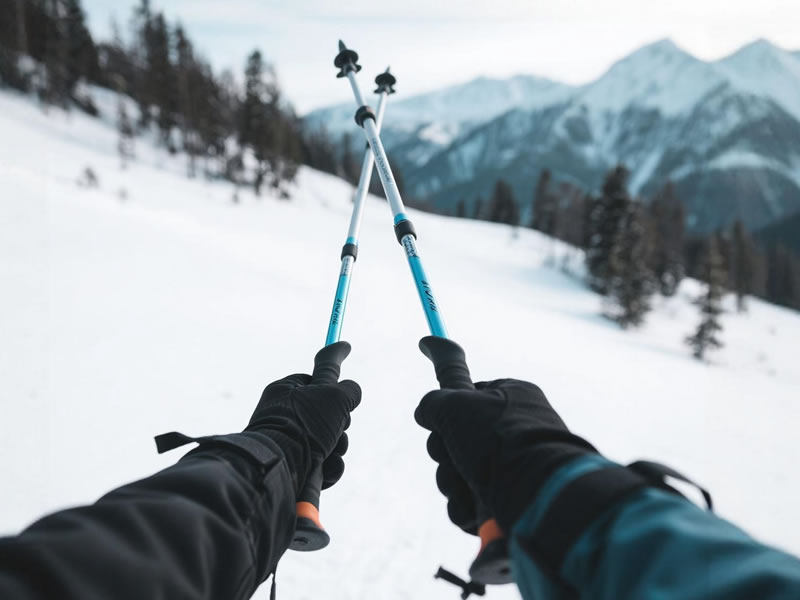
Recommended trekking pole purchase link: https://s.click.aliexpress.com/e/_c4M7OWaN
Winter conditions present unique challenges: deep, unconsolidated snow that demands flotation, freezing temperatures that affect material properties, and icy surfaces that test a tip's grip. An ultralight pole, when correctly configured, can not only meet these challenges but excel, offering the same energy-saving benefits it provides on summer trails.
The Non-Negotiable Accessory: Snow Baskets
The single most important factor for success is fitting your poles with large-diameter snow baskets. The small, standard trekking baskets that come with most poles are useless in deep snow; they will plunge through the surface, offering no support.
- What to Use: Install baskets that are at least 5 inches (12-13 cm) in diameter. These wide, plastic discs act like snowshoes for your poles, distributing downward force over a larger area to provide crucial flotation. This prevents the pole from sinking beyond its grip, ensuring you have a solid anchor point for balance and propulsion.
- Why it Matters: Without proper baskets, you might as well not use poles at all. They become inefficient, exhausting to use, and can even become dangerously stuck.
Material Performance in Cold Weather
How do the common ultralight materials hold up?
- Carbon Fiber: High-quality carbon fiber performs excellently in the cold, retaining its strength and stiffness. However, it's crucial to understand that all materials, including carbon fiber, can become more brittle at extremely low temperatures. The primary risk is not from normal use, but from a sharp, lateral impact against a hidden rock or ice chunk. While this is a risk in any season, the consequence of a break is greater in a remote winter environment.
- Aluminum: Aluminum poles are less brittle and may bend rather than snap under a severe impact, which can be a field-repairable advantage. Their main drawback is that aluminum is an excellent conductor of heat, making the shafts very cold to the touch without insulated grips or tape.
Locking Mechanism Considerations
This is a critical point of failure in winter.
- External Lever Locks (FlickLocks): These are the most reliable choice for winter. Their simple, external mechanism is less prone to freezing shut and is easier to operate with gloved hands.
- Twist Locks: Be very cautious with these in wet, freezing conditions. Moisture can seep into the mechanism and freeze, rendering the pole impossible to adjust. If you must use them, ensure they are thoroughly dried before storage and avoid plunging the locks directly into the snow.
- Folding (Z-Poles): The internal cord of folding poles is generally unaffected by cold, and they have no mechanisms to freeze. This makes them a surprisingly robust choice, provided their fixed length is suitable for your activity (e.g., snowshoeing).
Technique and Best Practices for Snow Travel
Using poles in snow requires a slight technique adjustment:
- Deliberate Planting: Use a firm, deliberate stabbing motion to drive the tip and basket through any crust and into the softer snow beneath.
- Test Before Trusting: Before committing your full weight, test the stability of the pole plant. Snow can hide voids and unstable layers.
- Probing for Safety: Your poles are excellent tools for probing snowbridges over streams or testing the depth of a drift.
Limitations and Final Verdict
Ultralight poles are fantastic for snowshoeing, winter trail hiking, and ski touring on non-technical terrain. However, for technical mountaineering or glacier travel where a pole might be used to arrest a fall or bear significant load in a crevasse rescue, a more heavy-duty, mountaineering-specific pole is the safer choice.
In conclusion, with the simple addition of large snow baskets and mindful technique, ultralight trekking poles are not just usable in the snow—they are a superb tool for the winter adventurer. They provide the stability needed to navigate a white world while preserving the energy and efficiency that make them so valuable in every other season. The key is to respect their design limits and prepare them properly for the unique demands of a frozen landscape.




