




Do Ultralight Trekking Poles Help With Knee Pain?
For countless hikers and backpackers, knee pain is a persistent companion that can transform a joyful journey into a painful ordeal. Whether it's a dull ache from osteoarthritis or sharp, acute pain from previous injuries, the descent from a mountain peak often exacerbates these conditions. This leads many to ask a critical question: can ultralight trekking poles genuinely provide relief? The answer, supported by biomechanical research and extensive user experience, is a resounding yes. When used correctly, these lightweight tools can be one of the most effective non-invasive solutions for managing and preventing knee pain on the trail.
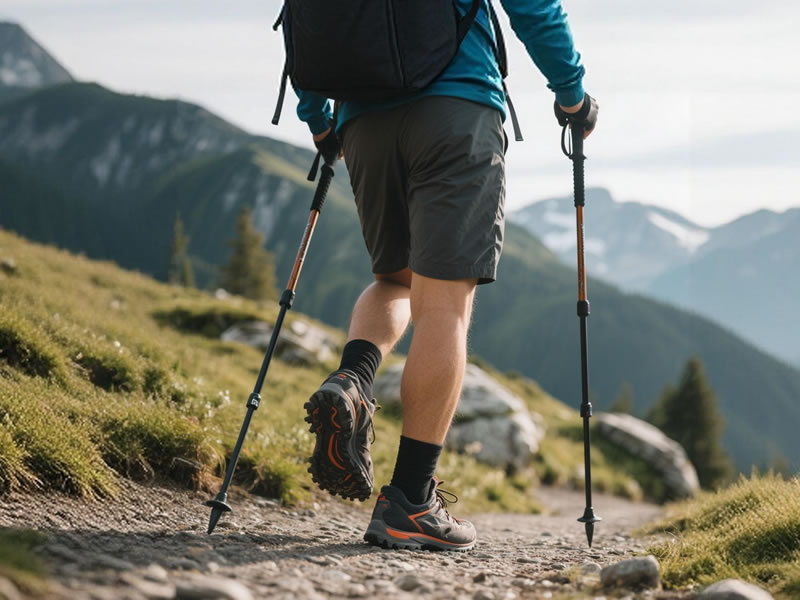
Recommended trekking pole purchase link: https://s.click.aliexpress.com/e/_c4M7OWaN
The mechanism through which trekking poles alleviate knee stress is both simple and profound. Research published in the Journal of Sports Sciences indicates that using trekking poles can reduce the compressive forces on knees during downhill hiking by up to 25%. This reduction occurs because poles effectively transfer a significant portion of your body weight and pack load from your lower to your upper body. With each step, your arms and shoulders share the burden that would otherwise be borne entirely by your knees, hips, and ankles.
The Biomechanical Benefits Explained
- Reduced Impact Forces: The most significant benefit comes during descents, where knee joint forces can reach 3-4 times your body weight. Poles act as additional limbs, creating a "four-point" contact system that dissipates these forces before they reach your knees.
- Improved Stability and Balance: For those with knee instability or weakness, poles provide crucial support on uneven terrain, preventing the sudden twists and missteps that often trigger pain episodes.
- Enhanced Proprioception: The additional contact points with the ground improve your body's awareness of its position in space, leading to more controlled, deliberate movements that are easier on vulnerable joints.
Why Ultralight Poles Are Particularly Beneficial
While any trekking pole can provide these benefits, ultralight models offer specific advantages for those managing knee pain:
- Reduced Arm Fatigue: Heavier poles can cause rapid fatigue in the arms and shoulders, leading users to abandon proper technique or use them less effectively. Ultralight poles (typically 120-200 grams each) allow you to maintain correct form for longer periods without upper body exhaustion.
- Natural Gait Preservation: The minimal weight of these poles means they interfere less with your natural arm swing and walking rhythm, promoting a more biomechanically efficient movement pattern.
- Increased Likelihood of Use: Perhaps most importantly, their compact size and light weight make them less burdensome to carry, increasing the probability that you'll actually use them consistently throughout your hike.
Maximizing the Therapeutic Benefits
To gain the full knee-protecting advantages, proper technique is essential:
- Downhill Adjustment: Lengthen your poles by 5-10 cm for descents. This allows you to maintain an upright posture while planting the poles ahead of you, creating an effective braking system.
- Rhythmic Planting: Develop a natural rhythm where opposite poles and feet move together (right pole with left foot). This creates a stable, balanced motion that smoothly transfers weight.
- Proper Grip and Push: Use the wrist straps to transfer weight through your skeleton rather than gripping tightly with your hands. Push down and slightly backward on the poles with each step to actively offload your knees.
Clinical Evidence and User Experience
Multiple studies have confirmed the efficacy of trekking poles for knee pain management. A 2017 systematic review concluded that pole use significantly reduces loading forces across the lower extremity joints. In practical terms, countless hikers with conditions ranging from patellofemoral pain syndrome to osteoarthritis report being able to hike longer, with less pain, and recover more quickly when consistently using poles.
Conclusion: A Worthy Investment in Joint Health
Ultralight trekking poles represent far more than mere hiking accessories for those suffering from knee pain—they are valuable therapeutic tools that can restore your ability to enjoy the trails you love. While they cannot reverse structural damage or replace professional medical treatment, their ability to substantially reduce joint loading makes them one of the most practical and cost-effective interventions available to active individuals with knee concerns. By choosing a quality pair of ultralight poles and mastering their use, you're not just lightening your load; you're investing in the long-term health of your knees and your continued enjoyment of the great outdoors.




