




Cleaning and maintaining ultralight trekking poles.
Your lightweight trekking poles are faithful companions on the trail, enduring impacts, mud, and harsh weather conditions. Like any precision tool, proper maintenance not only extends their lifespan but also ensures their reliability when you need it most. Incorporating maintenance into your post-hike routine can prevent costly repairs and keep your gear performing optimally for years to come.
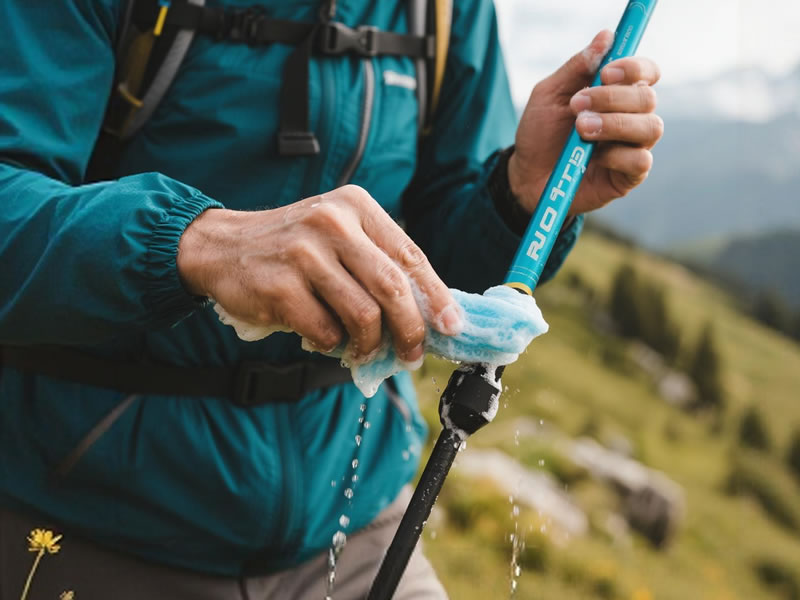
Recommended trekking pole purchase link: https://s.click.aliexpress.com/e/_c4M7OWaN
The core principles of trekking pole maintenance are simple: Clean, Lubricate, Dry, Inspect. Developing a habit of quick post-hike care is far more effective than occasional deep cleaning.
Post-Hike Immediate Cleaning
Spending five minutes on your poles as soon as you return home can prevent long-term damage.
- Overall Wiping: Use a damp cloth to thoroughly wipe down the entire pole shaft, removing dirt, sand, salt, and plant sap. These substances are abrasive or corrosive and can gradually damage surface coatings and metal components.
- Focus on Locking Mechanisms: This is the most critical step.External Lever Locks: Carefully clean inside the lever clasp and the contact area on the pole shaft using an old toothbrush and a small amount of isopropyl alcohol. Ensure all sand particles that could affect locking performance are removed.Twist Locks: Separate the pole sections completely. Wipe the inner male shaft and the inside of the female tube with a damp cloth. Isopropyl alcohol can also help dissolve built-up grime. Ensure all parts are completely dry before reassembly.
- Cleaning Straps and Grips: If the straps are removable, hand wash them with mild soapy water. For grips, wipe them with a damp cloth. Cork grips will gradually mold to the shape of your hand with use and sweat exposure – this is normal.
Regular Deep Maintenance
Perform more detailed maintenance monthly or approximately every 100 hiking miles.
- Lubrication: Never use WD-40 or other petroleum-based oils. They attract dirt and create an abrasive paste. Instead, use a dry silicone-based lubricant. Spray a small amount onto the inner male shafts of internal locking systems, then extend and collapse the poles repeatedly to distribute it evenly. For external lever locks, apply a small amount to the moving parts.
- Inspection: Systematically check your poles:Shafts: Run your fingers along carbon fiber shafts feeling for cracks, dents, or delamination (a spongy soft spot). Check aluminum shafts for bends or dents.Tips: Check if the tungsten carbide tips are worn down and rounded. If traction is noticeably reduced, it's time to replace them.Locking Mechanisms: Ensure all locks secure firmly without slipping.Baskets and Accessories: Make sure they snap securely in place and aren't cracked.
Drying and Storage
After cleaning, fully extend or separate all sections and air dry at room temperature. Never store poles collapsed while still damp, as internal moisture can cause aluminum oxidation or locking mechanisms to seize.
For long-term storage, keep poles fully extended or disassembled in a cool, dry place. Avoid storing them under heavy weight or in a bent, stressed position.
Material-Specific Tips
- Carbon Fiber: Avoid abrasive scrubbing pads that can scratch the surface. Be extra vigilant about checking for subtle internal damage.
- Aluminum: While more impact-resistant, they are more prone to oxidation spots. Keeping them dry is key.
In conclusion, consider trekking pole maintenance an investment. The small amount of time spent on systematic cleaning after each hike prevents the frustration and potential danger of equipment failure on remote trails. Well-maintained trekking poles are not just tools – they are reliable partners for your confident exploration of the wilderness.




