




How to Make Your Trekking Poles More Ultralight
For the ultralight hiker, every gram matters. You've likely scrutinized your backpack, sleep system, and shelter, but have you considered your trekking poles? Often seen as a necessary burden, poles are prime candidates for weight savings. A few strategic modifications can transform them from clunky supports into sleek, efficient tools that barely register in your hand.
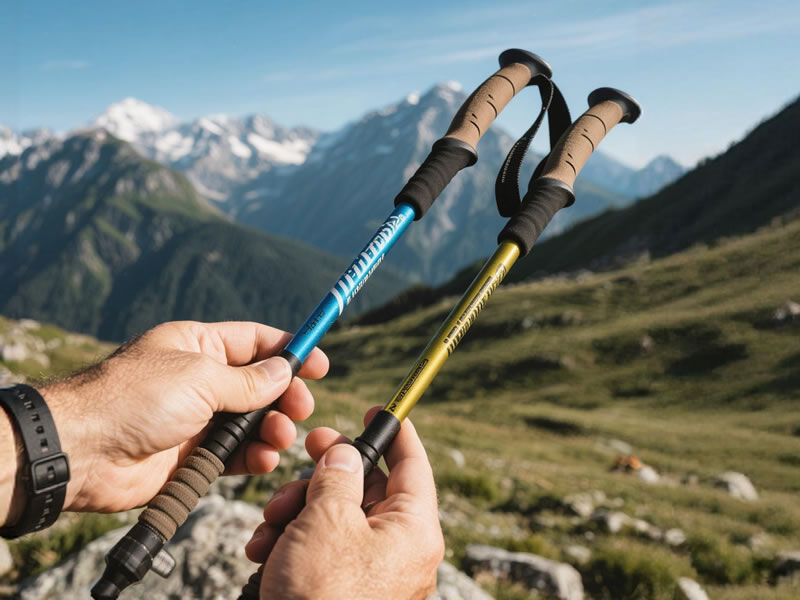
Recommended trekking pole purchase link: https://s.click.aliexpress.com/e/_c4M7OWaN
This guide will walk you through actionable strategies, from beginner-friendly swaps to advanced DIY projects, to make your trekking poles truly ultralight.
The Philosophy of Unsprung Weight
Think of your poles as "unsprung weight"—mass that you have to lift and place with every single step. Reducing this weight has a compounding effect on energy conservation over long miles. The goal isn't just to have lighter gear; it's to have a more efficient and enjoyable hiking experience.
Step 1: The Low-Hanging Fruit (Easy Swaps)
Start with these simple, reversible changes that require no special tools.
- Remove the Wrist Straps: This is the easiest and most debated mod. If you use the correct technique—pushing down through the palm of your hand rather than pulling on the strap—you may not need them. Cutting them off can save 15-30 grams per pole. Try hiking without using the straps first to see if you can live without them.
- Swap the Baskets: Those large, snow-friendly baskets are overkill on most trails. Replace them with minimalist trekking basketettes or remove them entirely. This simple switch can save 10-20 grams per pole. For summer hiking, you often only need the durable carbide or rubber tip.
Step 2: The Intermediate Modifications
These steps require a bit more effort but yield significant results.
- Shorten the Shafts: Most adjustable poles have more length than you need. Carefully measure your ideal hiking length and use a hacksaw or pipe cutter to permanently shorten the lower section. De-burr the cut edge. This not only removes weight but also increases rigidity. You can save 10-15 grams per inch removed.
- Replace the Grips: If your poles have heavy rubber or large cork grips, consider a replacement. Foam grips are a popular ultralight choice, but ensure the new grip is compatible with your pole's diameter. This mod is more advanced and may require disassembling the pole.
Step 3: The Advanced Overhaul (For the Dedicated Gram-Counters)
This is where you push the limits of conventional gear.
- The Carbon Fiber Shaft Swap: This is the ultimate mod. If you have access to old, broken, or spare carbon fiber poles (from tents or other gear), you can carefully craft replacement sections for your trekking poles. This requires precision, epoxy, and a good understanding of how to maintain the locking mechanism's integrity. The weight savings can be dramatic, potentially cutting the pole's weight by half.
- Drilling Strategic Holes: A controversial technique popular in the ultralight community. By carefully drilling small holes in non-critical, high-stress areas of the upper sections of aluminum poles, you can remove a surprising amount of material. Warning: This can severely compromise the structural integrity of the pole and is not recommended unless you fully accept the risk of failure.
The Ultimate Solution: Buying Ultralight
Sometimes, the most effective modification is a replacement. The market is now filled with dedicated ultralight poles from brands like Gossamer Gear, Fizan, or Mountain King. These are engineered from the ground up to be incredibly light (often under 150g per pole) without sacrificing essential strength. After going through the modification process, you may find that the cost and performance of a purpose-built pole are worth the investment.
Conclusion: A Lighter Pole is a Lighter Step
Making your trekking poles more ultralight is a rewarding process that deepens your connection to your gear. Start with the easy wins—removing straps and baskets—and progress from there. Remember that the goal is a safer, more enjoyable hike, so never compromise critical safety margins for a few saved grams. Embrace the tinkering, and feel the difference with every lighter step you take on the trail.




