




History and Evolution of Ultralight Trekking Poles
The ultralight trekking pole, a staple in every weight-conscious hiker's kit, has a fascinating history that mirrors the broader evolution of lightweight backpacking. Its journey from a cumbersome afterthought to a meticulously engineered piece of performance gear is a story of material science, user-driven innovation, and a shifting philosophy in outdoor culture.
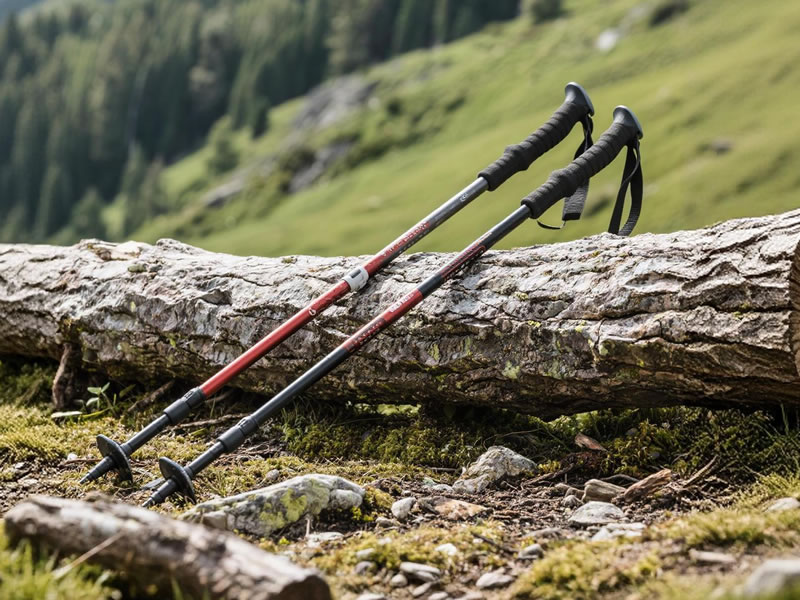
Recommended trekking pole purchase link: https://s.click.aliexpress.com/e/_c4M7OWaN
The Early Days: Heavy-Duty Origins
Before dedicated trekking poles existed, hikers often repurposed wooden staffs or heavy ski poles. The first commercial trekking poles, emerging in the 1970s and 80s, were essentially adaptations of these designs. They were constructed from heavy-grade aluminum and featured basic, often unreliable, locking mechanisms. Weight was a secondary concern to sheer durability, with poles often tipping the scales at over 400 grams (14 oz) each. They were seen as tools for mountaineering or aid for those with knee problems, not for the average backpacker.
The 1990s: The Aluminum Revolution and the Thru-Hiker Influence
The 1990s marked a pivotal shift. The rising popularity of long-distance trails like the Appalachian Trail (AT) and Pacific Crest Trail (PCT) gave birth to the modern thru-hiking culture. Hikers like Ray Jardine, author of "The Pacific Crest Trail Hiker's Handbook," began preaching a gospel of lightweight travel. This philosophy trickled down to every piece of gear, including poles.
Manufacturers responded by refining aluminum alloys, creating poles from 7075 aluminum that offered a better strength-to-weight ratio. Three-piece folding poles were also introduced, improving packability. More importantly, hikers themselves began to mod their gear, cutting down shafts and removing unnecessary parts like large baskets and straps, demonstrating a grassroots demand for lighter options.
The 2000s: The Carbon Fiber Game-Changer
The true revolution arrived with the widespread adoption of carbon fiber composites. Initially used in high-end aerospace and racing applications, carbon fiber offered an unparalleled weight reduction without compromising strength. Early models were criticized for being brittle, especially under side-load impacts, but technology rapidly improved.
Brands like Gossamer Gear and Locus Gear, often founded by ultralight enthusiasts, began producing poles that weighed under 150 grams (5.3 oz) each. This period saw the birth of the "trekking pole-supported shelter," where these ultra-light poles became an integral part of tent systems, further cementing their necessity in the ultralight kit. The focus shifted from mere support to multi-functionality and extreme weight savings.
The 2010s to Present: Refinement and Specialization
The current era is defined by refinement and specialization. Brands have mastered carbon fiber layups, creating poles that are both incredibly light and surprisingly durable. Features have been streamlined to the absolute essentials:
- Minimalist Grips: Foam and slim cork have largely replaced bulky rubber.
- Tiny Hardware: Locking mechanisms and baskets have been shrunk to save every possible gram.
- Specific Use-Cases: Companies now produce poles optimized for fastpacking, trail running, and specific shelter designs.
The concept of a "stock" pole is often just a starting point for today's ultralight hiker, who may still engage in weight-saving modifications, proving that the user-driven spirit of innovation that started the movement is still very much alive.
Conclusion
The history of the ultralight trekking pole is a testament to a community's relentless pursuit of efficiency. It evolved from a heavy derivative of ski equipment into a sophisticated, multi-purpose tool that is central to the ultralight philosophy. Driven by the demands of long-distance hikers and enabled by advancements in material science, the trekking pole has shed its weight while vastly increasing its utility, forever changing how we move through the wilderness.




