




Environmental impact of manufacturing carbon fiber trekking poles.
Carbon fiber trekking poles represent the pinnacle of ultralight hiking technology. Prized for their incredible strength-to-weight ratio, they have become the go-to choice for thru-hikers and weight-conscious backpackers. However, behind this performance marvel lies a complex and significant environmental story. Understanding the lifecycle of these poles—from raw material to final disposal—is crucial for making informed, sustainable gear choices.
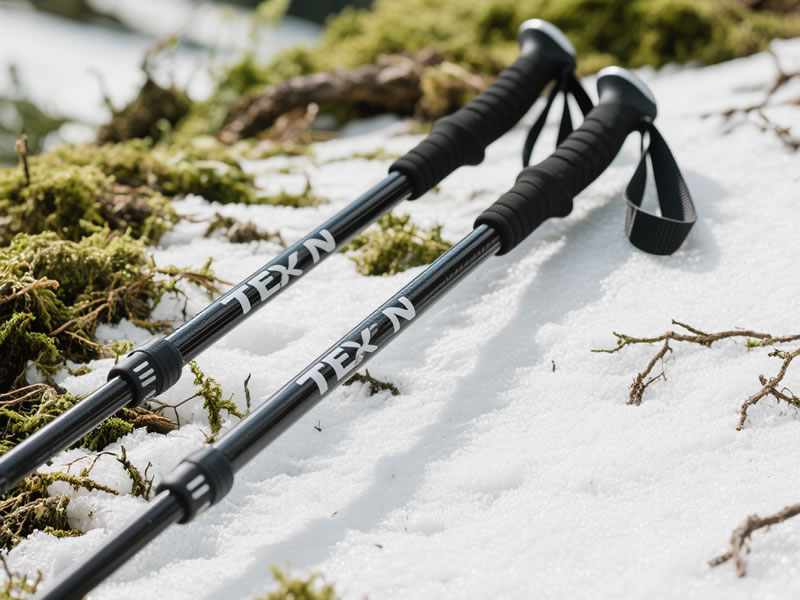
Recommended trekking pole purchase link: https://s.click.aliexpress.com/e/_c4M7OWaN
The environmental impact begins at the very source: the raw materials. Carbon fiber is a synthetic polymer, meaning its primary building block is a non-renewable resource—petroleum. The process starts with refining crude oil into a precursor called polyacrylonitrile (PAN). This precursor then undergoes an incredibly energy-intensive transformation. It must be heated to extreme temperatures (over 2,500°C) in specialized, high-energy-consumption furnaces, first in an oxygen-free environment to stabilize it and then to carbonize it. This "carbonization" process is what gives the fiber its legendary strength and lightness, but it comes with a heavy carbon footprint due to the massive amounts of electricity and natural gas required.
Furthermore, the production of the epoxy resins used to bind the carbon fibers into a solid composite also relies on petrochemicals. The entire manufacturing process generates greenhouse gas emissions and consumes a vast amount of water and energy, far more than the production of aluminum, the primary alternative for trekking poles. While aluminum smelting is also energy-heavy, it is a widely recycled material with established circular systems, something carbon fiber currently lacks.
This leads to the other major environmental challenge: end-of-life disposal. A carbon fiber trekking pole is not a simple, single-material product. It is a composite, making it notoriously difficult to recycle. The processes to separate the carbon fiber from the epoxy matrix are complex, expensive, and not yet widely available. As a result, the vast majority of broken or worn-out carbon fiber poles end up in landfills, where they will not biodegrade for centuries. While some companies and research institutions are developing recycling methods, these are not yet mainstream solutions available to the average consumer.
So, what is an environmentally-conscious hiker to do?
- Choose Durability and Longevity: The most sustainable pole is the one you never have to replace. Invest in a high-quality, durable model from a reputable brand, even if it costs more. A pole that lasts for thousands of miles has a lower per-use environmental impact.
- Consider Aluminum: For many hikers, a high-quality aluminum pole is a more sustainable choice. Aluminum has a well-established and efficient recycling infrastructure, making it a much more circular material. While slightly heavier, modern aluminum alloys are remarkably light and robust.
- Repair, Don't Replace: If a section of your carbon fiber pole breaks, explore repair options. Some companies offer repair services or sell replacement sections, which keeps the product in use and out of the landfill for longer.
- Support Innovative Brands: Look for and support manufacturers who are transparent about their supply chain, invest in recycling programs, or are exploring the use of bio-based resins and recycled carbon fiber.
In conclusion, the ultralight performance of carbon fiber comes with a tangible environmental cost rooted in its fossil fuel origins and energy-intensive creation. As consumers, the most powerful choice we can make is to shift our mindset from mere weight savings to one of longevity and total lifecycle impact. By valuing durability, supporting recycling initiatives, and making conscious purchases, we can help ensure that our journey into the wilderness leaves the lightest possible footprint on the planet itself.




