




Lighten Up Trekking Poles Company History: From Trailside Innovation to Industry Staple
The story of Lighten Up trekking poles is inextricably woven into the very fabric of the modern ultralight backpacking movement. It is not a tale of a massive corporation, but rather one of grassroots innovation, born from the dusty trails of America's longest footpaths and the relentless pursuit of a simpler, lighter way to hike.
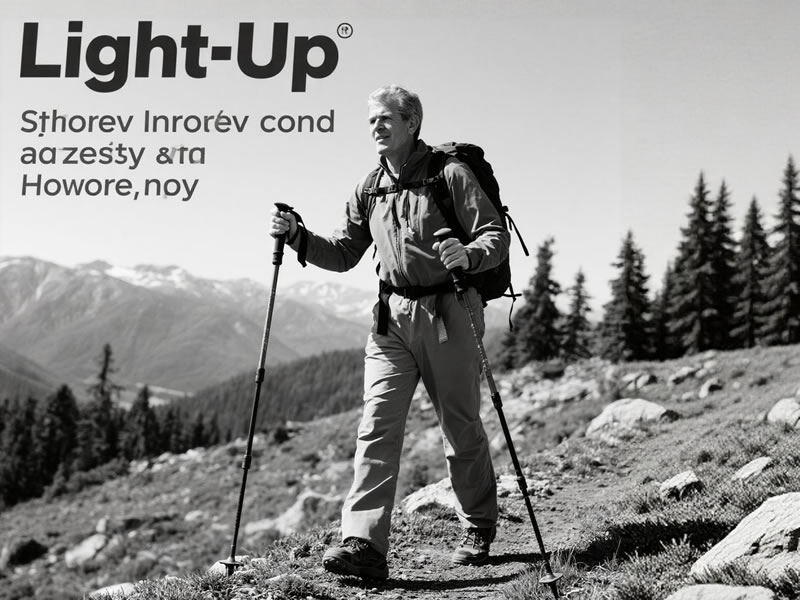
Recommended trekking pole purchase link: https://s.click.aliexpress.com/e/_c4M7OWaN
The history of Lighten Up is deeply connected to its visionary founder, Glen Van Peski. In the 1990s, long before "ultralight" became a mainstream marketing term, Van Peski was already a dedicated long-distance hiker who questioned the conventional wisdom of carrying heavy loads. His personal philosophy—that every ounce saved translated to more miles covered and more joy found on the trail—drove him to modify and create his own gear. His early creations, including a remarkably lightweight backpack, were crafted on his living room floor, earning him a legendary status in the nascent ultralight community.
The company began not as a pole manufacturer, but as a specialized resource. Lighten Up started as a small, mail-order business focused on providing hard-to-find lightweight gear to a growing circle of informed hikers. Van Peski curated products that met his rigorous standards, building a reputation for trust and expertise. It was this direct line to the thru-hiking community that provided the crucial insight for developing their own gear. He listened to the needs of hikers who, like him, were dissatisfied with the heavy, overbuilt trekking poles that dominated the market.
The evolution from retailer to manufacturer was a natural progression. Leveraging his deep understanding of materials and trail-worthy design, Van Peski began offering trekking poles that embodied the core Lighten Up philosophy: maximum functionality with minimum weight. These were not poles designed by engineers in a distant lab; they were born from thousands of miles of real-world use. The initial models were likely sourced or co-developed with manufacturing partners in Asia, but they were distinctively specified and refined based on direct user feedback from the Pacific Crest Trail (PCT) and Appalachian Trail (AT).
Key milestones in the company's pole development included a steadfast commitment to durable yet lightweight materials like 7075 aluminum, the elimination of unnecessary features, and the refinement of simple, reliable locking mechanisms. The brand resisted adding gimmicks, focusing instead on creating a pole that was a reliable, lightweight tool. This authenticity resonated powerfully with the backpacking community. Hikers knew that a product bearing the Lighten Up name had been vetted by one of their own.
While the brand and its product lines, including the popular trekking poles, were later integrated into the broader portfolio of Gossamer Gear (a company Van Peski also helped pioneer), the legacy remains. The Lighten Up name continues to symbolize a foundational principle in the outdoor industry: that the best gear often comes from a deep, authentic connection to the activity it serves.
In conclusion, the history of Lighten Up trekking poles is a chapter in the larger history of ultralight backpacking itself. It’s a story that started with a single hiker’s desire to lighten his load and grew into a trusted brand that helped countless others do the same, proving that the most impactful innovations are often those that simply make the journey easier and more enjoyable.




