




Lighten Up Trekking Poles: Aluminum vs Carbon Fiber Models - A Detailed Comparison
When selecting gear from a trusted brand like Lighten Up, one of the most critical decisions a hiker faces is the choice between aluminum and carbon fiber models. This isn't merely a question of cost; it's a fundamental choice that impacts durability, weight, performance, and overall hiking philosophy. Understanding the nuances between these two materials is key to choosing the perfect pole for your adventures.
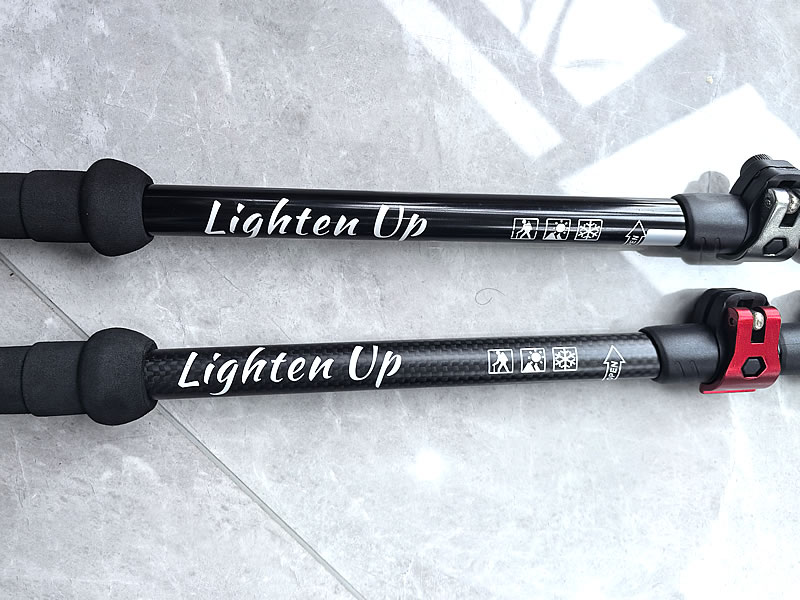
Recommended trekking pole purchase link: https://s.click.aliexpress.com/e/_c4M7OWaN
The Workhorse: Lighten Up Aluminum Models
Lighten Up's aluminum poles are typically crafted from 7075 aluminum alloy, a material renowned in the aerospace and demanding outdoor industries for its exceptional strength.
- Key Advantage: Supreme Durability and Predictability. The primary strength of aluminum is its ductility. When subjected to extreme stress—like a heavy sideways impact in a rock crevice—a high-quality aluminum pole will typically bend before it breaks. This is a crucial safety feature. A bent pole can often be straightened enough to remain functional for the rest of a trip, while a broken pole often cannot. This makes aluminum the preferred choice for:Thru-hikers on rocky, demanding trails like the Appalachian Trail.Off-trail adventurers and mountaineers where poles are subjected to unpredictable loads.Hikers who prioritize absolute reliability and a lower risk of catastrophic failure in remote settings.
- Other Considerations: Aluminum poles generally come with a lower price tag, offering outstanding value. They are also slightly better at damping high-frequency vibrations from the trail than basic carbon models, though they transmit more shock than advanced carbon composites. The main trade-off is weight; aluminum models are consistently heavier than their carbon fiber counterparts.
The Featherweight: Lighten Up Carbon Fiber Models
Carbon fiber poles are constructed from woven carbon filaments set in a resin matrix, creating a composite material that is incredibly strong for its weight.
- Key Advantage: Unmatched Weight Savings. The most significant benefit of carbon fiber is its phenomenal strength-to-weight ratio. Choosing a carbon model can save you several ounces per pole, a substantial reduction that compounds with every step over a long day or a 2,000-mile journey. This weight savings is the primary reason ultralight purists gravitate towards carbon fiber. Additionally, high-quality carbon fiber offers superior dampening of trail shock, leading to less fatigue in your hands and wrists over long, descents on hard-packed trails.
- Other Considerations: The primary drawback of carbon fiber is its failure mode. Unlike aluminum, it is a brittle material. When it fails, it does so catastrophically—it shatters or snaps. There is no bending it back into shape. This risk is highest from sharp, point-impact loads or being jammed and leveraged sideways. Furthermore, carbon fiber poles command a premium price and can be susceptible to damage from sharp impacts that wouldn't faze an aluminum shaft.
Head-to-Head Comparison Table
| Feature | Aluminum Models | Carbon Fiber Models |
|---|---|---|
| Primary Strength | Impact resistance, bendability | Lightweight, high stiffness |
| Failure Mode | Bends | Shatters/Snaps |
| Weight | Heavier | Lighter |
| Vibration Dampening | Good | Excellent (reduces hand fatigue) |
| Cost | More affordable, better value | Premium price |
| Ideal For | Thru-hiking, rough terrain, budget | Ultralight hiking, fastpacking, packed trails |
Making the Right Choice for Your Hike
The decision between Lighten Up's aluminum and carbon fiber models ultimately boils down to your personal priorities and the terrain you frequent.
- Choose Aluminum if: Your mantra is "absolutely bombproof." You hike in rugged, rocky, or off-trail environments where your poles will take a beating. You are on a budget but refuse to compromise on durability, or you simply value the peace of mind that comes with a pole that is more likely to bend than break in your hands.
- Choose Carbon Fiber if: You are a dedicated weight weenie for whom every gram counts. You primarily hike on well-maintained trails and want the vibration-dampening benefits for your joints. Your hiking style is fast and efficient (e.g., fastpacking), and you are willing to pay a premium and exercise more care with your gear to achieve the lightest possible setup.
In conclusion, there is no "better" material, only the right material for you. Lighten Up's strength lies in offering well-executed versions of both, allowing you to select the tool that perfectly aligns with your definition of the perfect hike. By understanding this fundamental trade-off between the resilient workhorse and the delicate thoroughbred, you can invest in a pole that will reliably support every step of your journey.




