




How to use wrist straps on Lighten Up trekking poles?
Many hikers view the wrist straps on their Lighten Up trekking poles as mere safety leashes to prevent dropping them. In reality, these straps are sophisticated load-transfer systems that, when used correctly, can dramatically reduce hand fatigue, improve stability, and enhance hiking efficiency. Proper strap technique transforms your relationship with your poles from simply "holding" them to having them become true extensions of your arms. This guide will walk you through the science, technique, and benefits of mastering your Lighten Up wrist straps.
Recommended trekking pole purchase link: https://s.click.aliexpress.com/e/_c4M7OWaN
The Science Behind the Strap: Why Proper Technique Matters
The fundamental purpose of the wrist strap is to transfer weight from your hands and arms to the stronger bones and ligaments of your wrists and forearms. When you grip a pole tightly for hours, the small muscles in your hands and forearms become fatigued quickly. The strap system allows you to maintain control with a relaxed grip while letting your skeletal structure bear the load.
Lighten Up designs their straps with this specific function in mind - they're not afterthoughts but integral components of the pole's performance. Understanding this principle is the first step toward using them effectively.
Step-by-Step Guide to Proper Strap Usage
Step 1: The Initial Threading
This is where most hikers make their first mistake. Instead of putting your hand through the strap from above and then grabbing the grip, you should:
- Locate the bottom of the strap (where it connects to the pole)
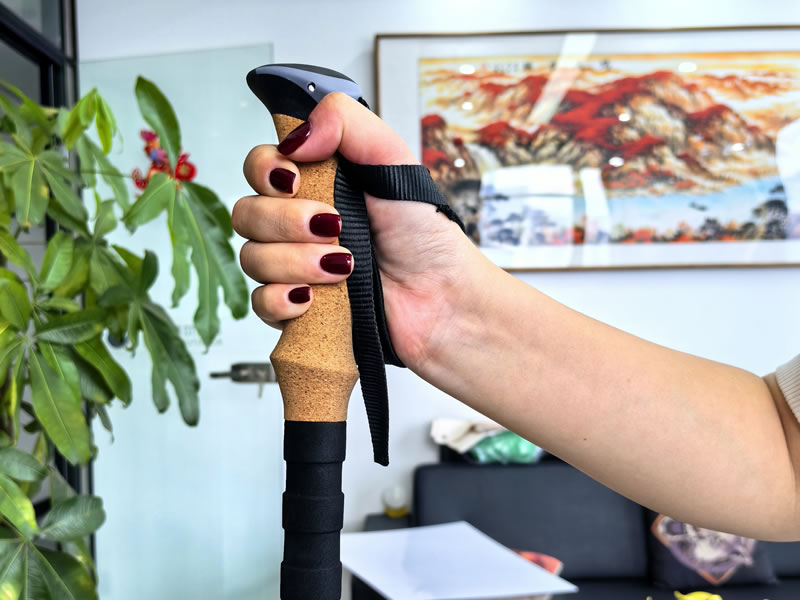
- Slide your hand UPWARD through this opening, palm facing toward you
- Your hand should now be between the strap and the pole grip
Step 2: The Proper Grip Position
- After threading your hand upward, lower your hand onto the grip
- The strap should now lie across the back of your hand, positioned in the space between your thumb and index finger
- Close your hand gently around the grip with the strap resting comfortably in your palm
- The strap should feel snug but not tight around your wrist
Step 3: The Weight Transfer Motion
- As you plant your pole, instead of squeezing the grip tightly, push downward through the heel of your hand
- Allow the strap to take the majority of the weight as you transfer force through the pole
- Maintain a relaxed, almost open-handed grip throughout the motion
- On the backswing, the strap will naturally keep the pole connected to your hand without requiring active gripping
Common Mistakes and Their Consequences
The "Death Grip" Error
Many hikers grab the strap along with the grip, essentially trapping it in their clenched fist. This prevents any effective weight transfer and typically causes:
- Rapid hand and forearm fatigue
- Hot spots and blisters on the palms
- Reduced blood circulation to the hands
- Inability to benefit from the strap system
The "Loose Connection" Problem
Other hikers make the strap too loose, creating a significant gap between the strap and their wrist. This leads to:
- Poor pole control and instability
- The pole bouncing around during use
- Inefficient energy transfer
- Potential for the pole to twist unexpectedly
Advanced Techniques for Different Scenarios
Uphill Technique:
- Maintain standard strap positioning
- Focus on pushing down through the strap during the planting phase
- Use the strap to help "pull" yourself upward on steep sections
Downhill Technique:
- The straps become crucial for shock absorption
- Let the straps bear the impact rather than your joints
- Maintain light grip pressure while allowing the straps to manage deceleration
Long Distance Efficiency:
- Periodically vary your hand position slightly to prevent pressure points
- Regularly check strap tension as hands may swell during extended hiking
- Use the straps to give your grip muscles brief recovery periods
Strap Adjustment and Customization
Lighten Up straps are typically adjustable to fit different hand sizes and preferences:
- Locate the sliding buckle on the strap
- Adjust until the strap feels secure but doesn't restrict blood flow
- Ensure the strap doesn't slide up and down your wrist during normal movement
- Consider that you may need thicker gloves in colder weather and adjust accordingly
When Not to Use the Straps
While generally beneficial, there are specific situations where disengaging from the straps is wiser:
- Extremely technical terrain where quick pole release is necessary
- River crossings where getting tangled could be dangerous
- When learning new techniques where you might need to quickly drop the poles
Maintenance and Care
- Regularly inspect straps for wear, especially at connection points
- Clean straps after muddy or sandy hikes to prevent abrasive damage
- Allow straps to air dry completely before storage
- Check stitching periodically for any signs of failure
Conclusion: Transforming Your Hiking Experience
Mastering your Lighten Up trekking pole wrist straps represents one of the simplest yet most impactful techniques for improving your hiking comfort and efficiency. What seems like a minor detail actually constitutes the fundamental connection between you and your poles. When executed properly, this technique can reduce hand and arm fatigue by up to 30%, allowing you to hike longer distances with greater comfort.
The proper strap technique enables you to harness the full potential of your Lighten Up poles, transforming them from simple walking aids into true efficiency multipliers. This approach perfectly aligns with the Lighten Up philosophy of working smarter, not harder, on the trail. With practice, this method will become second nature, allowing you to focus on the beauty of your surroundings rather than the fatigue in your hands.




