




Using Lighten Up Trekking Poles with Different Baskets: A Guide to Master Every Terrain
Trekking poles are a game-changer for hikers, providing stability, reducing joint impact, and improving endurance. However, many users of the excellent Lighten Up trekking poles overlook one of their most versatile features: the interchangeable basket system. Understanding how to use the right basket for the right condition is not a minor detail—it's the key to unlocking maximum performance, safety, and efficiency on every trail.
Recommended trekking pole purchase link: https://s.click.aliexpress.com/e/_c4M7OWaN
This in-depth guide will walk you through the different types of baskets available for your Lighten Up trekking poles and how to use them to conquer any environment.
Why Baskets Matter: More Than Just an Accessory
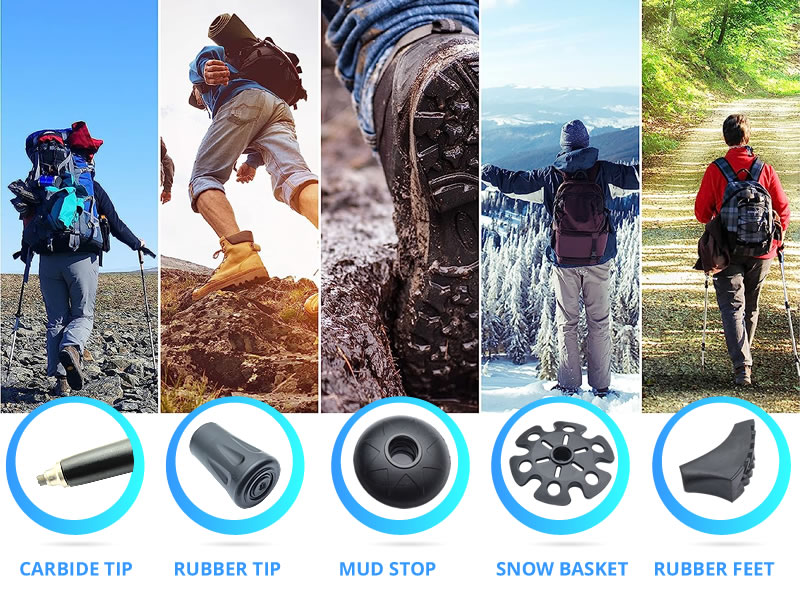
A trekking pole basket is the small, disc-like attachment located just below the tip. Its primary function is to prevent the pole from sinking too deeply into soft surfaces. Using the wrong basket can lead to a frustrating and potentially hazardous experience. A small basket in deep snow will offer no support, while a large basket on a rocky trail can feel clumsy and catch on roots. The ability to swap them makes your Lighten Up poles a truly adaptable tool.
The Basket Arsenal: Choosing Your Weapon for the Trail
Most Lighten Up trekking poles come with a standard set of baskets, but knowing what's available allows you to customize your kit.
1. The Standard/Small Summer Baskets
- When to Use: This is your default, all-around basket for the vast majority of hiking conditions.
- Terrain: Dirt trails, rocky paths, granite slabs, and forest floors.
- Benefits: Their small size (typically 2-3 inches in diameter) ensures they don't snag on rocks, roots, or underbrush. They provide just enough surface area to prevent sinking on firm ground without adding unnecessary bulk or weight, perfectly complementing the ultralight philosophy of the Lighten Up poles.
2. The Larger Mud/Sand Baskets
- When to Use: For wet, muddy trails, bogs, riverbanks, and sandy environments like deserts or beaches.
- Terrain: Deep mud, soft sand, and marshland.
- Benefits: With a diameter of 4-5 inches, these baskets offer a significantly larger surface area. This distributes the pressure from the pole tip, preventing it from plunging deep into soft, yielding ground. This provides a stable platform to push off from, saving immense energy with each step and keeping your hands drier and cleaner.
3. The Powder/Snow Baskets
- When to Use: This is essential gear for snowshoeing, winter mountaineering, or any travel over deep snow.
- Terrain: Fresh powder, packed snow, and icy slopes.
- Benefits: These are the largest baskets, often exceeding 5 inches in diameter and sometimes circular. They function like small snowshoes for your poles, keeping them on the snow's surface to provide a reliable anchor point. Without them, your poles would be useless in winter conditions, sinking deeply and failing to provide any leverage or stability.
How to Change Baskets on Your Lighten Up Trekking Poles
The process is typically simple and tool-free.
- Identify the Mechanism: Most baskets screw on or push directly onto the shaft below the tip.
- Remove the Old Basket: For screw-on types, hold the pole firmly and unscrew the basket in a counter-clockwise direction. For push-fit, simply grip and pull it straight off the shaft.
- Install the New Basket: Align the new basket and either screw it on clockwise or push it firmly into place until it's snug.
- Check Security: Give the basket a gentle tug to ensure it's securely attached before putting weight on the pole.
Conclusion: Optimize Your Gear, Elevate Your Hike
Your Lighten Up trekking poles are designed for performance and adaptability. By proactively managing your basket selection, you transform a great piece of gear into a precision instrument tailored for your specific adventure. Don't just leave the standard baskets on and forget about them. Pack the appropriate set for your journey. This small, simple act of preparation will enhance your stability, conserve your energy, and give you the confidence to tackle whatever the trail throws your way. It’s a minimal effort for a maximum return on your hiking investment.




