




How to Clean and Store My Lighten Up Hammock: The Complete Maintenance Guide
Proper maintenance of your Lighten Up Hammock extends its lifespan, preserves its performance characteristics, and ensures many years of reliable comfort in the backcountry. This comprehensive guide covers everything from routine cleaning to long-term storage, helping you protect your investment while maintaining the technical integrity of the specialized materials.
Understanding Your Hammock's Materials
Before beginning any cleaning process, it's essential to understand what you're working with:
- High-Tenacity Ripstop Nylon: This technical fabric is engineered for strength and lightweight performance but requires specific care to maintain its water resistance and tear strength.
- Silicone-Impregnated Finish: The water-resistant treatment can be compromised by harsh detergents or improper cleaning techniques.
- Reinforced Stitching: The triple-stitched seams and bar-tacked stress points require gentle cleaning to preserve thread integrity.
Step-by-Step Cleaning Process
Regular Maintenance (After Each Trip):
- Shake and Brush: Upon returning home, vigorously shake your hammock to remove dirt, leaves, and debris. Use a soft-bristled brush to gently dislodge any stubborn particles.
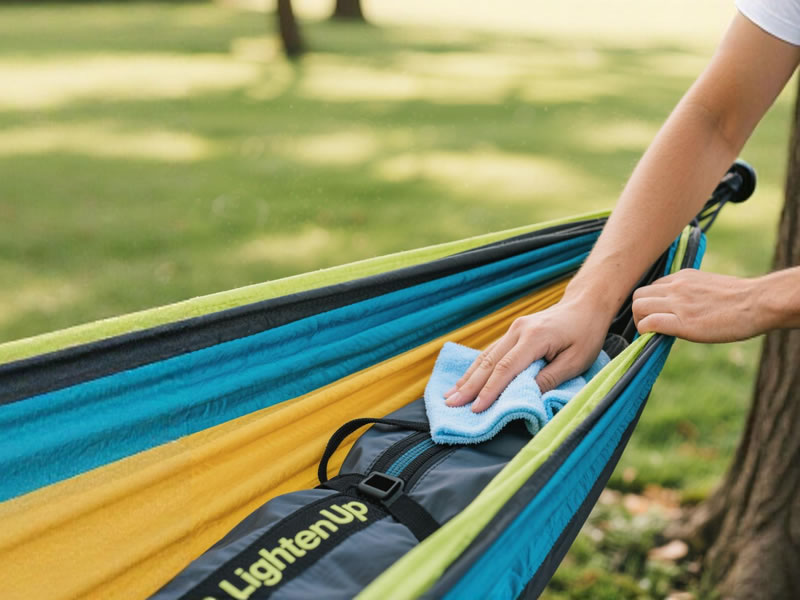
- Spot Cleaning: Address small stains immediately with a damp cloth and a small amount of mild soap. Gently dab rather than rub to prevent grinding particles into the fabric.
- Air Dry: Hang the hammock in a well-ventilated area away from direct sunlight for several hours to ensure complete dryness before storage.
Deep Cleaning (Seasonal or As Needed):
- Preparation: Fill a bathtub or large container with lukewarm water. Avoid hot water, which can damage the silicone treatment and reduce water resistance.
- Gentle Cleaning Solution: Add a small amount of technical gear cleaner (such as Nikwax Tech Wash) or a mild, dye-free soap. Never use detergents, bleach, or fabric softeners.
- Agitation and Soaking: Submerge the hammock and gently agitate with your hands. Allow it to soak for 15-30 minutes for heavily soiled areas.
- Rinsing: Drain the soapy water and refill with clean water. Repeat until all soap residue is removed—typically 3-4 cycles. Soap residue attracts dirt and compromises water resistance.
- Drying: Hang the hammock over two lines (to distribute weight) in a shaded, well-ventilated area. Rotate periodically to ensure even drying.
Special Considerations for Different Conditions
- Mold and Mildew: Create a solution of one part white vinegar to four parts water. Gently spot treat affected areas, then proceed with regular cleaning. Never use bleach.
- Sap and Pitch: Rubbing alcohol applied sparingly with a cloth can break down tree sap without damaging the fabric.
- Salt Water Residue: Soak longer in fresh water to ensure all salt crystals are dissolved and rinsed away.
Proper Storage Techniques
How you store your hammock between uses significantly impacts its longevity:
Short-Term Storage (Between Trips):
- Ensure the hammock is completely dry before storage
- Loosely stuff rather than tightly roll to allow air circulation
- Store in its provided stuff sack in a cool, dry location
- Avoid compressed storage for extended periods
Long-Term Storage (Off-Season):
- Final Cleaning: Give the hammock a thorough cleaning before extended storage
- Complete Drying: Verify every part is bone-dry, paying special attention to seams and end channels
- Loose Folding: Fold the hammock loosely rather than stuffing
- Breathable Container: Store in a cotton pillowcase or breathable storage bag rather than the stuff sack
- Ideal Conditions: Choose a cool, dark, dry location with stable temperature and humidity
Common Maintenance Mistakes to Avoid
- Machine Washing: The agitation can damage stitches, fabric treatment, and create microfractures
- Machine Drying: High heat can melt synthetic fabrics and permanently damage water-resistant coatings
- Harsh Chemicals: Detergents, bleach, and softeners degrade technical fabrics
- Direct Sunlight Drying: UV radiation weakens nylon fibers over time
- Compressed Damp Storage: The leading cause of mold and fabric degradation
Restoring Water Resistance
Over time, the water-resistant treatment may diminish:
- After Cleaning: While the hammock is still damp, spray with a technical waterproofer like Nikwax TX-Direct
- Application: Ensure even coverage, paying extra attention to high-wear areas
- Drying: Hang in a well-ventilated area until completely dry
Inspection and Repair Protocol
Regular maintenance includes inspecting for wear:
- Fabric Inspection: Check for thin spots, abrasion, or developing tears in the ripstop grid
- Stitch Check: Examine all stitching, especially at end channels and stress points
- Hardware Inspection: Check carabiners for cracks, gate issues, or corrosion
- Suspension System: Inspect straps for fraying, weakened loops, or UV damage
Seasonal Maintenance Schedule
- Spring: Inspection and light cleaning after winter storage
- Summer: Regular spot cleaning between trips
- Fall: Deep cleaning before extended storage
- Winter: Check storage conditions periodically
Conclusion: Preservation Through Proper Care
Your Lighten Up Hammock represents an investment in outdoor comfort that, with proper care, will provide years of reliable service. The relatively small time investment in correct cleaning and storage pays substantial dividends in extended product life and maintained performance. By following these guidelines, you're not just cleaning gear—you're preserving the potential for countless future adventures and ensuring that your hammock remains a trustworthy companion in the backcountry for seasons to come.
Remember that proper maintenance is cumulative; each correct cleaning and storage decision contributes to the long-term health of your equipment. Treat your hammock with the same respect you have for the environments you use it in, and it will reward you with the same reliable performance that made you choose Lighten Up in the first place.




