




Best Lighten Up Hammock Model for Cold Weather Camping
Choosing the best Lighten Up Hammock for cold weather camping requires a fundamental shift in perspective. The hammock itself is not the primary source of warmth; it is the foundational platform upon which a complete, insulated sleep system is built. Therefore, the "best" model is the one that most effectively integrates with specialized winter gear to create a sheltered, warm microclimate in freezing conditions.
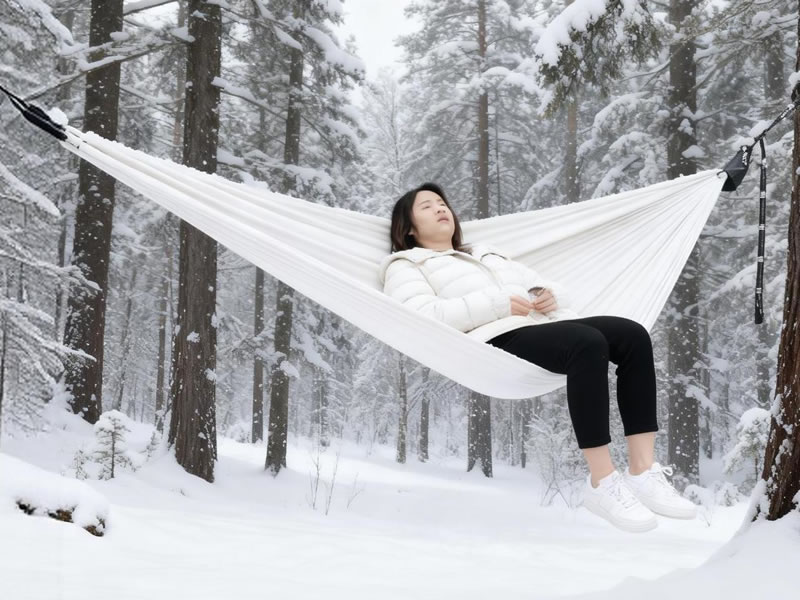
Core Principle: Battling Convective Heat Loss
The primary challenge in a hammock is convective heat loss. Unlike a tent on the ground, you are surrounded by moving air that swiftly wicks away body heat from all sides, especially from below. Insulation underneath you is non-negotiable; a top bag alone is insufficient as your body weight compresses it, eliminating its loft and warmth.
Part 1: Evaluating the Hammock Platform
While any Lighten Up hammock can be used in winter, specific designs offer distinct advantages for system integration.
| Feature / Model | Single-Layer (e.g., Ultralight) | Double-Layer (e.g., Expedition) |
|---|---|---|
| Primary Construction | One layer of ripstop nylon. | Two separate fabric layers with a gap between. |
| Key Cold-Weather Pro | Ultimate lightness for fast, cold-weather trips. | Structural Advantage: A sleeping pad can be securely inserted between the layers, locking it in place and eliminating slippage throughout the night. This is the most reliable pad-integration method. |
| Best For | Experienced ultralight winter backpackers. | Most campers, especially those using inflatable pads or who prioritize stability. |
Verdict: For most users, a Double-Layer model is the superior choice for cold weather. It solves the perennial problem of pad movement, ensuring consistent insulation. Its slightly heavier weight is a worthwhile trade-off for guaranteed warmth and comfort.
Part 2: The Essential Winter Trilogy: Insulation & Shelter
The hammock is just 25% of the system. These three components are critical:
- Bottom Insulation: The Underquilt (Mandatory)This is the most important investment. An underquilt hangs beneath the hammock, creating a lofted layer of trapped warm air without compression. For winter, select a full-length, down-filled underquilt rated at least 10-20°F below your expected low temperature. Synthetic options perform better in wet conditions but are bulkier.
- Top Insulation: A Top Quilt or Sleeping BagA dedicated top quilt—essentially a backless sleeping bag—is ideal for hammocks as it eliminates dead weight and material underneath you. A cold-rated mummy sleeping bag is also effective, though it can feel restrictive.
- Overhead Shelter: A Winter Tarp with DoorsYour standard rain fly is inadequate. A winter tarp or "tarp with doors" is essential. It provides extensive coverage and features adjustable ends ("doors") that can be sealed shut in wind, snow, or blowing rain, creating a protected, semi-enclosed space that retains heat and blocks elements.
Part 3: System Synergy and Practical Setups
True winter readiness comes from synergy. Here are two proven system builds:
- Setup A (Deep Winter, Below 20°F/-7°C):Hammock: Lighten Up Double-Layer.Insulation: A -10°F (-23°C) underquilt + a 0°F (-18°C) top quilt.Shelter: Winter tarp with doors, pitched low.Logic: The double-layer secures a high-R-value pad as a backup to the underquilt, creating redundant insulation—a key safety principle in extreme cold.
- Setup B (Shoulder Season / Fast & Light, 20-35°F/-7 to 2°C):Hammock: Lighten Up Single-Layer.Insulation: A 20°F (-7°C) underquilt + a 30°F (-1°C) top quilt.Shelter: Standard hex tarp pitched in a storm-blocking configuration.Logic: Prioritizes minimal weight while still employing the critical underquilt-tarp core system for safety and comfort.
Final Recommendation & Buying Strategy
Best All-Around Model: The Lighten Up Double-Layer Hammock provides the most versatile and foolproof foundation for a winter system, especially for those using pads.
Investment Priority: Allocate your budget in this order:
- A properly rated underquilt.
- A robust winter tarp.
- The double-layer hammock.
- A high-loft top quilt.
Winter hammock camping is about managing the complete airspace around your body. By starting with the right platform—a double-layer Lighten Up Hammock—and building it out with a dedicated underquilt and winter tarp, you create a shelter that is not only resilient in the face of cold but also uniquely comfortable. Explore the compatible insulation systems and four-season tarps recommended on the Lighten Up official site to build your ultimate cold-weather sanctuary.




