




What Does a Carabiner Do?
To ask "What does a carabiner do?" is to unlock the story of one of the world's most versatile tools. While its iconic image is tied to rock climbing, its function extends far beyond the cliff face. At its most fundamental, a carabiner is a secure, load-bearing connector. Its job is to create a temporary, strong, and often quick-to-engage link between two separate objects, a role that makes it indispensable in both life-saving and everyday organizational tasks.
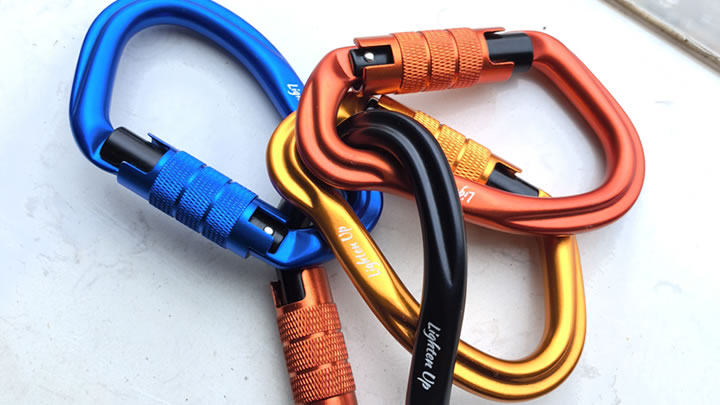
The Core Function: Connecting Under Load
The primary function of any carabiner is to bear weight or force safely. This is defined by its material (aluminum or steel) and its kN (kilonewton) rating. This core function breaks down into specific applications:
- Safety and Life Support: This is its most critical role. In climbing, mountaineering, and industrial rope access, carabiners form the essential links in a safety chain. They connect the climber's harness to the rope via a belay device, anchor safety ropes to protection points, and secure lanyards in fall arrest systems. Here, locking carabiners are non-negotiable, as their screw or auto-locking gate prevents accidental opening under load or from snagging.
- Load and Gear Management: A secondary, but vital, function is organization and transportation. Climbers use them to rack gear on their harness. Hikers clip them to backpack loops to carry water bottles, trekking poles, or camping gear. They are perfect for suspending equipment off the ground or for creating a makeshift handle to carry bulky items.
- Everyday Utility and Organization: The carabiner’s function has seamlessly translated into daily life. It acts as a reliable key ring, a secure clip for a reusable mask or water bottle, a tether for tools, or a handy leash clip for pets. In these contexts, non-locking, lightweight versions are typically used for convenience.
How It Performs These Functions: The Design Details
The carabiner’s ability to perform these jobs relies on its precise engineering:
- The Spine: Bears the main load. Its strength rating (e.g., 22kN) indicates its capacity in a perfect, straight-pull scenario.
- The Gate: Provides the opening to insert ropes, slings, or other objects. The spring mechanism ensures it snaps shut, creating the closed loop.
- The Locking Mechanism (on safety models): This is the critical feature that upgrades the carabiner from a simple connector to a safety device, preventing gate opening in high-stakes situations.
- The Shape: A D-shape directs force onto the stronger spine, while an oval offers symmetrical organization. An asymmetric D (HMS) is designed specifically for belaying.
Choosing the Right Carabiner for the Job
Understanding function dictates choice:
- For life-critical safety: Always use a locking carabiner from a reputable brand, with a strength rating suitable for the activity.
- For gear organization: Non-locking wire-gate carabiners are lightweight and cost-effective.
- For heavy-duty utility (e.g., towing, industrial): Steel carabiners offer superior abrasion resistance and strength.
A Word of Critical Caution
A carabiner’s function can be compromised by misuse. It is designed to be loaded along its major axis (spine) with the gate closed. Cross-loading (force across the narrow side) or loading with the gate open drastically reduces its strength and can lead to catastrophic failure.
In essence, what a carabiner does is provide a simple, robust solution for creating a secure connection. It is a masterclass in functional design, transforming from a lifeline on a mountain to an organizer in your home, always asking the user to match its capability with informed and responsible use.




