




Screwgate vs Twist Lock Carabiner: A Detailed Safety and Use Analysis
Choosing between a screwgate and a twist lock (auto-locking) carabiner is a fundamental decision for climbers, rescue professionals, and anyone working at height. This choice directly impacts safety, efficiency, and system security. While both are locking carabiners designed to prevent accidental gate opening, their mechanisms, failure modes, and ideal applications differ significantly.
Understanding the Mechanisms
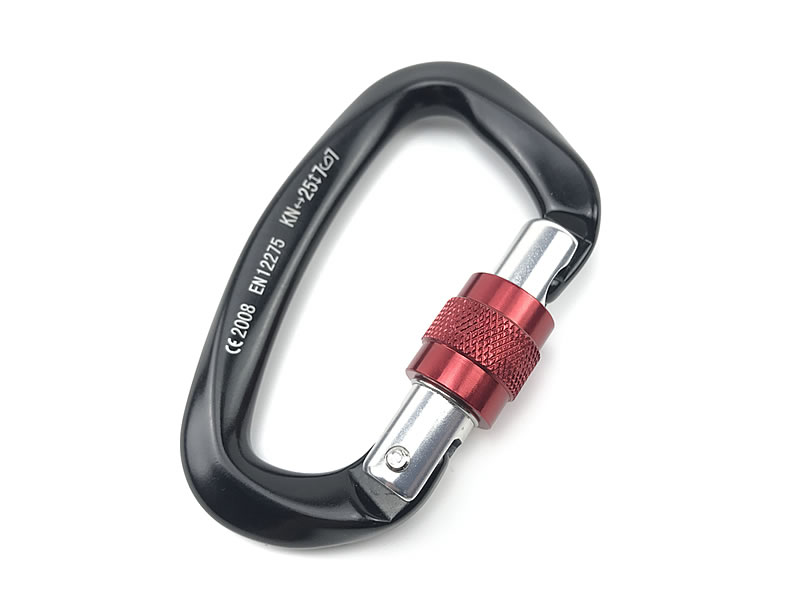
Screwgate Carabiner:
This is a manual locking system. After the spring-loaded gate is closed, a threaded sleeve must be physically screwed down the gate arm until it contacts the carabiner nose, forming a physical barrier. To open, the process is reversed: unscrew the sleeve, then open the gate. Its operation is entirely user-dependent.
Twist Lock (Auto-Locking) Carabiner:
This is an automatic locking system. When the gate is closed, an internal spring mechanism automatically rotates a locking sleeve into position over the gate nose. To open it, the user must perform a two-stage action: first, twist the locking sleeve back against the spring, then open the gate. The lock engages without any additional action from the user.
Comparative Analysis: Key Factors
1. Security & Primary Failure Modes
- Screwgate: Its main vulnerability is human error. In the field, a user may forget to screw it down fully, or vibration may cause the sleeve to back off unintentionally ("cross-loading" a partially open gate is a known hazard). Its security is only as good as the user's vigilance.
- Twist Lock: Engineered to minimize human error, its primary risk is mechanical failure. Dirt, sand, ice, or damage to the spring mechanism can prevent it from locking automatically or make it difficult to unlock. However, when functioning correctly, it provides a consistent, verified lock every time the gate closes.
2. Ease of Use & Speed
- Screwgate: Generally simpler to operate, especially with cold hands or heavy gloves, as it requires a simple twisting motion. However, it is slower for repeated locking/unlocking, as both hands are often needed for a secure, full screw-down.
- Twist Lock: Can be operated with one hand once mastered (press against something to close the gate, which auto-locks). However, the two-stage opening process can be challenging with numb fingers or thick gloves. It excels in situations where a gate is closed once and left unattended.
3. Durability and Maintenance
- Screwgate: Mechanically simple with fewer internal parts. The threads can collect dirt and grime, requiring occasional cleaning. Visual inspection of lock status is immediate.
- Twist Lock: More complex internal mechanism. It is crucial to keep the locking sleeve clean and free of debris. Regular function-testing—ensuring the lock engages with an audible "click" every time—is a vital part of the inspection routine.
4. Weight and Design
Screwgates are typically slightly lighter and less bulky. High-end twist locks are very refined, but the mechanism inherently adds minimal weight and complexity.
Application Recommendations
Choose a Screwgate Carabiner for:
- Belay Devices: Where you are constantly manipulating the carabiner. The simple action is reliable with frequent use.
- Personal Anchor Tethers: When you are directly monitoring the connection.
- General Multipurpose Use: Where you need a reliable, lightweight locking biner that you can visually check regularly.
Choose a Twist Lock Carabiner for:
- Critical Anchor Points: The Master Point in a climbing anchor or rigging system, where the carabiner may be out of sight and unattended for long periods.
- Rescue & Industrial Rope Access: Where protocol demands the highest security to eliminate forgetfulness in high-stress or team environments.
- Top-Rope Setups or Fixed Lines: Where the gate is closed once and should not be accidentally opened by rope movement or contact with the rock.
The Universal Verdict: No Substitute for Vigilance
Regardless of your choice, one rule is absolute: both types require conscious, pre-use inspection. For a screwgate, you must physically verify the sleeve is fully locked. For a twist lock, you must visually and audibly confirm the lock has engaged after closing the gate. No mechanism can replace a thorough equipment check.
Conclusion:
The screwgate offers simplicity and direct user control, ideal for frequently manipulated connections under direct supervision. The twist lock provides automated security, superior for critical, long-term placements where human oversight cannot be constant. A well-equipped practitioner will often carry both, selecting the right tool for the specific task at hand, understanding that informed selection and consistent inspection are the true foundations of safety.




