




D-shaped vs Oval Carabiner: A Guide to Shape, Strength, and Application
Choosing the right carabiner shape is a fundamental aspect of building safe and efficient systems in climbing, rigging, and rescue. The two most common profiles—D-shaped and oval—offer distinct advantages rooted in their geometry. Understanding the difference is not about finding a "best" carabiner, but about selecting the optimal tool for your specific task.
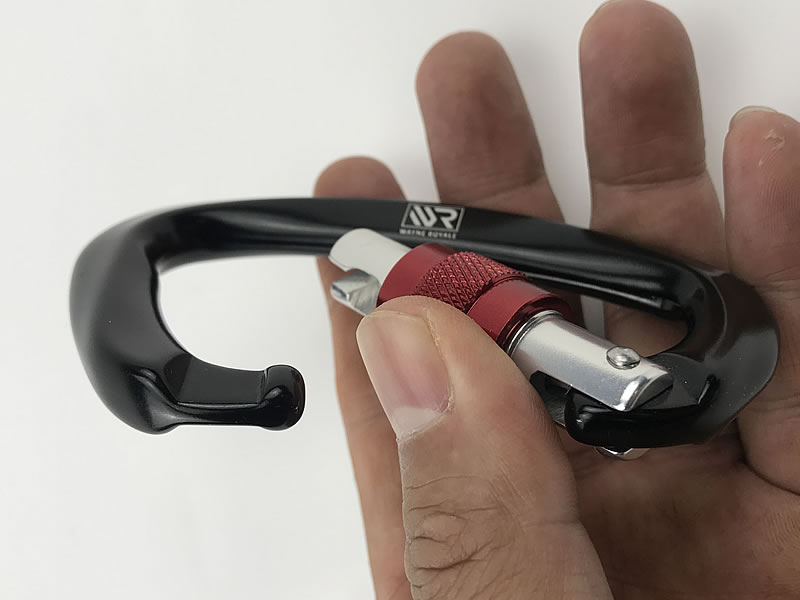
Fundamental Geometry and Force Distribution
The core difference lies in how each shape manages load.
Oval Carabiners are symmetrical. Their smooth, rounded shape creates a consistent, parallel-sided interior. When loaded, force is distributed relatively evenly around the entire frame. This classic design is straightforward and functional.
D-shaped Carabiners are engineered with a key design principle: to direct force along the strongest axis. The straight, non-gated spine (the back of the "D") bears the majority of the load, while the curved gate side completes the shape. This creates a "loaded axis" that is optimally aligned with the force vector, minimizing bending stress on the gate.
Comparative Analysis: Performance and Use
1. Strength-to-Weight Ratio
- D-shaped: The clear winner here. By concentrating material on the load-bearing spine and allowing a narrower, lighter gate-side frame, D-shaped carabiners achieve higher strength ratings (e.g., 22-24 kN) for a given weight. This makes them the preferred choice for any critical, high-load point in a safety system.
- Oval: The symmetrical design requires a more uniform distribution of metal to maintain strength, often resulting in a slightly heavier carabiner for a similar strength rating. Their strength is typically comparable when tested closed, but they are less efficient under cross-loading scenarios.
2. Usability and Function
- Oval Carabiners excel in organization and stability.Multiple Components: Their parallel sides prevent bunching, making them ideal for racking nuts or cams on a gear sling, or for clipping multiple slings or rope loops that need to lie flat.Gate Opening: The symmetrical shape often provides a wider, more consistent gate opening, which can make clipping feel smoother in some situations.Rotation: They are less prone to rotating into an awkward, cross-loaded position when hanging freely.
- D-shaped Carabiners excel in dedicated, high-load applications.Directional Loading: They are designed to be loaded along the spine, making them perfect for belay devices, anchor master points, and anywhere the load direction is predictable.Ergonomics: The curved gate side can fit more comfortably in the hand during clipping.
3. Cross-Loading Risk
Cross-loading occurs when force is applied across the minor axis (sideways on the gate). This dramatically reduces a carabiner's strength.
- D-shaped: Are more susceptible to cross-loading if not set up correctly, as their asymmetrical shape can encourage rotation under certain conditions.
- Oval: Are inherently more stable against cross-loading due to their symmetry, though the risk is never zero.
Practical Application Guide
Choose an Oval Carabiner for:
- Gear Organization: As the central carabiner on a gear sling for trad climbing.
- Equalizing Multiple Elements: In an anchor where three or more slings need to be gathered without twisting.
- Haul Systems or Pulleys: Where a smooth, straight-sided interface is beneficial.
Choose a D-shaped Carabiner for:
- Critical Life-Support Links: As your belay device carabiner, or for connecting your harness to an anchor via a personal anchor system (PAS).
- Anchor Master Points: Where the primary load from the rope will be directed down the spine.
- Any High-Stress, Single-Direction Load: Where maximizing strength-to-weight is a priority.
Important Note: This discussion applies to locking carabiners for life-support applications. Both shapes are widely available as non-locking carabiners for quickdraws, with "D" or asymmetrical shapes being the modern standard for the rope-end due to their strength.
Conclusion: It's About the Right Tool
Your rack will likely contain both shapes. The modern, weight-conscious climber will favor D-shaped carabiners for the majority of their direct safety connections—belay, anchors, clove hitches—leveraging their superior strength efficiency. They will keep a few oval carabiners in their kit for superior organization and managing multi-point connections cleanly.
Ultimately, the choice between D and oval is an exercise in applied physics. By matching the carabiner's engineered strength profile to the demands of your specific task, you build systems that are not only stronger but also more predictable and efficient. Always remember, irrespective of shape, a rigorous pre-use inspection and proper locking procedure remain the non-negotiable foundations of safety.




