




Wiregate vs Solid Gate Carabiner: A Technical and Practical Analysis
In the pursuit of optimizing your rack, the choice between a wiregate and a solid gate (often called "bar stock" or "standard gate") carabiner is a frequent consideration. This decision goes beyond simple preference, touching on factors of weight, durability, cold-weather performance, and handling. Understanding the engineering and practical implications of each design will help you select the right tool for your specific discipline and conditions.
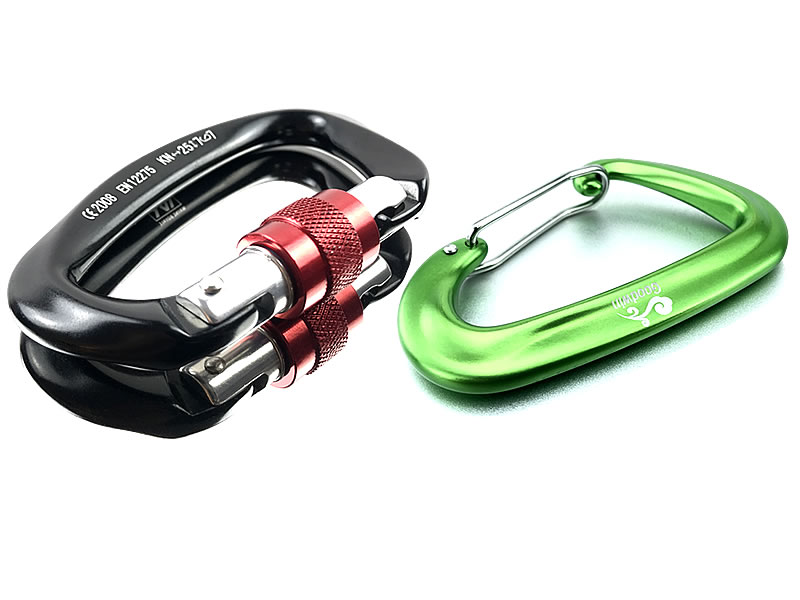
Fundamental Construction and Design
Solid Gate Carabiners feature a gate machined from a solid piece of aluminum alloy, identical to the carabiner's body. This creates a broad, flat surface area. They are the traditional, robust design found on most locking carabiners and many general-use models.
Wiregate Carabiners utilize a gate formed from a bent strand of high-tensile steel or titanium wire. This results in a narrower, rounded profile and a notably lighter mechanism.
Comparative Analysis: Performance Trade-offs
1. Weight and Strength
- Wiregate: The clear winner in weight reduction. Replacing the solid aluminum gate with a thin wire shaves off significant grams, a critical factor for sport climbers and alpine athletes counting every ounce. Despite their slender appearance, modern wiregates meet the same UIAA/CE strength standards (typically 22-25 kN major axis) as their solid-gate counterparts.
- Solid Gate: Heavier, but this weight often translates to a subjective feeling of robustness and durability. The solid metal gate is less prone to deformation from minor impacts against rock.
2. Gate Function and "Gate Flutter"
- Gate Flutter: This is a key differentiator. During a dynamic fall, the rope's movement can generate suction, potentially pulling a carabiner's gate open momentarily. Due to their lower mass, wiregates are significantly less susceptible to this phenomenon. Their lightweight gate simply doesn't have enough inertia to be pulled open as easily by suction forces.
- Solid Gate: Their higher-mass gate is more prone to inertia-induced gate flutter in severe, high-factor falls. However, for most climbing scenarios, this is a minimal risk and is mitigated by using the carabiner correctly (with the gate opposed to the rock or other carabiners).
3. Cold Weather and Icing Performance
- Wiregate: Excell in cold and icy conditions. Their smaller surface area and the lack of a tight-fitting solid gate sleeve (common on auto-locking designs) leave less room for ice to form and jam the mechanism. The wire can often break through thin ice easily.
- Solid Gate: More susceptible to icing shut, especially locking models where ice can freeze the sleeve mechanism. In freezing environments, they require more vigilant maintenance.
4. Durability and Handling
- Solid Gate: Generally more durable against abrasion and impact. The broad gate is easier to handle with cold or gloved hands and often features a more positive "snap" when closing. The larger gate mouth can also make clipping slightly easier.
- Wiregate: The thin wire is more vulnerable to notching or damage from repeated, forceful rope movement (e.g., at a high-traffic top-rope anchor). They can also be slightly trickier to manipulate with bulky gloves.
Practical Application Guide
Choose a Wiregate Carabiner for:
- Sport Climbing Quickdraws: Where weight savings on a dozen draws is substantial and gate flutter resistance is a bonus.
- Alpine and Ice Climbing: For superior resistance to freezing and to reduce overall pack weight.
- The Rope-End of Traditional Quickdraws: To benefit from lighter weight and reduced gate flutter on protection that might see significant rope drag.
Choose a Solid Gate Carabiner for:
- Belay Devices and Critical Anchor Points: Where the robust feel, easy handling, and high abrasion resistance are valued. Most locking carabiners are solid gate.
- The Gear-End of Traditional Quickdraws: Where the carabiner is repeatedly clipped to rough webbing and metal gear, demanding higher abrasion resistance.
- Heavy-Duty Use & Rigging: In scenarios like canyoneering, rescue, or fixed anchors where the carabiner may see more abrasive wear and frequent, forceful loading.
Conclusion: A Balanced Rack for Modern Climbing
The debate isn't about which is universally better, but which is more appropriate for a specific task. The evolution of wiregate technology has made them exceptionally reliable and strong, not just a "lightweight alternative." Many climbers optimize their systems by employing a hybrid approach: using wiregates for weight-critical, high-movement applications like quickdraws, and relying on solid-gate carabiners for high-wear, high-handling positions like belay stations and anchor construction.
Ultimately, both designs are rigorously tested and safe when used within their limits. Your choice should be informed by the primary demands of your activity—be it shaving grams for a redpoint attempt, ensuring bombproof reliability on a multi-pitch anchor, or needing a gate that won’t freeze on an ice route. By understanding the inherent trade-offs, you can build a rack that is not only lighter and more efficient but also intelligently tailored to the challenges at hand.




