




How to Attach a Carabiner to a Backpack: A Guide for Security and Function
Attaching a carabiner to a backpack seems straightforward, but doing it correctly is the difference between a secure, functional setup and a lost piece of gear or a damaged pack. Whether you're a hiker needing quick access to water, a commuter organizing daily essentials, or a climber extending their carry capacity, the right technique matters. This guide covers the principles of secure attachment, optimal placement, and critical safety considerations.
The Golden Rule: Identify Load-Bearing Attachment Points
Never clip a carabiner to a random strap or zipper pull. These are not designed for load and will fail. Only use points specifically built for attachment:
- Sewn-in Gear Loops: Robust, reinforced nylon loops often found on the shoulder straps, hip belt, or front of the pack. These are ideal for small items.
- Daisy Chains or Lash Tabs: Rows of horizontal loops running down the front or sides of the pack. They allow for modular and adjustable attachment.
- Ice Axe/Pole Loops: Heavy-duty loops at the bottom or sides of the pack, designed for high-load items.
- Compression Straps: You can safely thread a carabiner under a tightened compression strap for a semi-permanent hold.
Secure Attachment Methods: From Basic to Bombproof
Method 1: The Standard Clip (For Quick Access)
- How: Simply open the carabiner gate and clip it directly onto a sewn loop.
- Best For: Lightweight, frequently accessed items (e.g., a dog leash, gloves, a compass). Use a locking carabiner (screwgate or auto-lock) for anything you cannot afford to lose, as movement can cause a non-locker to snag open.
Method 2: The Threaded Spine (Maximum Security)
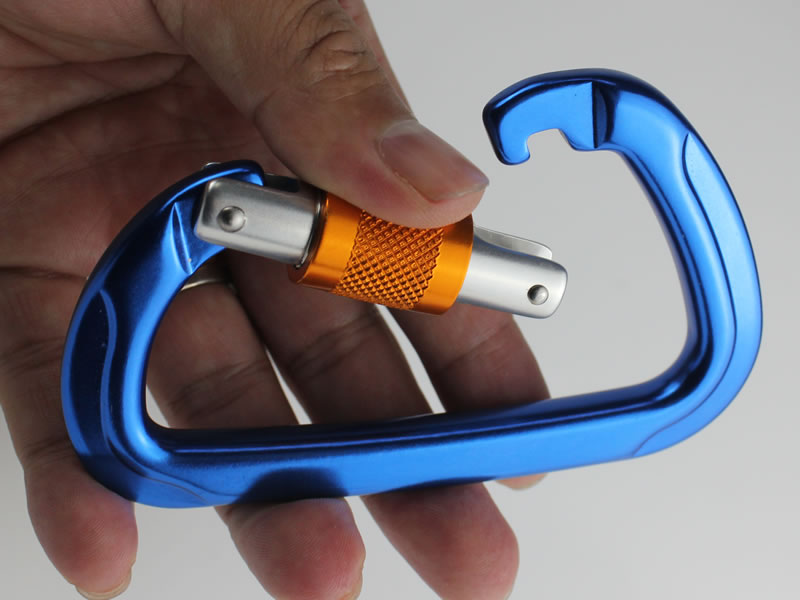
- How: Do not open the gate. Instead, thread the pack's load-bearing loop through the inside of the carabiner's spine (the solid, curved back), then close the gate on your item. This attaches the carabiner's body, not just the gate, to the pack.
- Best For: Semi-permanent attachment of heavy or critical items (e.g., a water bottle, camera, trekking pole basket). This method places the load on the carabiner's strongest axis and prevents the pack's loop from accidentally opening the gate.
Method 3: Integration with Daisy Chains
- How: Use two carabiners in a "gate oppose" setup. Clip one carabiner through two adjacent daisy chain loops, then clip the second carabiner (holding your item) to the first. This prevents the carabiners from twisting into a cross-loaded position.
- Best For: Stabilizing bulky items or creating a versatile attachment point that won't slide.
Practical Applications & What to Attach
- Shoulder Straps: Perfect for clipping a small bottle, GPS, or sunglasses within easy reach. Ensure the item is lightweight to avoid unbalanced strain.
- Front Daisy Chain: Excellent for organizing multiple items: a whistle, trail map case, hand sanitizer, and car keys. Keeps essentials accessible without opening the main pack.
- Side Loops/Compression Straps: Ideal for carrying a rolled-up jacket, trekking poles (using the threaded spine method), or a climbing helmet.
- Bottom/Ice Axe Loops: The best location for wet, muddy, or heavy gear like wet shoes, a rolled-up sit pad, or a climbing rope.
Critical Safety and Care Warnings
- Avoid Cross-Loading: Never let the carabiner bear weight sideways on its gate. Ensure the load pulls directly down the carabiner's long, solid spine. Use two carabiners in opposition if necessary.
- Mind the Gate: Position the carabiner so the gate faces away from your body and the pack fabric. This minimizes the chance of it being pressed open accidentally.
- Respect Weight Limits: Backpack attachment points are strong but not infinite. Distribute weight evenly. Avoid hanging multiple heavy items on one point.
- Pack Integrity is Key: Your attachment is only as strong as the loop it's on. Regularly inspect these points for fraying, torn stitching, or UV degradation.
- Carabiner Fitness: Use a carabiner suitable for the task. A worn-out keychain carabiner is not fit for holding a liter water bottle on a hike. Inspect for gate wear, cracks, and smooth function.
Conclusion: Purposeful Attachment
Attaching a carabiner to your backpack is a simple yet powerful way to customize your load carriage. By consciously choosing robust attachment points, employing the threaded-spine method for security, and always respecting the mechanics of your gear, you transform a simple clip into a reliable extension of your backpack’s functionality. Whether for convenience on the daily commute or for critical access in the backcountry, this disciplined approach ensures your gear stays where you put it, allowing you to focus on the journey ahead.




