




What is a Wiregate Carabiner and Its Advantages?
In the world of climbing carabiners, the wiregate represents a significant evolution in design, prioritizing performance and reliability under demanding conditions. A wiregate carabiner is defined by its gate mechanism: instead of a solid bar of aluminum, the gate is constructed from a bent steel wire. This seemingly simple substitution from a solid gate to a wire gate delivers a suite of tangible advantages that have made it the dominant choice for sport climbing, alpine pursuits, and lightweight racking.
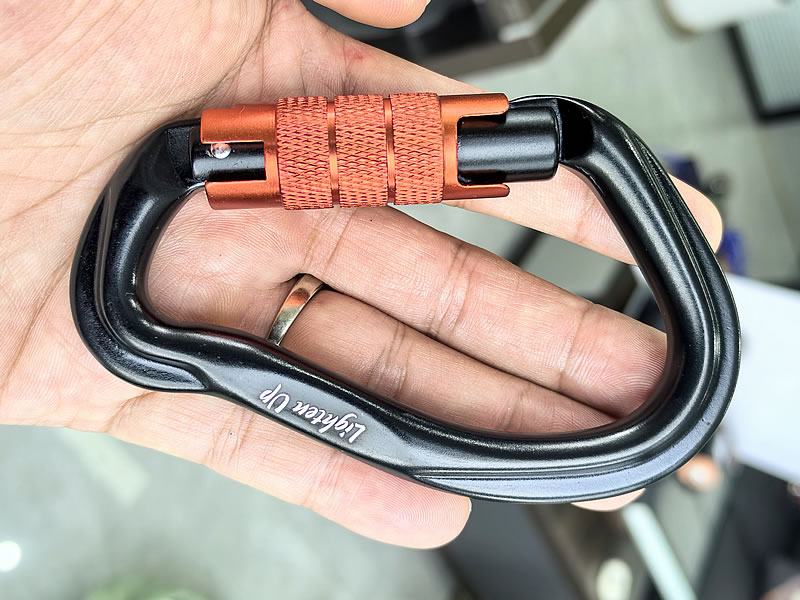
Core Design and Mechanism
The wiregate functions on the same principle as a traditional solid-gate carabiner: a spring mechanism forces the gate closed, and pressing the thumb tab compresses the spring to open it. However, the use of a thin, high-tensile steel wire radically changes its physical properties. The gate travels along the same axis but with significantly less mass.
Key Advantages Explained
1. Reduced Weight
This is the most immediately apparent benefit. By replacing a solid aluminum gate with a slender steel wire, manufacturers can shave 5-10 grams per carabiner. While this seems minor, the cumulative effect is substantial. A trad climber carrying 20 carabiners could save up to 200 grams—the weight of a large cam—directly reducing fatigue on long routes and multi-pitch climbs.
2. Minimized Gate Flutter
This is a critical performance and safety advantage. During a dynamic fall, the immense force and vibration can cause a solid gate to oscillate rapidly, a phenomenon known as "gate flutter." This momentary opening under load temporarily reduces the carabiner's strength to its much lower open-gate rating. The reduced mass and inertia of a wiregate make it far less prone to this oscillation, helping it stay closed more reliably during the peak forces of a fall.
3. Superior Ice Resistance
In cold, wet, or icy conditions, a solid-gate carabiner can freeze shut as moisture seeps into the tighter spaces around the gate and spring. The open, simpler design of a wiregate presents fewer surfaces for ice to bond and less interior space for moisture to accumulate, making it much easier to open in freezing temperatures. This makes wiregates a preferred choice for alpine and ice climbing.
4. Reduced "Walk" or "Creep"
When connected to a bolt hanger or other carabiner, solid gates can sometimes experience rotational force that causes them to unscrew or "walk" open if they are locking models. The wiregate's design and lighter tension can sometimes reduce this tendency, promoting a more stable orientation.
5. Durable Spring Mechanism
The spring in a wiregate is typically a robust coil that is well-protected within the carabiner's nose. This design is often considered less susceptible to dirt intrusion and spring fatigue compared to some solid-gate designs, contributing to long-term, reliable action.
Considerations and Comparison to Solid Gates
While wiregates excel in many areas, solid-gate carabiners still have their place:
- Durability in Abrasive Environments: For big wall climbing or aid climbing where carabiners are constantly dragged over rough rock, a solid gate may withstand abrasion slightly better.
- Ease of Handling: Some climbers find the broader thumb tab of a solid gate easier to manipulate, especially with cold or gloved hands.
- Locking Mechanisms: For locking carabiners, the solid sleeve of a screw-gate can feel more robust, though wiregate lockers (like the Black Diamond GridLock) are increasingly popular.
Popular Models and Trusted Brands
The wiregate design has been perfected by major manufacturers:
- Black Diamond: The HotForge and Nitron series are quintessential wiregates.
- Petzl: The Spirit and Ange models are legends of lightweight performance.
- DMM: The Alpha Sport and Shadow are renowned for their innovative, strong wiregate designs.
- Camp: The Photon Wire offers exceptional value and performance.
Conclusion: The Performance Standard
The wiregate carabiner is a triumph of intelligent, purpose-driven design. By solving specific problems—weight, gate flutter, and ice jamming—it has become the default choice for climbers seeking efficiency and reliability. It demonstrates that in engineering, less (mass) can indeed be more (performance, safety, and reliability). Whether you're clipping the bolt of a sport route or building a lightweight alpine rack, the wiregate carabiner provides a critical advantage, proving that the smallest details in gear design can have a profound impact on performance and safety. Always ensure any carabiner you use, wiregate or otherwise, bears the necessary UIAA/CE certification for climbing safety.




