




What Does Triple-Action Lock Mean on a Carabiner?
In the world of safety-critical connectors, the term "triple-action lock" signifies one of the most secure gate mechanisms available. It describes an auto-locking carabiner that requires three distinct, deliberate motions to open it. This design is engineered to be foolproof against accidental opening, making it a gold standard for climbing, industrial work-at-height, and rescue where a single point of failure is unacceptable.
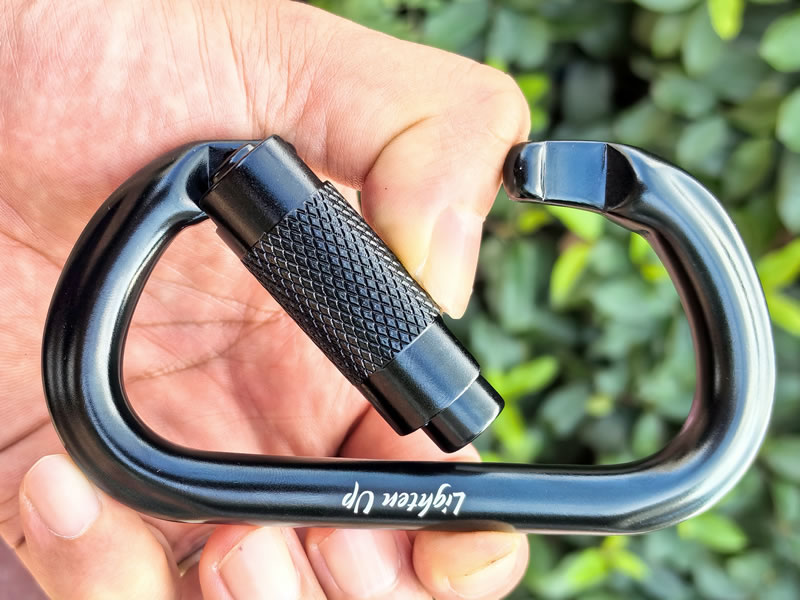
The Core Mechanism: A Three-Step Sequence
Unlike a standard screw-gate that requires manual twisting to lock, a triple-action lock engages automatically when the gate closes. You hear and feel a definitive click. To open it, you cannot simply pull the gate. You must perform a specific, sequential disengagement:
- PUSH: Press the locking sleeve inward, compressing a spring. This action disengages the initial lock.
- TWIST: While holding the sleeve pushed in, rotate it (usually 90 degrees) to align a channel with the gate pin.
- PULL: Only now can the gate be swung open.
This sequence is intentionally non-intuitive. It cannot be accomplished by a random snag, a bump against the rock, or the vibration of a fall.
Why This Design? The Philosophy of Passive Safety
The triple-action lock is built on the principle of passive or "brain-off" safety.
- Screw-Gate Reliance: A standard screw-gate relies on the user's memory and diligence to twist the sleeve shut. Under stress, fatigue, or distraction, this can be forgotten.
- Triple-Action Assurance: A triple-action lock removes this human error variable. The moment the gate closes, it is mechanically locked. Security is the default state.
Key Advantages Over Other Locking Types
- Vs. Screw-Gate: Eliminates the risk of an unlocked or cross-threaded gate. Much faster to secure (close-and-click vs. close-and-screw).
- Vs. Simple Auto-Lockers (e.g., twist-lock): The three-step sequence provides a higher level of security against persistent snags or manipulation by rope or gear. It is a more positive, redundant lock.
- Security in Congested Systems: In complex anchor setups, carabiners can rub against each other. This friction can slowly unscrew a screw-gate—a phenomenon called "gate walk." A triple-action lock is immune to this.
Practical Considerations and Usage Notes
- The Audible Click: Always wait for and verify the audible and tactile click when the gate closes. No click means the lock is not engaged.
- Operation with Gloves/Cold Hands: The sequence can be challenging with thick gloves or numb fingers. Practice is essential to build muscle memory.
- Dirt and Debris: Like all complex mechanisms, it can be more susceptible to jamming if clogged with mud, ice, or sand than a simple screw-gate. Regular cleaning is vital.
- Not a Substitute for Vigilance: You must still visually inspect that the lock is fully engaged. The sleeve should be flush in its locked position.
Ideal Applications for a Triple-Action Lock Carabiner
This mechanism is particularly valued for:
- Belay and Rappel Devices: The primary connection between you and the rope system.
- Critical Anchor Points: The master carabiner in an anchor, connecting the harness to the safety system.
- Professional/Rope Access Use: Where protocols mandate the highest security and equipment is subject to daily, rigorous use.
Popular Models Featuring Triple-Action Locks
The design is championed by several leading brands:
- Black Diamond GridLock: A benchmark design, known for its intuitive push-twist-pull action.
- DMM Sentinel & Shield: Renowned for their robust and reliable triple-action mechanism.
- Edelrid Bulletproof and Sirix: Feature similar multi-stage auto-locking systems.
Conclusion: Engineering for Human Error
A triple-action lock is more than a feature; it is a safety philosophy cast in metal. It acknowledges that humans make mistakes, especially under pressure, and builds a mechanical backup to compensate. For anyone operating in an environment where a gate opening could have severe consequences, it represents the pinnacle of secure connection technology. By understanding and correctly using its three-step sequence, you integrate a powerful layer of fail-safe security into your personal safety system, allowing you to focus on the task at hand with greater confidence.




