




Best Carabiners for Via Ferrata: A Guide to Specialized Safety Systems
Selecting the right carabiner for via ferrata is not a matter of choosing a standalone product from a climbing rack. Via ferrata demands a complete, integrated safety system where the carabiners are a critical component of a specialized energy-absorbing lanyard. Understanding this system, its certification, and the specific design of its carabiners is essential for safe travel on these protected climbing routes.
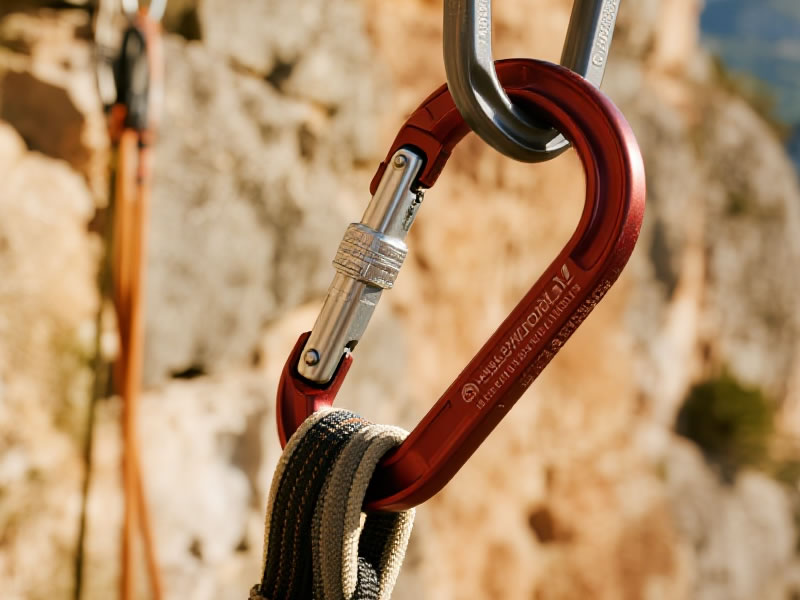
The Core Concept: It's a System, Not a Carabiner
For via ferrata, you do not purchase a standard climbing carabiner. Instead, you invest in a via ferrata lanyard (or set). This lanyard is a Y-shaped system with:
- An energy absorber (a tearable or deforming material sewn into the lanyard).
- Two impact-resistant ropes or webbing arms.
- Two specialized locking carabiners permanently attached to the ends of these arms.
This integrated design is certified as a complete unit to manage the unique forces of a via ferrata fall.
Why Standard Climbing Carabiners Are Inadequate and Dangerous
Using a quickdraw or a regular locking carabiner on a via ferrata is extremely dangerous. Here’s why:
- No Energy Absorption: A fall on a via ferrata generates high-impact forces on a static steel cable. The integrated energy absorber is designed to rip or deform, dramatically reducing the force on your body and the anchor points to survivable levels. A standard carabiner offers no such protection.
- Abrasion: Steel cables are incredibly abrasive. The carabiners on a via ferrata lanyard are designed for thousands of clips onto a harsh steel surface. Aluminum climbing carabiners would quickly develop deep, dangerous grooves.
- Security: The system requires a carabiner that cannot come unclipped from the cable, even if twisted or bounced.
Key Features of Via Ferrata Carabiners (Within the System)
The carabiners on a certified lanyard are engineered for this specific abuse:
- Material: Forged or Machined Steel. This is non-negotiable. Steel provides the necessary abrasion resistance against the cable. Aluminum would wear out dangerously fast.
- Locking Mechanism: Auto-Locking, Often Triple-Action. The carabiner must lock automatically upon closing. Triple-action locks (push-twist-pull) like those on the Petzl Vertigo or Edelrid Owl are the gold standard, providing the highest security against accidental opening from bumps against the rock or cable.
- Shape and Design: They often have a large, rounded nose for smooth clipping over thick cables and eyes of pitons. The internal curvature is designed to fit snugly around a standard via ferrata cable.
- Attachment: They are permanently and robustly sewn or swaged to the lanyard's arms. They are not meant to be removed or swapped.
Crucial Certification: Look for This Stamp
Your primary selection criterion is the certification of the entire lanyard system. It must meet one or both of these standards:
- UIAA 128
- CE EN 958These certifications guarantee the system has been tested for impact force, strength of the carabiners and stitching, and durability of the energy absorber. Never use an uncertified system.
Top Recommended Via Ferrata Lanyard Systems (and Their Carabiners)
You are choosing a system brand, not a carabiner brand. The leading, most trusted systems include:
- Petzl VERTIGO / RIDE: The industry benchmark. Features ultra-secure Petzl triple-action steel carabiners (Ball Lock system). The energy absorber is a precisely folded and stitched Kevlar belt that tears in a controlled manner.
- Edelrid Via Ferrata Set: Features their excellent Edelrid triple-action steel carabiners. Known for a very durable construction and often a slightly more affordable price point while maintaining top quality.
- Salewa via ferrata Alp Trainer 2: Uses Salewa's robust auto-locking steel carabiners. Often praised for ergonomics and the handling of the lanyard arms.
- Kong FERRATA K: Features Kong's auto-locking steel carabiners. Kong is a respected Italian manufacturer known for technical innovation and durability.
How to Choose and Use Correctly
- Buy a Certified System: Purchase a new, UIAA/CE-certified via ferrata lanyard set from a reputable brand.
- Two-Point Attachment: Always keep one carabiner clipped to the cable before moving the other. You should be attached at all times.
- Inspect Before Each Use: Check the carabiners for cracks, deep grooves, and smooth locking function. Inspect the lanyard arms and absorber for cuts, abrasion, or signs of deformation. Retire the entire set if any damage is found or after a single serious fall (the absorber is expended).
- Proper Connection: Clip the carabiner directly to your harness's tie-in points (the central belay loop is acceptable if the manufacturer instructs), not to your backpack or gear loops.
Conclusion
The "best carabiner for via ferrata" is the specialized, auto-locking steel carabiner that comes as part of a UIAA 128 / CE EN 958 certified energy-absorbing lanyard system. Your safety depends on this integrated design—where the energy absorber manages the force, and the rugged, secure carabiners maintain the connection. By investing in a quality system from Petzl, Edelrid, Salewa, or Kong, and using it with disciplined technique (constant two-point attachment), you ensure that your via ferrata experience is both thrilling and safe. Remember, the metal rungs and cables provide the path, but your certified lanyard and its carabiners provide the lifeline.




